Ecuadorian Amazon
The Oriente covers 45% of the territory for 5% of the inhabitants: a network of rivers, Kichwa and Achuar community lodges, and one of the strongest biodiversities in the Amazon basin.
The Oriente, the local name for Ecuadorian Amazon, covers nearly 120,000 km² east of the Cordillera, roughly 45% of the national territory for just 5% of the population. From our Quito agency, we organize departures to two main gateways: Coca (Francisco de Orellana), 30 minutes by air, which opens onto the Napo basin and the Yasuní reserve; and Tena, accessible by a 4.5-hour drive through the Papallacta valley, serving the upper Amazon and Cuyabeno reserve via Lago Agrio.
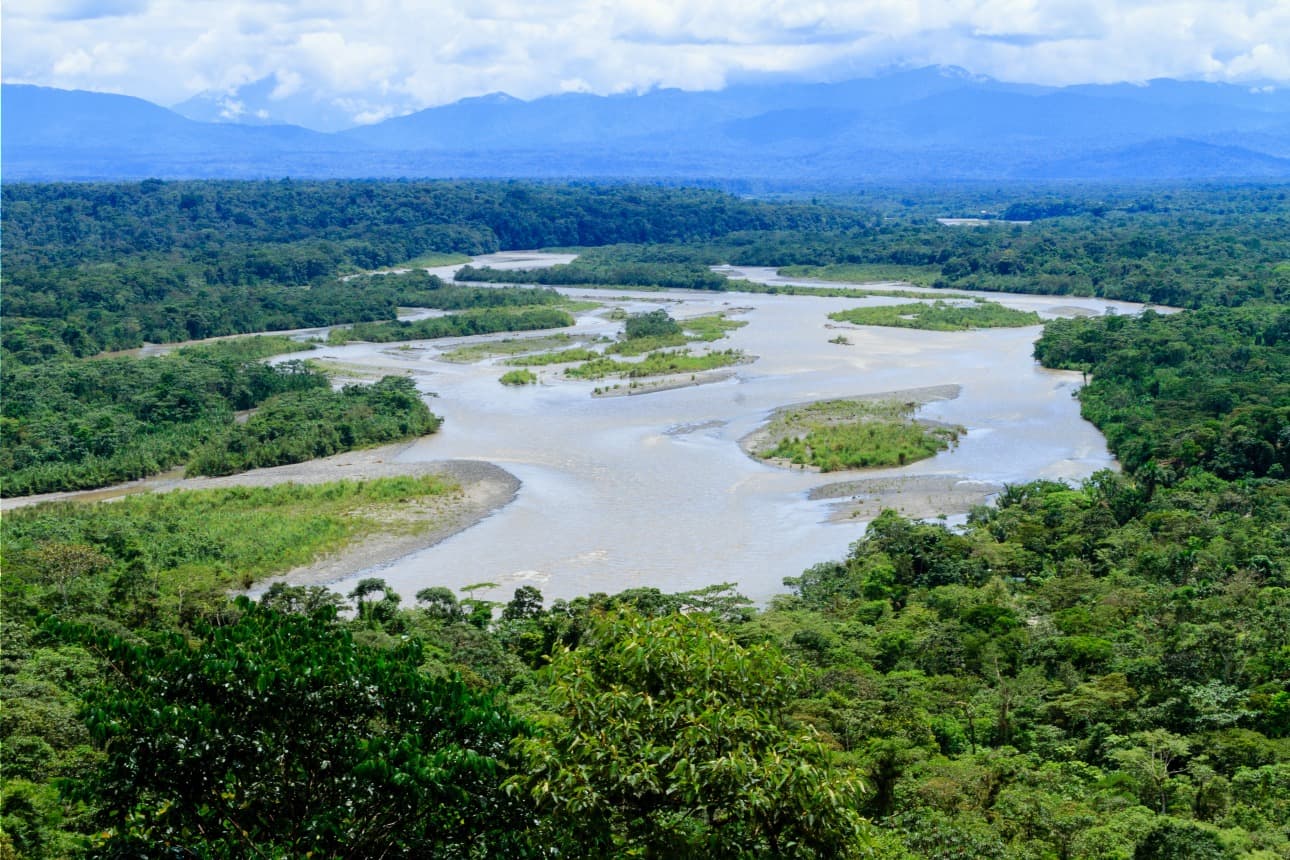
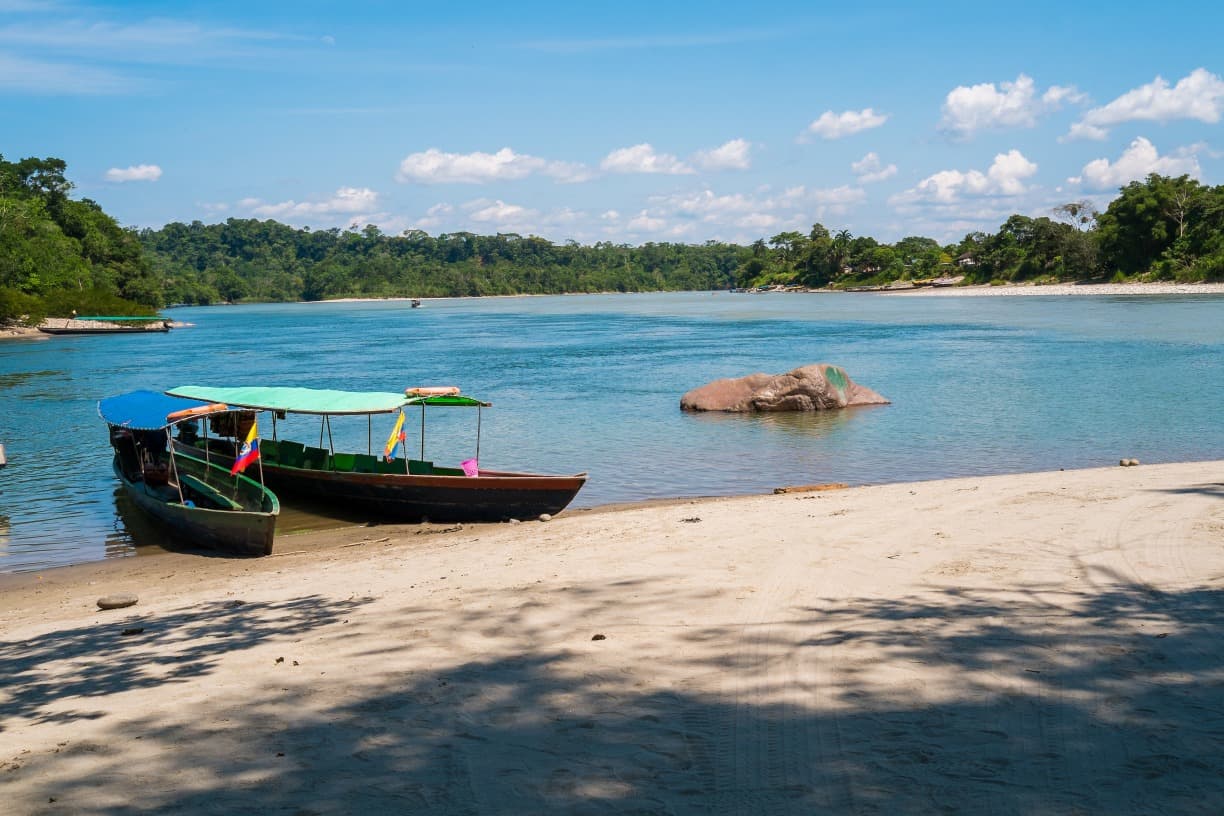
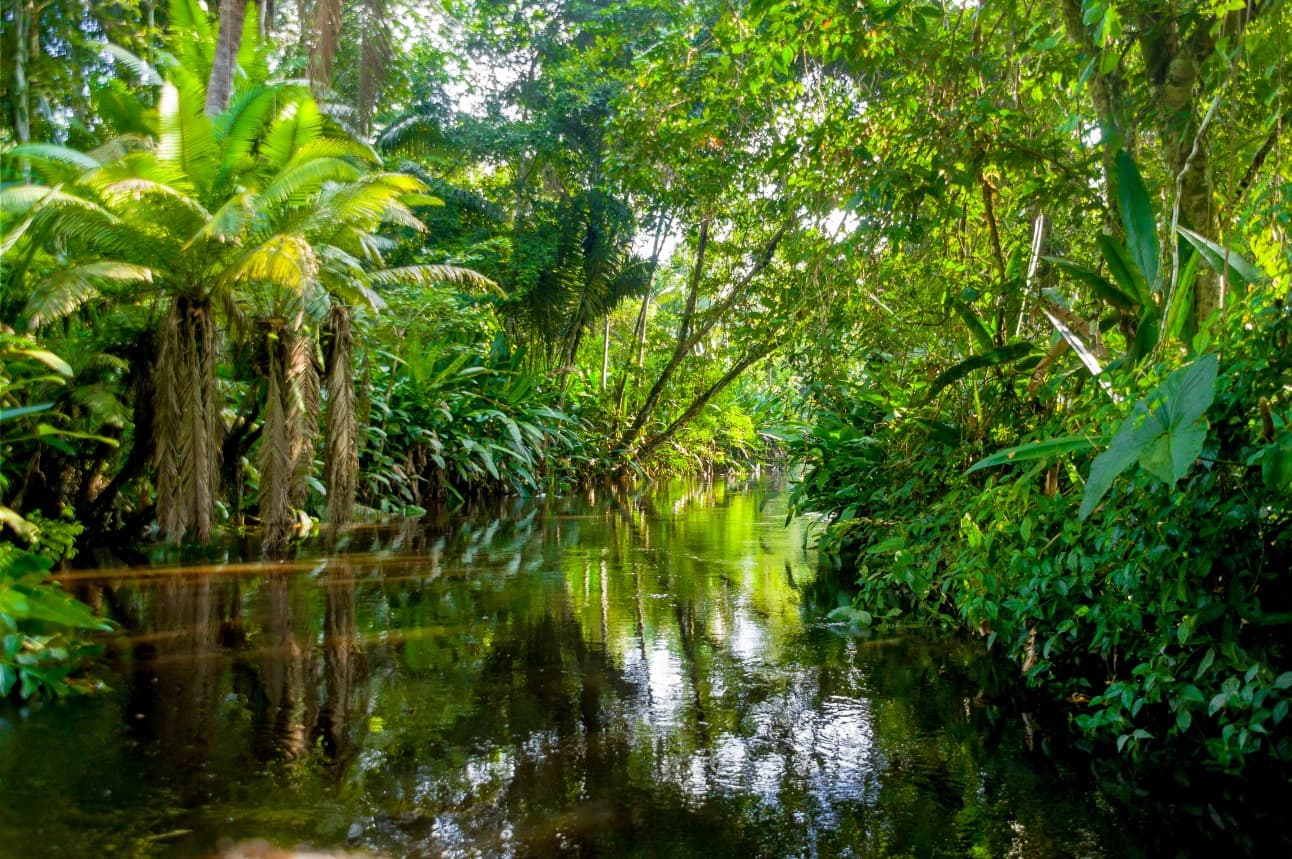
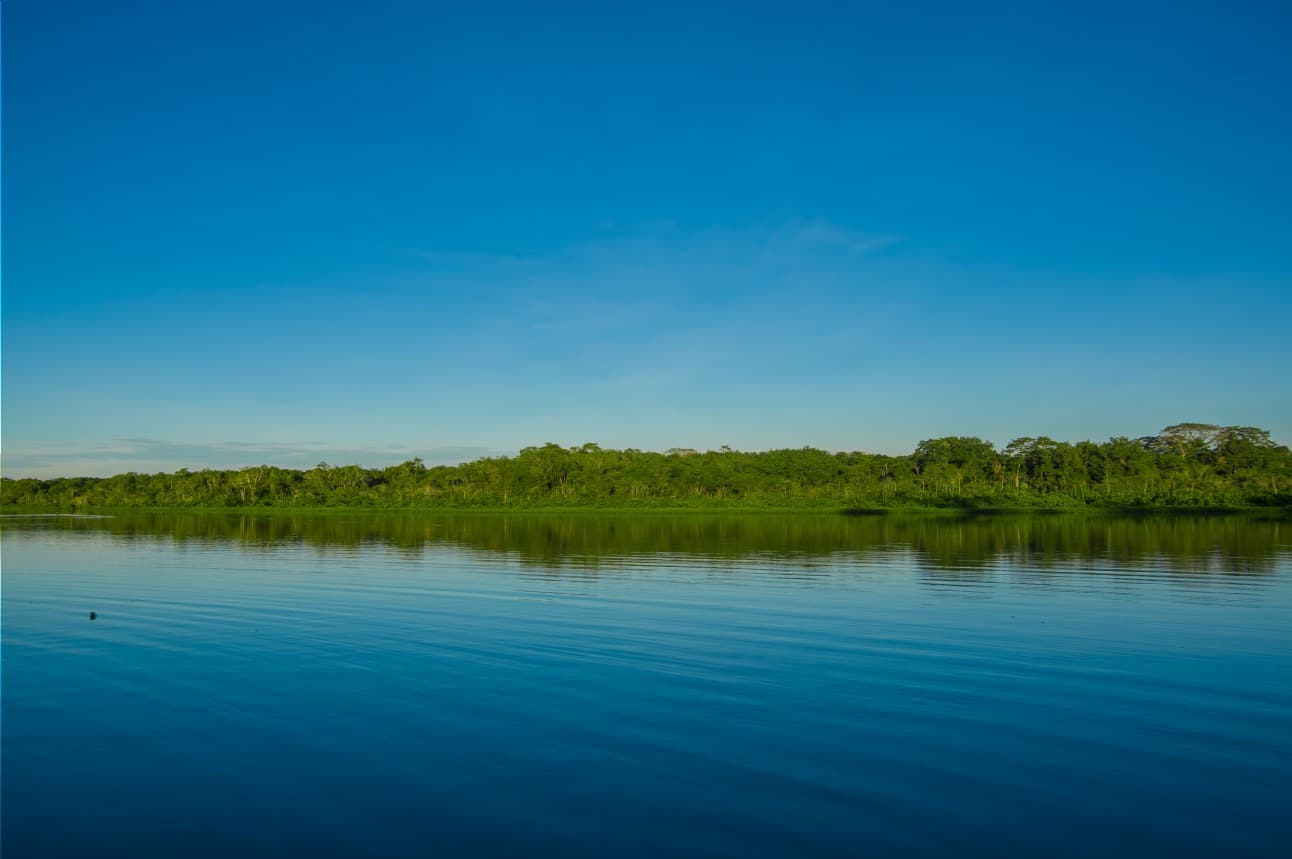
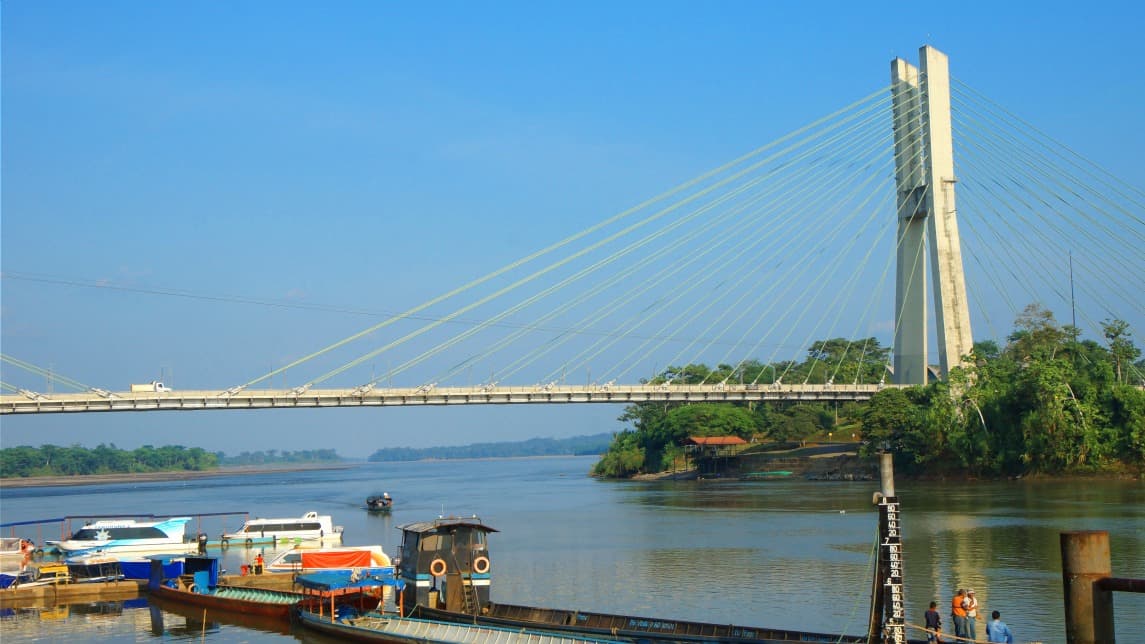
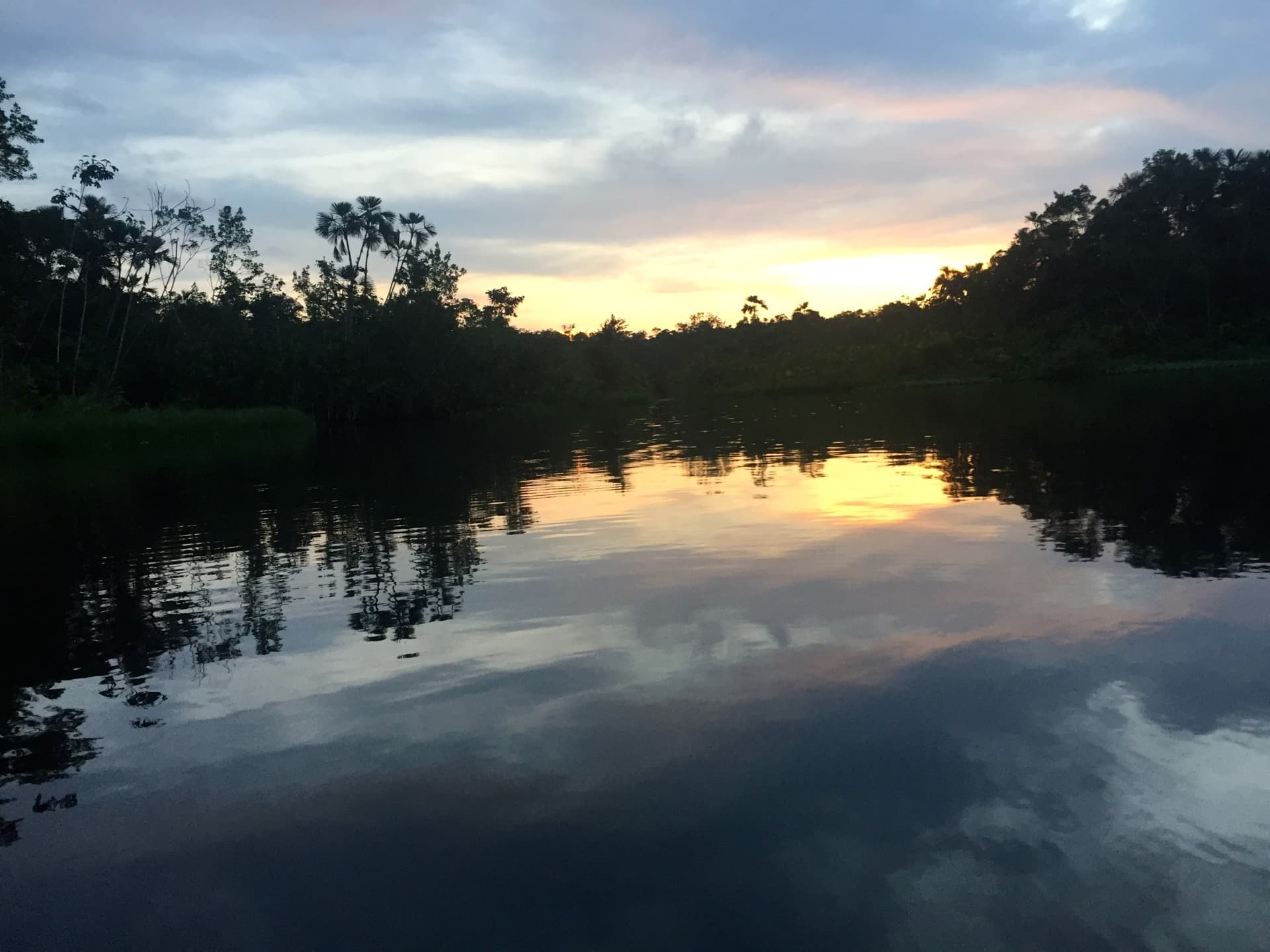
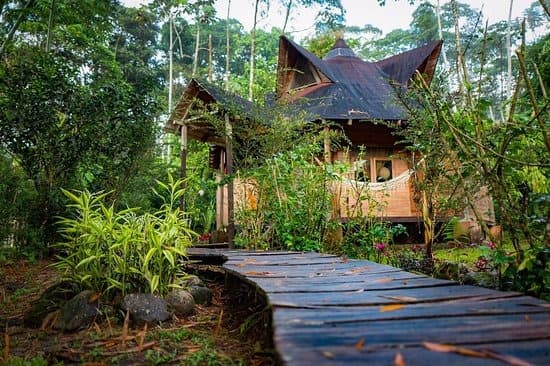
The region ranges between 200 and 1,500 meters in altitude. This difference is felt: the upper Amazon around Tena and Misahuallí maintains denser vegetation, crossed by rivers with clear waters like the Jatunyacu, ideal for class III rafting. Lower down, the Napo widens and becomes a brown river, carrying Andean sediments; its tributaries—the Tiputini, Cuyabeno, and Aguarico—form a network of blackwater lagoons bordered by moriche palms where black caimans and anacondas thrive. Community-managed lodges like Sani, Napo Wildlife Center, or Kapawi, run in partnership with the Kichwa, Siona, Secoya, or Achuar peoples, are reached only by motorized canoe, sometimes after 2 to 3 hours of navigation.
Yasuní National Park concentrates one of the highest documented biodiversity densities in the world: on a single hectare, up to 650 tree species have been recorded—more than in all of North America combined. On the fauna side, over 600 bird species frequent the region, including macaws that gather at mineral licks (saladeros) to ingest clay. Pink river dolphins from Cuyabeno, giant otters, spider monkeys, and occasionally tapirs or jaguars are among possible sightings. No guarantees, though: our naturalist guides speak in probabilities, not promises.
The Oriente is also an inhabited territory. The Kichwa of the Napo represent the most present indigenous nation along the river, organized into communities that have developed managed community tourism since the 1990s. Further east, the Waorani live in Yasuní's buffer zone, with some clans (Tagaeri, Taromenane) having chosen voluntary isolation in the intangible zone. To the south, Achuar territory extends to the Peruvian border. During a community lodge stay, the welcome typically includes tasting chicha de yuca (fermented cassava drink), an educational walk through medicinal plants (curare, sangre de drago, ayahuasca), and, depending on the village, blowgun hunting demonstrations.
Local economy remains marked by oil duality. Coca and Lago Agrio developed with petroleum field exploitation since the 1970s, explaining road quality but also ongoing environmental tensions. Community tourism represents, for indigenous nations, a direct economic alternative to extraction. Choosing a lodge managed by a community means funding this shift. We work exclusively with operators who return a documented share of revenues to partner villages.
The Oriente is not visited as a quick stop. Canoe distances, the necessity of dawn departures (5:30 am) to observe wildlife, temperatures around 28°C and constant humidity of 85-90% impose their own rhythm. It's a region for curious travelers, capable of accepting rain, mosquitoes, and the unexpected, in exchange for immersion in an ecosystem whose sonic density no documentary captures at dawn.
Highlights
Cuyabeno Reserve and its blackwater lagoons. Three hours by canoe from Lago Agrio leads to Laguna Grande, where you can swim at sunset among pink river dolphins. Night outings allow spotting caimans by headlamp.
Yasuní National Park and parrot clay licks. From Napo lodges, ascend the Tiputini at dawn to watch 200 to 300 parrots and macaws land on clay banks. 35-meter observation towers above the canopy at Sani and Napo Wildlife Center.
Stay in a Kichwa community near Misahuallí. Two to three nights in an upper Napo village to learn preparing maito (fish grilled in bijao leaf), blowgun shooting, and forest walks with a yachak, traditional healer.
Achuar territory at Kapawi. Lodge accessible only by bush plane from Shell, at the Peruvian border. Co-managed by the Achuar nation since 1996, one of the most developed community tourism projects in the Amazon basin.
Rafting on the Jatunyacu. 25-kilometer class III descent around Tena, in 22°C water flowing from Andean foothills. A day for travelers wanting to see the Amazon beyond slow canoe travel.
When to visit
The Oriente receives between 3,000 and 4,000 mm of rain annually, distributed year-round. There is no true dry season, but useful variations to know. December through March, rainfall is more moderate and temperatures hover around 26-30°C during the day: this is the period we recommend for a first visit. April to July, river levels rise significantly, easing navigation to remote lagoons but increasing downpours, sometimes for hours on end. June through August, rains peak, with daily intense showers and humidity regularly exceeding 90%.
Wildlife observation remains possible year-round. Parrot licks are most active September through March. Low water levels, August to October, expose banks more and ease forest walks, but limit access to secondary tributaries. Note: temperature varies little, between 24°C at night and 32°C during the day, simplifying packing.
Practical advice
We recommend a minimum of 4 days and 3 nights on site to justify transfer time: most lodges sit 2 to 3 hours by canoe from Coca or Lago Agrio, themselves 30 minutes by air or 8 hours by road from Quito. Below 3 nights, the transport-to-observation ratio becomes unfavorable. For travelers wishing to explore Yasuní deeply or reach Achuar territory at Kapawi, budget 5 to 6 nights.
The Amazon naturally combines with the Andes and Avenue of the Volcanoes: descent from Quito or Baños via the Papallacta road, then ascent toward Cotopaxi and Quilotoa. It integrates less easily with the Galápagos in a short combined circuit, due to required air connections through Quito or Guayaquil. Comfort varies by lodge: from rustic community (cold shower, limited solar power) to premium lodge (air-conditioned rooms, English-speaking guides available on request). It's a region we propose to naturalist travelers, families with children from age 8, and contemplatives who accept 5:30 am departures and hammock afternoons.