Tena
Tena
Ecuador's rafting capital and gateway to the Amazon: Tena blends Kichwa jungle, legendary rivers and peaceful atmosphere at the foot of the Andes.
Situated at the confluence of the Tena and Pano rivers, Tena is the capital of Napo Province in the Amazon. It's a tranquil city where life moves at an easy pace. Travelers come here primarily to take advantage of its ideal location for expeditions into the lush forests that surround it.
History
The city of Tena was founded in November 1560 by Spanish missionary explorers. Initially, it was merely a base camp to facilitate trade between Brazil and Ecuador. River transport proved relatively straightforward to Brazil via the Pano and Tena rivers, which flow through the city.
The city's founding is commemorated annually on November 15 with concerts and community events.
Tena Today
Located 190 km southeast of Quito, Tena is the capital of Napo Province in Ecuador. More than 58% of its inhabitants belong to the indigenous Kichwa (Quichua) community. The economically active population represents 32% of the city's total and work primarily in agricultural activities. Most residents are called tenense, a Spanish name derived from San Juan de los Dos Ríos de Tena.
Its geographic position at the confluence of the major rivers Tena and Pano makes it strategically a significant commercial center for Ecuador, utilizing its river networks for trade with Brazil and beyond.
Tena was once an important ecotourism hotspot, but unfortunately deforestation from coffee, cacao, cassava and corn plantations threatens to diminish all vegetation. The problem extends to wildlife inhabiting the jungle: monkeys, jaguars, birds and even insects see their environment shrinking and face extinction risk.
Staying in Tena
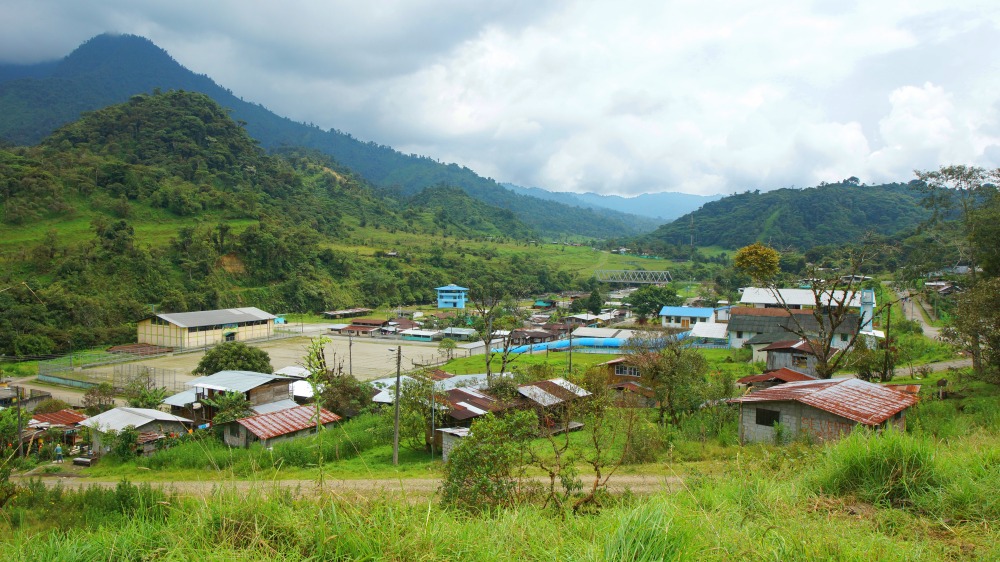
Perched at the edge of the Andes, Tena is primarily celebrated for its landscapes framed by wooded hills, tropical forests and two majestic rivers. The city's tourist activities concentrate around hiking, rafting and kayaking.
About fifteen kilometers away, luxuriant jungle unfolds. Though some areas suffer from deforestation, certain Quichua communities hope that green tourism will help protect primary forests, the natural habitats of local biodiversity, and transform these wooded zones into natural preserves. To develop their activities, these communities eagerly showcase the fauna and flora that inhabit the jungle to travelers.
The region's rivers hold an almost legendary reputation among rafting enthusiasts. They hosted the World Rafting Championship in 2005. You can easily indulge in rafting in the vibrant waters of the Tena region.
Following the Tena and Pano rivers as they flow into the Amazon, you can relax on several beaches such as those at Rancho Alegre, Cocha del Cementerio and Dos Ríos.
While Awaiting Jungle Expeditions
Tena is a calm city where it's pleasant to rest before heading out on jungle expeditions. Downtown, Tena boasts a botanical garden known as "Amazonian Isla Park." Most expeditions into the deep Amazon jungle depart from this park. The garden houses a zoo displaying over 200 animal species, some extremely rare and endangered. Amazonian Isla Park also offers splendid views of the volcanoes Sumaco, Revenador and Sangay, Ecuador's most significant volcanic peaks.
To learn more about the Amazon rainforest and discover local biodiversity, nothing beats visiting the Jatun Sacha Biological Station. This facility ranks as Ecuador's second largest conservation organization. It conducts continuous research on the forest and implements numerous sustainable development and forest protection projects. Through various programs and exhibitions, the station offers visitors an educational perspective on local biodiversity.
You can also venture to the Jumandi Cave, one of Tena's finest tourist attractions. The site lies just 20 minutes from the city and is accessible by bus or taxi.
Beyond natural scenery, Tena boasts several attractions to charm passing travelers. At the confluence of its two rivers stands a pedestrian bridge connecting both sides of the city, locally known as "el puente peatonal". A statue of Jumandy also stands at the city entrance to welcome visitors. Jumandy courageously led an uprising against the Spanish in 1578 and was subsequently executed.
Climate
The city sits at over 598 meters altitude. Surrounded by forest, it experiences constant humidity and rainfall throughout the year. According to the Köppen-Geiger classification, it enjoys a warm oceanic climate with no dry season. Annual precipitation averages 322.3 mm. July, with just 6.4 mm, is the driest month. This means August through September offer the most favorable conditions for visiting the region.
During November, the warmest month, the region experiences an average temperature of 14.2°C.
Tena is accessible by road, river or air.
Bus
Roads connecting the city to surrounding municipalities like Pano, Talag, Puerto Napo, Puerto Misahuallí and Ahuano are all paved. Access to the region's various tourist attractions has thus become easier.
Linked by a paved road, Tena is 6 hours by bus from Quito, Ecuador's capital. Along this route, regular buses depart Tena for Baeza. These buses fill quickly, particularly on Fridays and Sundays. To plan ahead, it's wise to book your seats in advance.
Air
Tena's airport sits just outside the city. It's a small facility handling commercial flights.
Want to discover this destination?
Our local advisors design your tailor-made trip.