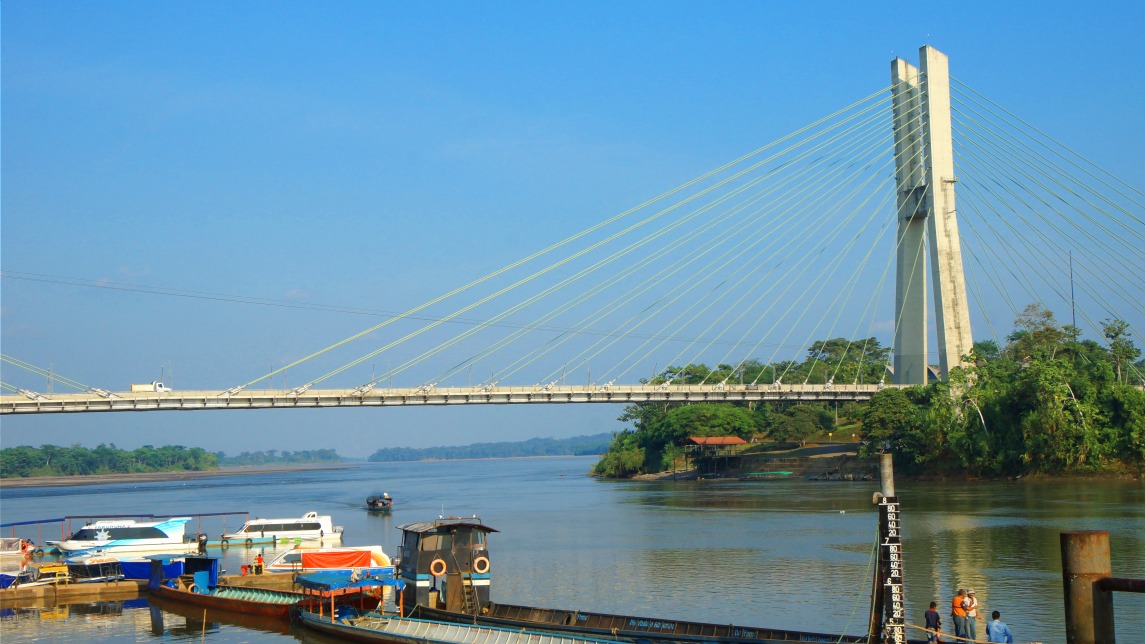
Lago Agrio
Lago Agrio
The oil capital of Ecuadorian Amazonia, Lago Agrio is the strategic gateway to the Cuyabeno Wildlife Reserve and the indigenous communities of Sucumbíos.
The city of Lago Agrio ranks among the most important cities in northeastern Équateur. It is an essential stopping point before venturing into the vast Ecuadorian Amazon jungle. It is also the primary entry point to Cuyabeno Reserve and the Limoncocha Biological Reserve.
History
Once a simple base camp for the American oil company Texaco, Lago Agrio grew haphazardly in size and importance in tandem with the oil industry's expansion. During its formative years, it evolved into a major city and provincial capital.
Lago Agrio was officially renamed in 1960 by the first workers of this American company to Nueva Loja. History tells us that the name Nueva Loja derives from an American city in Texas: Sour Lake. Despite this new designation, locals continue to call it the city of Lago.
After causing a massive oil spill and polluting the Amazon rainforest in the region, the company was taken to court in 1992. Since then, the company has been forced to abandon the region. In a ruling on February 14, 2011, a local judge determined that "the Texaco company must pay 9 billion dollars in environmental damages".
Today, the region's natural environment is deteriorating significantly due to the city's industrial development.
Today
Located 312 km from Quito, Lago Agrio is the capital of the canton bearing the same name and of Sucumbíos province, Équateur's newest province. Spanning an extensive area of 379.80 km, its population numbered approximately 40,000 inhabitants in 2010. It also hosts a United Nations military base reserved for Colombian exiles.
Lago Agrio serves as a gateway to the southern portion of the Amazon jungle. Tourists make a stop here before penetrating deeper into the jungle. For the brief time they spend in the city, hikers enjoy the local gastronomy, which draws from the region's culinary richness. They also discover local craftsmanship, which typically focuses on objects created by indigenous peoples.
The city of Lago Agrio thrives at the rhythm of the oil industry. It hosts Équateur's most significant oil field. Due to its numerous oil fields, Lago Agrio faces serious ecological challenges: the tropical forest is nearly decimated. Although the city has few tourist attractions and enjoys a poor reputation, it offers interesting tourist activities including jungle excursions. The natural landscapes surrounding it play a key role in tourism. The forest is surrounded by the Cuyabeno Reserve and the Limoncocha Biological Reserve. For this reason, it teems with the infrastructure needed to welcome tourists, including hotels, restaurants, entertainment centers, and shops. These establishments aim to showcase local gastronomy and artisanal products to visitors.
The Perla Ecological Recreation Park, an iconic tourist attraction in the city, spans over 1 km² and is home to the region's largest lagoon. The "Lago Agrio" lagoon measures 2,000 m in width, 3,000 m in length, and 5 m in depth. This place is considered the city's only center for recreation, environmental education, tourism services, and the enhancement of natural ecosystems (forest and aquatic). Park visitors can enjoy canoeing, cycling, and hiking along ecological trails.
Despite industrialization, certain areas within the city still feature very dense tropical forest. These spaces have been transformed into a biological educational center, hence the Nueva Loja Tourist Park. The park hosts numerous rare species, including monkeys, turtles, caimans, fish, and various birds.
From Lago Agrio, it is very easy to reach Cuyabeno Reserve, one of Équateur's most important protected areas. This site was established in 1979 and encompasses approximately 603,380 hectares of tropical forest extending from Colombia's northern border to Peru's border. The reserve is a sanctuary for numerous endemic animal and plant species. This is why it is extremely popular with hikers and nature enthusiasts. Visitors can encounter several species of monkeys, birds, caimans, anacondas, piranhas, and turtles. They can admire pristine natural landscapes formed primarily by dense vegetation, rivers, canyons, and spectacular lagoons created by flooding.
Like Cuyabeno Reserve, Limoncocha Biological Reserve is also a protected area renowned for its biodiversity richness. It is characterized by wetlands and marshes as well as predominantly flat terrain. It is home to approximately 450 bird species. Although they are severely threatened by oil exploitation, its vegetation is highly varied. It features giant ceiba trees, cedars, laurel, balsa, and pambil.
Climate
Like all regions within Équateur's Amazon basin, Lago Agrio enjoys a Mediterranean climate. Rainfall is more abundant in summer, between June and August. Average precipitation reaches 384.5 mm, remaining substantial even during the driest months.
Throughout the year, temperatures range from approximately 23°C to 35°C. Between April and July (the year's coldest period), temperatures can drop to 11.1°C.
Air
As a capital city, Lago Agrio has its own airport. TAME or Aerogal operates daily flights to Quito, with a flight time of just 30 minutes.
Bus
From Quito, located 7 hours away by road, public buses depart every 20 minutes from the Cumanda bus station heading to Lago Agrio. Several bus companies service the Quito–Lago Agrio and Baños–Lago Agrio routes. Certain buses also connect the cities of Tena, Coca, and Baeza.
Want to discover this destination?
Our local advisors design your tailor-made trip.