Cuyabeno Wildlife Production Reserve
Cuyabeno Wildlife Production Reserve
Over 600,000 hectares of flooded Amazonian rainforest, exceptional wildlife and indigenous Siona and Kichwa communities: the Cuyabeno reserve is one of Ecuador's richest and best-preserved jungle destinations.
The Cuyabeno reserve spans more than 600,000 hectares in Ecuadorian Amazonia, in the northeast of the country, near the Colombian border. This vast flooded tropical forest territory is home to one of the planet's richest ecosystems: pink dolphins, anacondas, manatees, caimans and hundreds of bird species coexist in a network of lagoons and black-water rivers. It is one of Ecuador's most accessible and best-preserved jungle destinations.
Quick reference guide
- Access: from Lago Agrio (Nueva Loja), by bus to the village of Cuyabeno, then by motorized canoe (several hours depending on destination within the reserve)
- Entry: mandatory reserve entrance fee, included in most lodge packages
- Recommended duration: minimum 4 days / 3 nights to see wildlife in good conditions
- What to wear: lightweight long-sleeved clothing, raincoat, rubber boots (often provided by lodges)
- Rules: visits must be accompanied by an approved guide; no waste may be left in the reserve
- Accessibility: very limited due to flooded terrain and boats
What you'll see
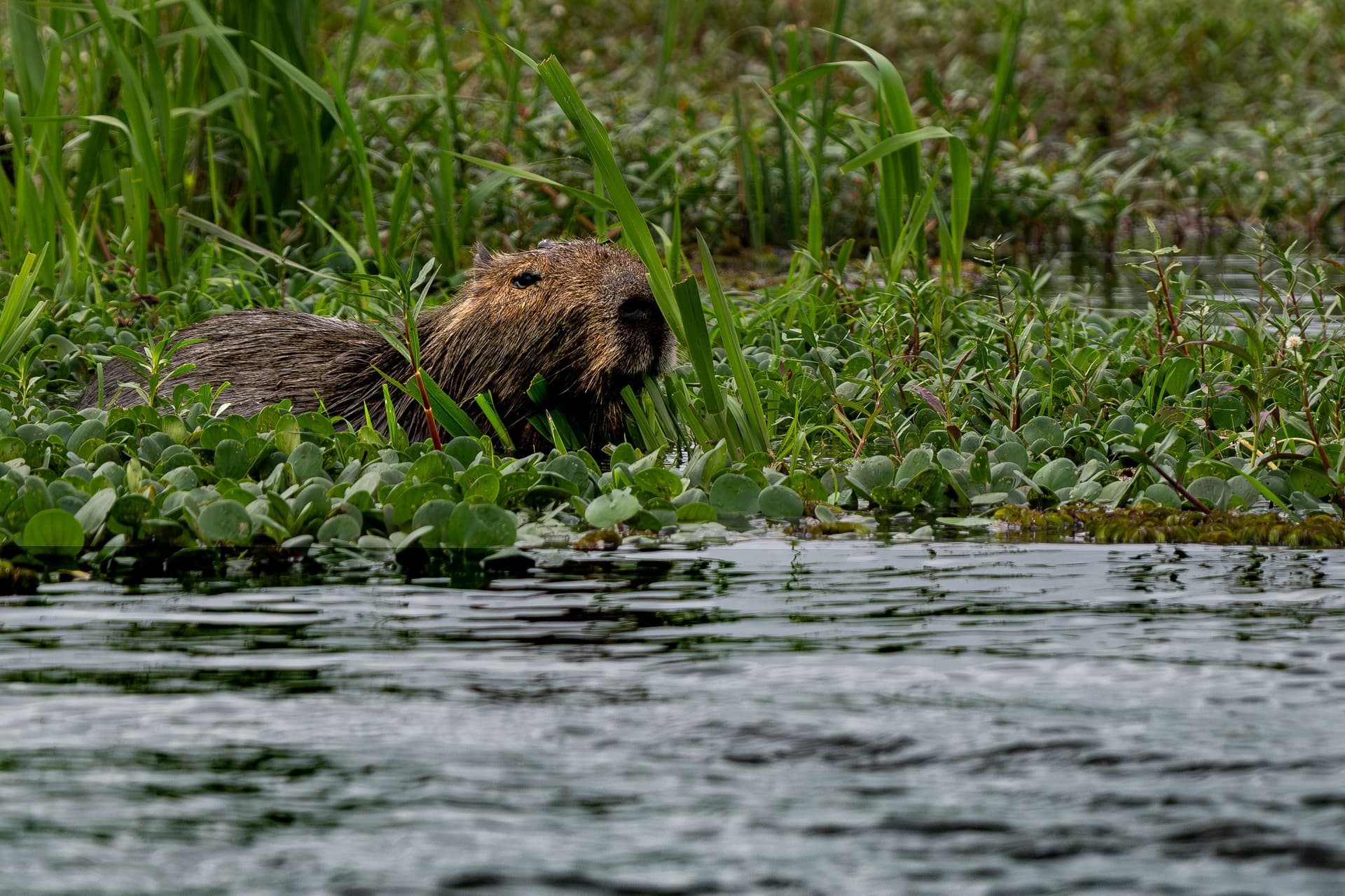
The reserve concentrates exceptional biodiversity. The lagoons — including the great Cuyabeno lagoon — welcome pink dolphins (Inia geoffrensis), giant otters and aquatic turtles. The canopy shelters howler monkeys, spider monkeys, toucans and parrots. At night, canoe trips reveal caimans with shining eyes and poison frogs. More than 500 bird species have been recorded in the reserve.
History and context
Created in 1979 and expanded several times, the Cuyabeno reserve is managed by Ecuador's Ministry of Environment. It is inhabited by several indigenous communities — Siona, Secoya, Cofán and Kichwa — some of which participate in ecotourism as guides or lodge owners. The reserve has faced pressures from oil exploitation in the region, but remains one of Amazonia's most protected natural spaces.
Highlights of your visit
Cuyabeno Lagoon
A vast expanse of black water surrounded by flooded forest, the main lagoon is the heart of the reserve. Pink dolphins can be observed at the surface and, at sunset, the low light illuminates the canopy beautifully. Swimming is possible in designated safe zones.
Night canoe expeditions
After dinner, guides take visitors out on the rivers with flashlights. Spectacled caimans are frequently observed from the boat. The soundscape — frogs, insects, nocturnal birds — is striking.
Walks through flooded forest
Certain parts of the reserve can be explored on foot or wading in shallow water. Local guides identify medicinal plants, animal tracks and insects. These walks help you understand how the Amazonian rainforest functions from within.
Meeting indigenous communities
Several lodges organize visits to Siona or Kichwa communities. Residents share their knowledge of plants, traditional fishing techniques and their vision of the territory. These exchanges are guided and respectful of local customs.
Photography tips
Light in tropical rainforest is diffuse and weak beneath the canopy: a bright lens (f/2.8 or wider) is recommended. The best wildlife observations occur early morning (6am-9am) and late afternoon. For dolphins, remain patient and silent at the bow of the canoe. Avoid using flash on nocturnal animals — guides may prohibit it.
Location and access
The reserve is located in Sucumbíos Province, approximately 3 hours' drive from Lago Agrio. Lago Agrio is accessible by air from Quito (regular flights, approximately 30 minutes) or by bus from the capital (approximately 8 hours). From the reserve's entry point, the canoe trip to the lodges takes between 2 and 4 hours depending on destination. All visits are made with an approved guide; local agencies and lodges organize transfers.
In the surrounding area
- Lago Agrio (Nueva Loja) — departure city for Cuyabeno, with services, hotels and flights to Quito.
- Yasuní Reserve — another major Ecuadorian Amazonian reserve, further south, also accessible from Coca (Puerto Francisco de Orellana).
- Coca (Puerto Francisco de Orellana) — gateway to the Napo and Yasuní park, several hours to the southwest.
Frequently asked questions
The reserve can be visited year-round. During the rainy season (June-August), water levels are high: the forest is more flooded, canoes can access more areas and dolphins are more visible. During the dry season (December-February), some hiking trails are more passable. Wildlife is present at all times.
Yes. Access to the reserve is regulated and lodges have limited capacity. It is strongly recommended to book several weeks in advance, especially during high tourism season (July-August, December-January).
No. Regulations require the presence of an approved guide and accommodation in authorized structures within or on the edge of the reserve. Day visits from Lago Agrio do not allow access to the most wildlife-rich areas.
Yellow fever vaccination is recommended and sometimes required. Preventive antimalarial treatment may be advised by your doctor. High-concentration insect repellent (DEET) is essential, especially at dusk and night.
Yes, in certain areas of Cuyabeno lagoon and a few rivers, under guide supervision. Piranhas present in the reserve are generally not aggressive toward humans, but the guide always indicates safe zones.
A 4-day / 3-night stay is the minimum recommended to observe wildlife in good conditions and enjoy the various activities (canoe, hiking, night trip, community visit). Stays of 5 to 7 days allow you to explore more remote areas.
Want to discover this destination?
Our local advisors design your tailor-made trip.