Baños
Baños
At the foot of Tungurahua, Baños brings together waterfalls, thermal springs and adventure sports. The complete guide to prepare your Ecuadorian stop.
The city of Baños in Ecuador exudes a serene and peaceful atmosphere. For extreme sports enthusiasts and adventure seekers, Baños is an unmissable destination. Most of its visitors consider it South America's adventure capital.
History
The city of Baños is known by different names: Baños de Agua Santa, The Gateway to El Dorado, City of the Volcano. The name Baños de Agua Santa was given to the city because of the thermal waters* of the region, considered by locals to possess healing properties.
Around 1887, a Belgian priest named Thomas Halflants took on the role of city mayor and made possible the realization of numerous projects such as the delimitation of the city's streets, the construction of the San Francisco, El Topo, and San Martin bridges, the implementation of the first water intakes in Chigla, the renovation of the old church, the founding of the Basilica of the Virgin (1904-1944), and the acquisition of a bronze fountain in Plaza de El Higueron. In 1909, he was succeeded by another Belgian priest known as Van Shoote.
During the most recent eruption of Tungurahua volcano in 1999, the Baños region was severely affected by the explosion. Its population was completely evacuated.
Today
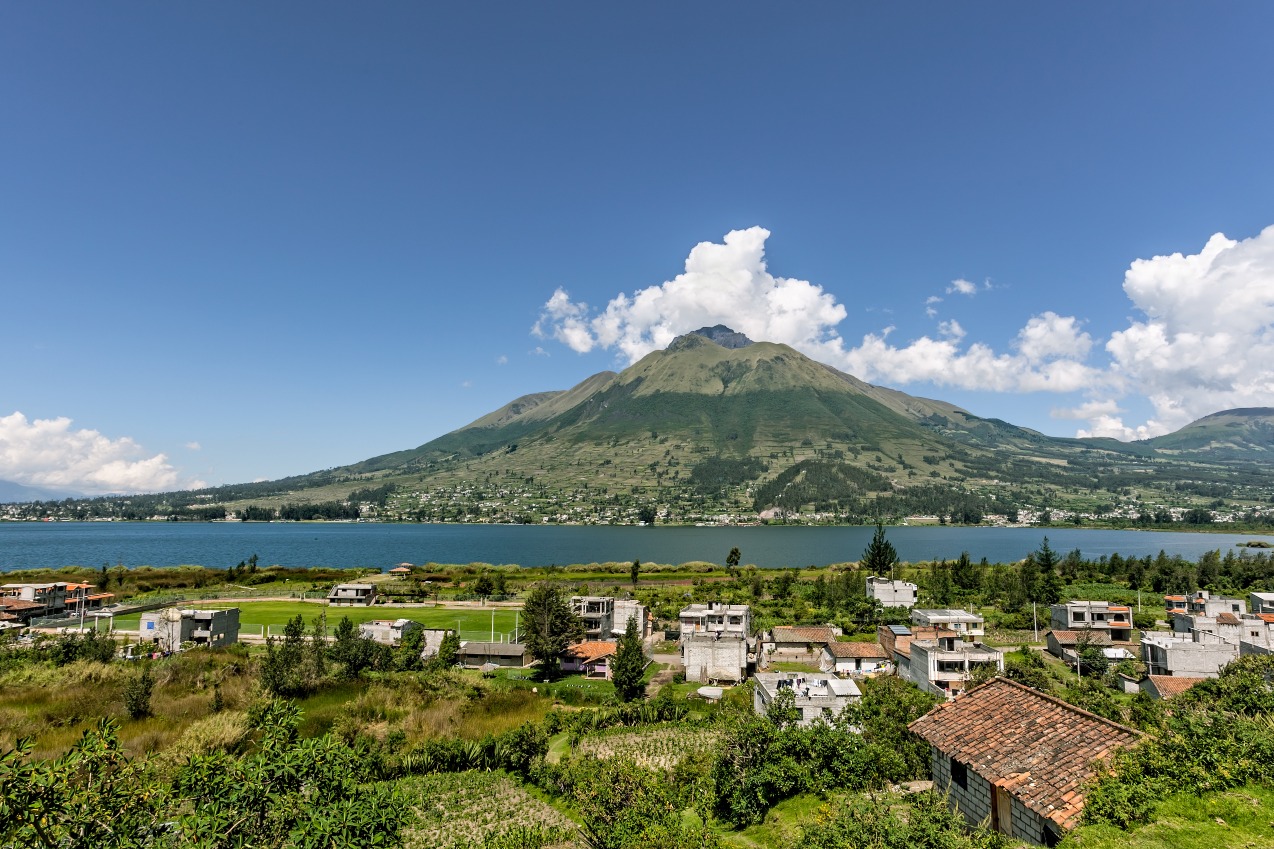
Capital of the Canton bearing the same name, Baños is located 40 km east of Ambato, in the province of Tungurahua, on the outer slopes of the eastern Cordillera of the Andes. The city is situated just 8 km from the Tungurahua volcano. It is therefore surrounded by the Bascun rivers to the west, Oulba to the east, and Pastaza to the south.
The population of Baños is approximately 12,995 inhabitants. It is the second most populated city in the province and the 74th most populated city in the country. Since the early 20th century, its population has been divided between landowners and rural workers.
Baños is one of the most important administrative, economic, financial, and commercial centers in the province of Tungurahua. Its economic activities focus on tourism. According to the WWF, the region is considered a "gift to the earth".
This city is also a center of religious pilgrimage. Influenced by a Dominican community long established in the region, its inhabitants make pilgrimages to the thermal springs. They believe that the thermal waters can miraculously heal diseases.
Baños de Agua Santa, the city of sacred water
The Baños region has more than 6 municipal thermal stations, 4 of which are in the city center. The region's hot water springs are fed by the mineral and sulfurous waters of Tungurahua volcano.
Inaugurated in 1933, the Santa Clara spa (on the south-east side of the city) is the most famous swimming pool in Baños. With a temperature of 22°C, the thermal waters of the pool treat several ailments such as those related to the liver, kidneys, or the digestive system.
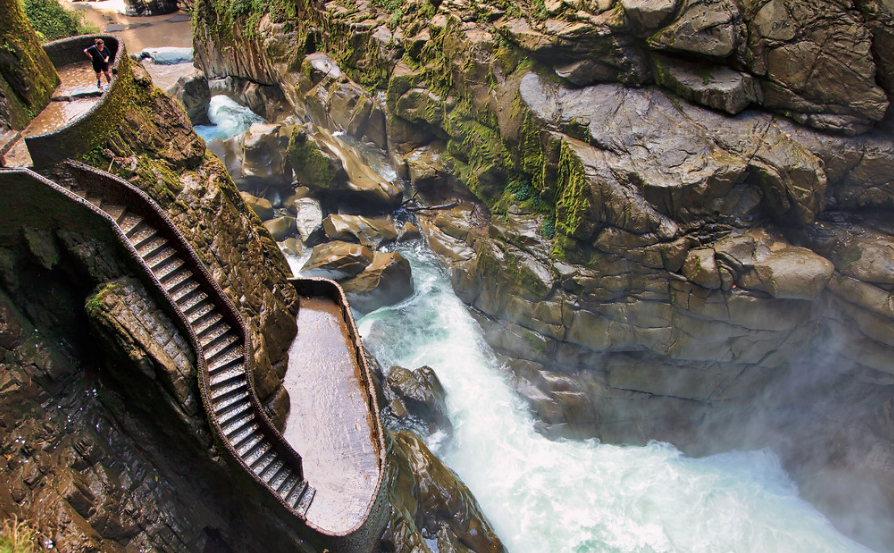
Among the numerous waterfalls in the region, the Virgin's waterfall located in the heart of the city is the most famous. For Catholics, it is a sacred place. According to locals, the Virgin Mary made occasional appearances in the waterfall and performed a number of miracles.
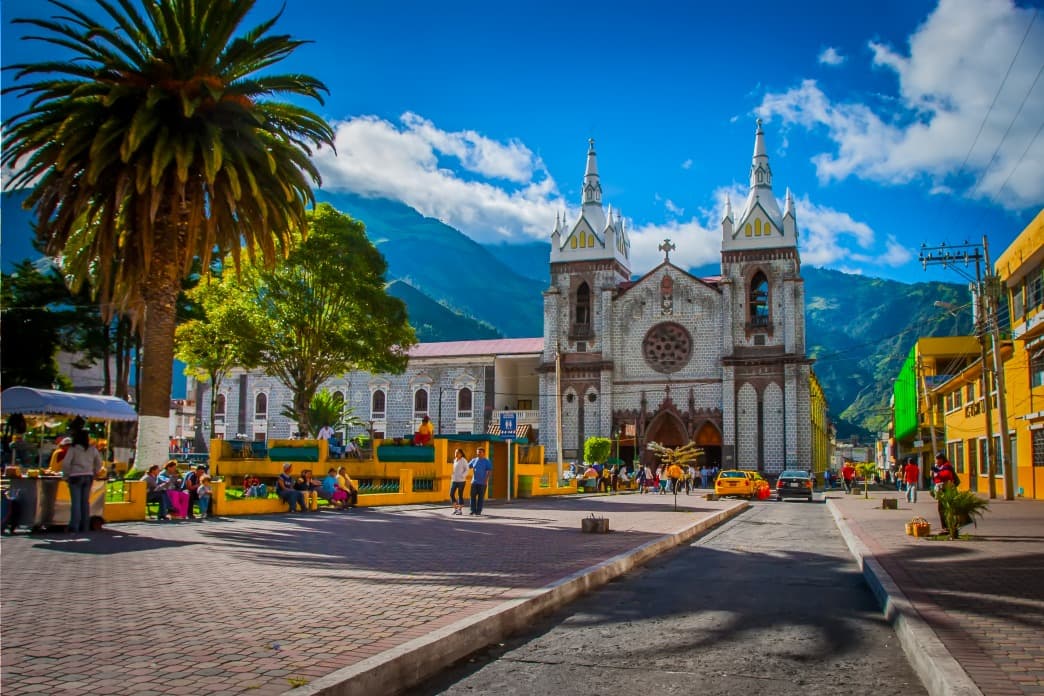
The Basilica of Holy Water reinforces this idea of a city of sacred water. Founded in 1887, its neo-Gothic architectural style was imagined by a Belgian priest known as Thomas Halflants. As its name suggests, the church is dedicated to the Virgin Mary or Virgin of Holy Water, who according to local belief protects the city from the eruption of Tungurahua volcano. The various decorations of the church, particularly the works of art on the walls, illustrate the miracles performed by the Virgin Mary. Every year, a festival honoring her is celebrated here. Seeking spiritual peace, hundreds of visitors from all over the country come to attend this celebration.
Baños, a nature getaway
Thanks to its proximity to the Amazon jungle, the region has been developing a strong appeal for ecological tourism in recent years.
Its landscapes consist of more than 60 waterfalls and several natural pools generated by hot spring water sources. The city is also surrounded by green spaces, dense forests, and natural attractions. It ranks among Ecuador's most popular tourist destinations.
Baños and its surroundings offer several outdoor activities. Visitors can see waterfalls, climb the Tungurahua mountain to admire the volcano's occasional eruptions, hike through lush forests, enjoy a swim in the thermal springs, descend steep gorges, or cycle or boat to the Amazon basin. With all the rivers in the area, particularly the Pastaza River, several water sports activities such as rafting, canoeing, or bungee jumping from the canyons are available to the more daring travelers. It is also possible to cross the river and canyons via zip-line.
Climate
The Baños region sits at over 1,820 meters above sea level, which is why it enjoys a very pleasant climate year-round. According to the Köppen-Geiger classification, it experiences a warm subtropical climate with no dry season. With 6.4 mm of precipitation, July is the driest month of the year.
From Quito's terminal, numerous bus companies depart regularly for Baños (approximately 4 hours of travel). Baños also has inter-cantonal buses to maintain connections with neighboring cities.
To travel within the city, public transportation is the main means of transport. Baños is among the few cities in the province with an urban public bus service.
The city also offers its visitors several bicycle rental agencies.
Want to discover this destination?
Our local advisors design your tailor-made trip.