San Pablo
San Pablo
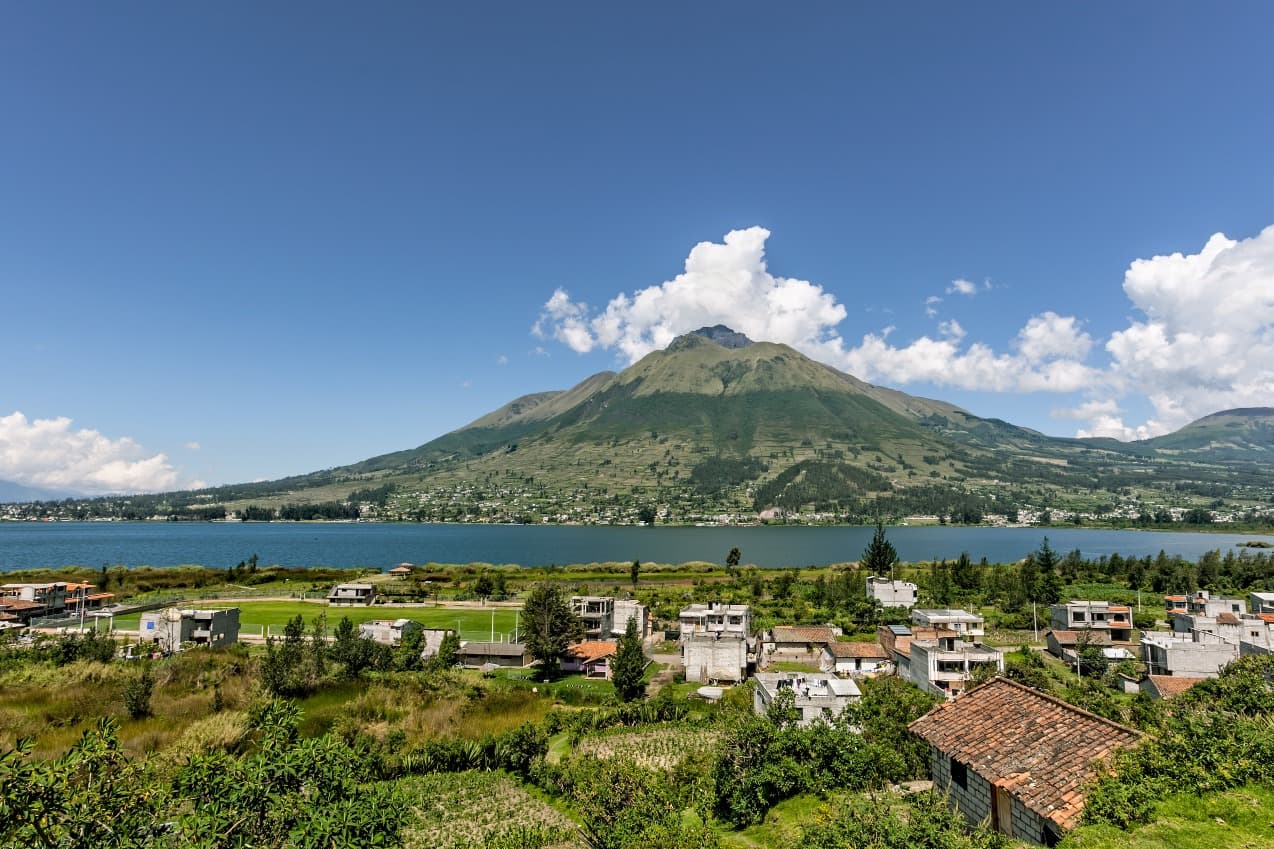
At the foot of Imbabura volcano, Lake San Pablo spreads its 2.6 square miles, sacred to the Kichwa Otavalo people. Wildlife, festivals, hiking: complete guide.
Perched at 2,660 meters above sea level, Lake San Pablo lies in Imbabura province, at the foot of the volcano bearing its name and 6.6 miles south of Otavalo. This body of water holds major symbolic importance for local indigenous communities. It is also a sanctuary for several bird species and a popular tourist attraction in the region. It offers multiple hiking trail options and hosts various water sports competitions.
Équateur's second-largest lake
With an area of 2.6 square miles (2.2 x 1.4 miles), Lake San Pablo is Équateur's second-largest lake, behind Lake Cuicocha, located in the same province. It is fed by Peguche waterfall, a sacred site for local shamans, and reaches a maximum depth of 272 feet.
Along the shores of this expanse, reeds thrive and are used in artisanal craftsmanship. Cattails and forests of eucalyptus, willow, and pine also flourish along its banks.
As for wildlife, Lake San Pablo is home to numerous bird species. You'll find grebes, cormorants, coot-like ducks, white herons, ducks, coots, hummingbirds, terns, and various other native species. Fish species include rainbow trout and carp.
A cultural site
Much more than a simple body of water, the lake occupies an important place in the worldview of local indigenous people, the Kichwa Otavalo. They consider water purifying and associate it with femininity, attributing it the power to create life. Peguche waterfall is a sacred place for the Yachak (shamans), who purify themselves there during the Inti Raymi and Paukar Raymi festivals.
Activities at Lake San Pablo
Lake San Pablo lends itself to several water activities such as boat tours or pedal boating, rowing, wakeboarding, and kneeboarding, among others. Various events take place on its waters. One of the most famous is the lake swimming crossing, which takes place during the Yamor festival, celebrated annually.
The Yacht Club frequently organizes sailing competitions on Lake San Pablo, while the Chicapan Fishing Club offers sport fishing outings.
Various hiking trails are available in the lake's surroundings. They lead to natural viewpoints such as El Lechero and Mira Lago.
During your visit to the lake, you can also check out the Punyaro fish station, which studies and tests the adaptability of fish species. Also take advantage of your visit to discover Peguche waterfall, which stands 59 feet high and is surrounded by lush vegetation. It's a highly photogenic spot.
Practical information
When to visit?
The best time to visit Lake San Pablo is during the dry season, from June to September. During this part of the year, days are sunny and temperatures pleasant. This is ideal for enjoying outdoor activities like hiking and water sports. The Yamor festival also takes place during this period, specifically in September.
By car
If departing from Quito, take the Gonzáles Suárez exit and pass through the villages of San Pablo and Araque, which are located near the lake.
If you're already in Otavalo or Ibara, take the left entrance of Eugenio Espejo toward the old dock and follow the road passing through several villages such as Camuendo, Compania, and finally Araque.
By public transportation
From Quito, take a bus and get off at the Gonzáles Suárez stop, then take a taxi to reach the site.
From Otavalo, several cooperatives (Otavalo, Los Lagos, and Imbaburapac) are available to take you to localities nestled near the lake, such as San Pablo, Araque, and Trojaloma.
Want to discover this destination?
Our local advisors design your tailor-made trip.