Quito
Quito
An Andean capital perched at 2,850 meters, Quito blends a UNESCO colonial center, active volcanoes, and the equatorial line. Here's everything you need to plan your stay.
Capital of Équateur and Pichincha Province, Quito, officially known as San Francisco de Quito, is a sanctuary of architectural marvels. From historic monuments to religious citadels and museums, a visit here promises a truly unique and enriching experience to discover more about pre-Columbian history and the traces left by Spanish colonization.
History
The city of Quito was founded in 1534 by Spanish conquistador Sebastian de Benalcazar, on the ruins of an ancient Inca city. Initially, an indigenous group called the Quitus inhabited Quito when it was merely a simple settlement. In 1487, this city was annexed and became the residence of Emperor Huayana Capac.
With the arrival of Catholic missionaries in the early 16th century, the city adopted a new character. Several evangelical citadels were erected and numerous Catholic missions were directed from the city.
In 1822, Équateur's independence was proclaimed by General Antonio José de Sucre. Following this, Quito officially became the capital and principal economic center of the country.
Due to its location in the heart of the Équadorian Andes, the Quito region experienced numerous earthquakes throughout history. In 1917, it was struck by a major earthquake.
Despite these frequent seismic events, Quito has managed to preserve its historic monuments intact. Its historic center is in fact the best-preserved in Latin America. In 1978, the city became one of the first places in the world to be designated a UNESCO World Heritage Site.
Quito Today
Quito is the capital of Équateur. It is the cultural, tourist, historic, administrative, and economic center of the country. It is also home to the Quito Metropolitan District and the seat of the Union of South American Nations. Most of the country's largest national and international companies, including financial institutions and oil companies, are based here.
At the last census in 2015, Quito's population was 2,007,734 inhabitants, with an average density of 6,923 residents per km². Today, it has approximately 3,100,000 inhabitants, making it the second most populous city in Équateur after Guayaquil.
Quito reaches the pinnacle of its tourism appeal through its numerous cultural and architectural heritage sites. Essential when visiting the city, these spots are concentrated mainly in Quito's historic center, known as "El Panecillo." Extending northward, the historic center is also the city's most modern area. It is the emblem of this Équadorian capital.
Staying in Quito
As one of Équateur's largest cities, Quito offers a multitude of hotels, hostels, and restaurants of all types. From charming family hotels to luxury establishments, the cost of a stay in this city remains accessible to all visitors. Quito is indeed among the most affordable capitals in South America.
What to Do in Quito?
Being the cultural and tourist capital of the country, Quito promises countless and fascinating entertainment activities. Whether you're a nature lover, history enthusiast, or fascinated by ancient cultures, the city has plenty to offer through its exceptional natural landscapes, historic architecture, and diverse urban attractions. Its streets brim with cultural richness, especially on holidays and weekends.
Discovering Pre-Columbian Culture
Architecture, tradition, and culture are also pillars of the city's tourism sector. Despite centuries of urban development, its cultural identity rooted in pre-Columbian culture has not lost its place among residents. On the southern side of the historic center, you can watch artisans prepare traditional regional snacks, candies, or craft Andean musical instruments.
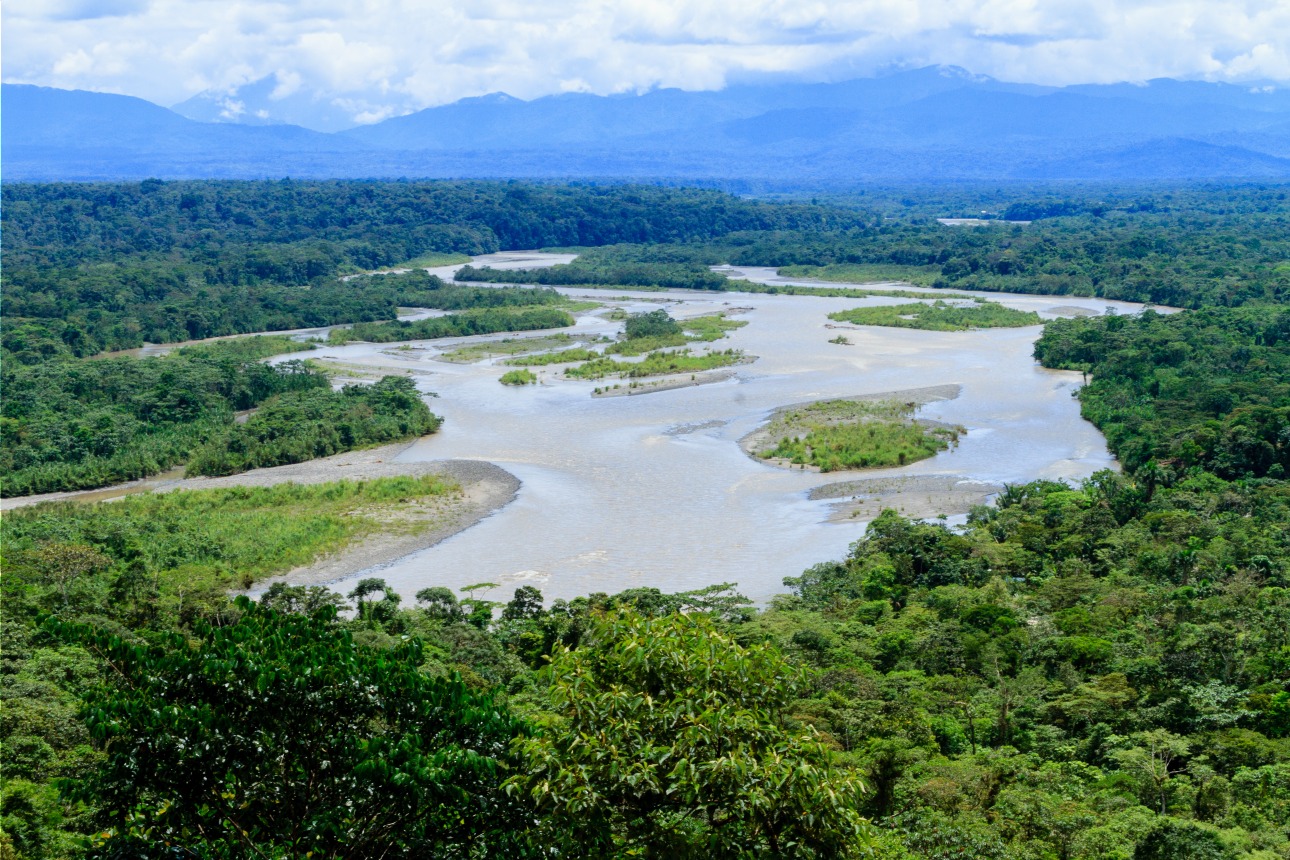
Isolated in the Équadorian Andes, the Quito region drapes the slopes of Guagua de Pichincha volcano and stretches from north to south over 50 km. The natural landscapes of this region are framed by the Panecillo and Ichimbia hills. Its panoramic horizons are dominated by towering, snow-capped and misty peaks. More than 19 still-active volcanoes in Équateur are visible from afar in the city. To fully experience the region's biodiversity, you can participate in hiking circuits through parks and reserves, some of which are even located within the city itself.
Discovering Local Gastronomy
Tradition is strongly felt through Équadorian culinary specialties. During your visit, you can refresh yourself by tasting artisanal ice cream called Paila.
Admiring the City's Architectural Gems
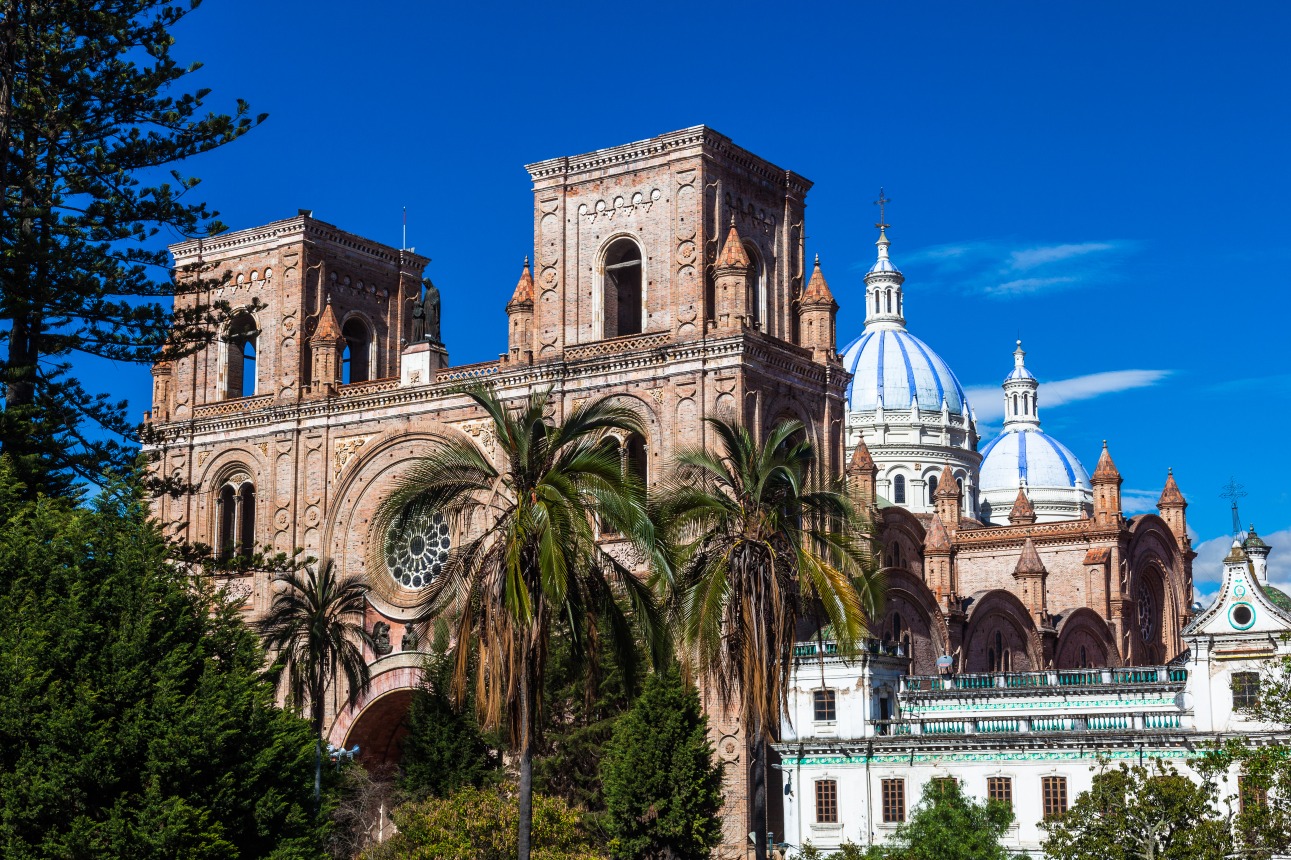
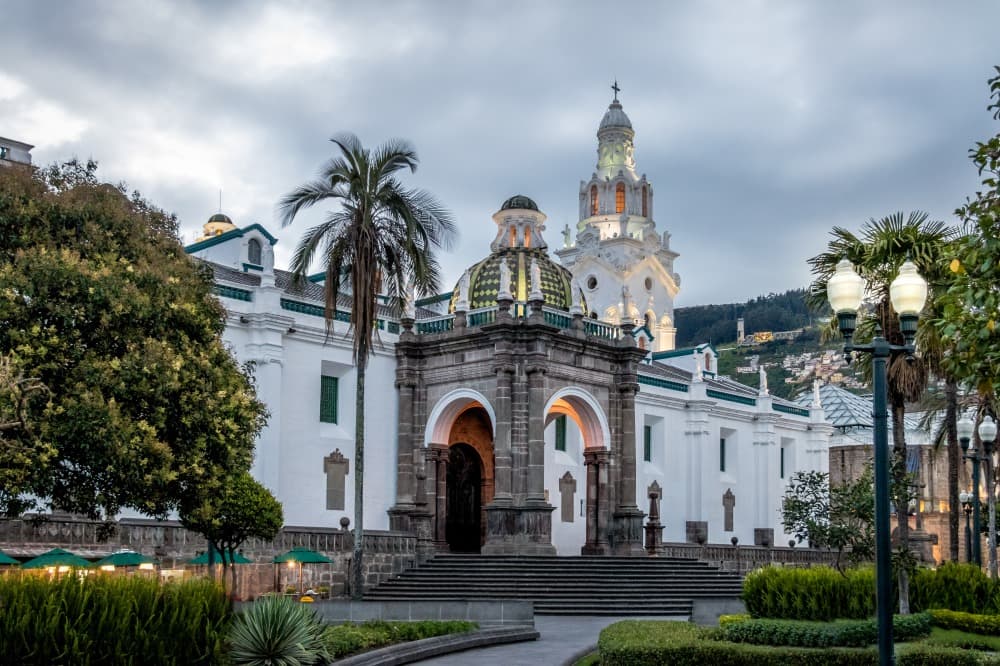
Quito showcases an impressive array of baroque schools and churches. Highly popular, these structures are true spiritual citadels. Among these buildings, you can visit the Plaza de San Francisco and Santo Domingo, as well as the church and Jesuit college of the Compania.
Tracing the City's History
Rich in history and heavily influenced by European culture, Quito is home to several museums: archaeology, contemporary art, anthropology, wax, colonial art, history, and many other themes. Visiting these institutions allows you to discover the true value of Équadorian history, culture, and tradition. You can view permanent or temporary exhibitions at the Museo de Arte Contemporaneas, located north of the Basilica del Voto Nacional, the Museo de la Ciudad, or the Équadorian National Museum of Medicine.
Climate
The climate of regions in the Andes varies depending on altitude and time of year. Perched at 2,850 meters above sea level, Quito, one of Équateur's highest cities, enjoys a subtropical highland climate. According to the Köppen-Geiger classification, its climate alternates between two seasons: the dry season and the rainy season.
Airplane
Inaugurated on February 20, 2013, Quito's international airport, known as Mariscal Sucre, is located 25 km from the city's historic center. It is Équateur's main airport. It features the longest runway in Latin America and a control tower (also the highest in this region of the Americas).
The headquarters of TAME, Équateur's national airline, is located in Quito.
Bus
Quito is connected to surrounding regions by more than 100 bus companies. For this reason, it has two new terminals: the Terminal Quitumbe, located in the southern part of the city, and the Terminal Norte Carcelen, situated at the far north.
Train
To reach the main tourist destinations south of the city, the best option is the tourist train called "Tren de la Libertad" (Train of Liberty). This network connects the small town of Ibarra to the city of Salinas. It is one of the rail lines operated by Tren de Ecuador.
Bus
Several bus and trolleybus networks serve the city of Quito. The MetrobusQ network, also locally known as "Red Integrada de Transporte Publico," is among the fastest public transportation systems for getting around.
Bicycle
Bike riding remains the best way to get around Quito. The city has a bike-sharing network commonly called "BiciQ". This network has its own stations at the exits of shopping centers and tourist attractions, banks, parks, and museums.
Attractions in Quito
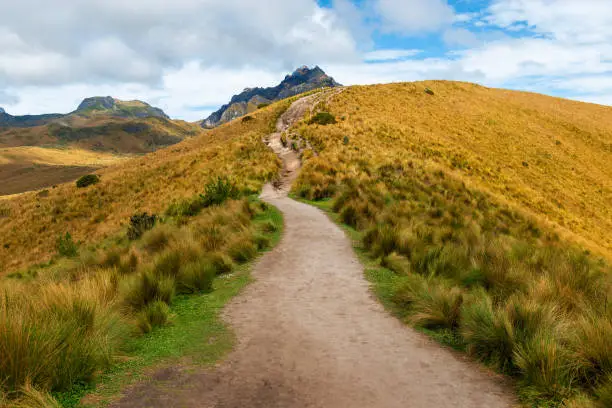
Volcán Pichincha
Le Pichincha domine Quito à l'ouest avec ses deux sommets : le Rucu (4 696 m) et le Guagua actif (4 784 m). Accessible via le TelefériQo, il offre une randonnée andine intense et des panoramas sur la capitale équatorienne.
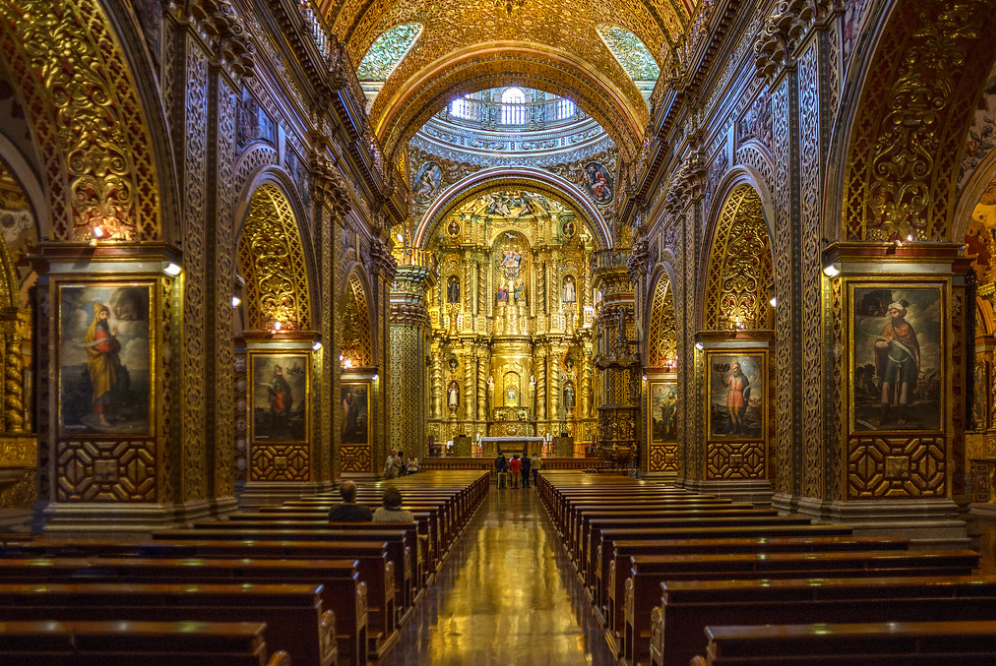
L'Église de la Compagnie de Quito
Surnommée La Compañia, cette église baroque du centre historique de Quito figure parmi les 7 merveilles d'Équateur, célèbre pour ses dorures et son école de Quito.
Want to discover this destination?
Our local advisors design your tailor-made trip.