Gualaceo
Gualaceo
Just 35 km from Cuenca, Gualaceo blends a vibrant Sunday market, traditional ikat weaving, and orchid farms in a mild-climate Azuay valley.
Nestled alongside the towns of Chordeleg and Sigsig, Gualaceo epitomizes a typical Andean settlement of peasant-artisans. It remains remarkably tranquil, unpretentious, and largely undiscovered by mainstream tourism. A visit here promises a serene atmosphere, far removed from the crowds that descend on Équateur's major cities and popular attractions.
History
Gualaceo ranks among the oldest towns in Azuay province. It was the first Spanish settlement to extract gold in the region. The town was officially established as a canton on July 25, 1824.
Today
Situated 35 km east of Cuenca at an elevation exceeding 2,230 meters, Gualaceo earns its reputation as the garden of Azuay thanks to its stunning landscapes. This small cantonal town in Azuay province is divided into nine urban parishes. Nestled near a river within a valley that enjoys a warmer climate than Cuenca, the town is cradled by the Sonillana, Gushin, and Achupallas mountains, as well as the Cordillera de Ayllon.
Discovering Gualaceo
Despite its modest character and unhurried pace, Gualaceo rewards visitors with genuine discoveries. Beyond its fresh produce and artisanal goods, the Sunday market offers genuine tranquility through several parks and two majestic rivers. Each Sunday, the local market transforms into a gathering place for travelers keen to experience local products and culture firsthand.
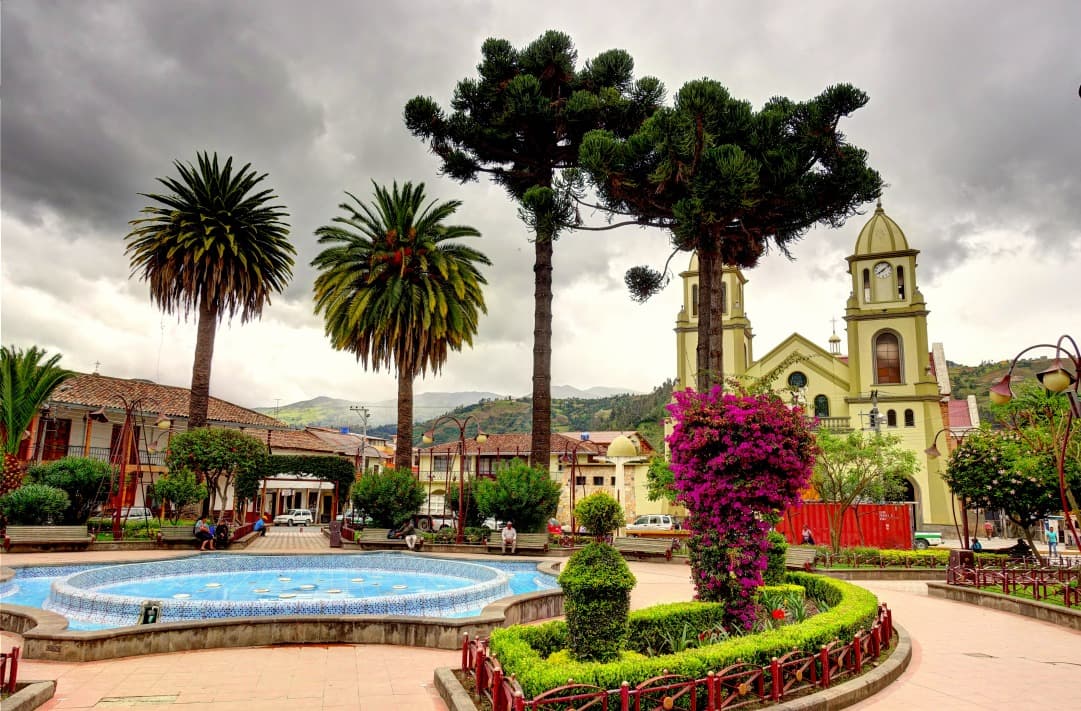
To appreciate the town's authentic architectural heritage, the town center is essential. This district was officially declared a cultural and historical heritage site on December 31, 2002. It remains an unmissable destination during a visit to Gualaceo. With its traditional, preservationist character, the area reveals itself through narrow streets with wide sidewalks lined by centuries-old buildings. These are colonial-style homes topped with clay tile roofs. The town boasts nearly 208 historic structures, with the former Manuel Moreno Vasquez hospital and El Calvario district among the most striking. Some buildings are celebrated for their historical significance, including the corner house on Gran Colombia and 3 de Noviembre streets, which was Simón Bolívar's residence during his stay in Équateur before his journey to Peru for the Battle of Junín.
The local Sunday market on the main plaza represents the perfect moment to encounter indigenous communities. This meeting is enriched by discovering local agricultural and artisanal products\—herbal tisanes, fruits, vegetables, and various household items. As a morning market, it overflows with fresh produce. The region is renowned for its fruit cultivation, including apples, peaches, capuli, and greengages. The market primarily serves local dietary needs, where roasted pork, the regional specialty, takes pride of place.
For art and craft enthusiasts, a visit to Gualaceo promises substantial discoveries. Local artisanal products rank among the finest in the region. Traditional techniques and artisan skill shine through in the quality and originality of their creations.
Gualaceo is traversed by two rivers, the Santa Barbara and San Francisco rivers, which inspired the town's name, literally meaning "the place where the river sleeps." For tourists, Gualaceo's rivers offer genuine respite. Visitors can enjoy a charming park stretching along their banks. During Carnival in February, the park becomes exceptionally lively, thanks to the abundant fountains and water displays.
Gualaceo's appeal is further enhanced by its orchid farms.
From central Cuenca, approximately 30 minutes' drive from Gualaceo, travelers can catch an urban bus from the city's bus terminal.
Want to discover this destination?
Our local advisors design your tailor-made trip.