El Nariz del Diablo
El Nariz del Diablo
A zigzagging railway section carved into the Andes departing from Alausi: history of the Quito–Guayaquil line, train route and practical tips.
El Nariz del Diablo, or "Devil's Nose," refers to a spectacular section of the historic railway linking Quito to Guayaquil, in the Ecuadorian Andes. The name applies both to the stretch of track carved into the mountain and to the tourist train that once departed from Alausi, a small town in the central Sierra.
Why visit El Nariz del Diablo
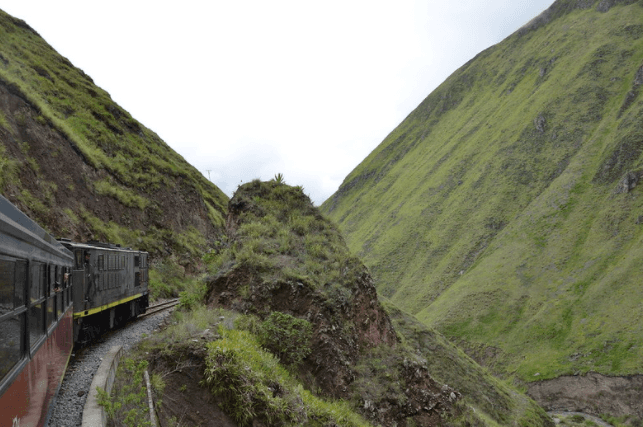
The site offers two main attractions. First is the railway engineering feat: to overcome a vertical elevation gain of more than 1,000 meters on an almost sheer mountainside, engineers designed a system of zigzags (switchbacks) where the train moves forward, stops, then reverses onto a higher track, continuing until it reaches the summit. This engineering solution is rare at this scale in South America. Second is the landscape: the line winds through the Andes cordillera, alternating between ravines, agricultural terraces, and Quichua villages.
The train, nicknamed the "Andes Train," was long among the country's most iconic tourist journeys.
History of the line
The idea of connecting the Andean capital, Quito, to the Pacific port of Guayaquil dates back to the 19th century. Construction spanned the 19th and 20th centuries and mobilized Ecuadorian workers alongside foreign labor forces. The route had to cross the Andean barrier over extremely steep terrain, necessitating the railway zigzag solution on the ridge known as Nariz del Diablo.
The nickname likely derives from a rocky outcrop whose silhouette reminded builders of a prominent nose. The construction was marked by accidents and significant loss of life, which contributed to the stretch's "devilish" reputation.
During the 20th century, regular railway use declined, supplanted by road transport. The line was progressively reduced to a few tourist sections, renovated in the 2000s and 2010s by Ferrocarriles del Ecuador. The Nariz del Diablo tourist service has experienced several interruptions, notably from 2020 onward. It is therefore essential to verify the operational status when planning your visit.
What to see and do
When operating, the train departs from Alausi station and descends toward Sibambe station, located at the foot of the rocky ridge. The route, much shorter than the original line, covers approximately 12 km one way. Highlights of the journey include:
- leaving Alausi and viewing the town's rooftops from the initial turns;
- the zigzag descent on the Devil's Nose mountainside, with the characteristic forward-and-reverse switchback maneuvers;
- the stop at Sibambe, where a small Quichua cultural demonstration is typically performed;
- the return to Alausi via the same route.
An audio guide in Spanish accompanies the journey on board. Riding on the train roof, once emblematic of the experience, is no longer permitted following the line's renovation and an accident that occurred in 2007.
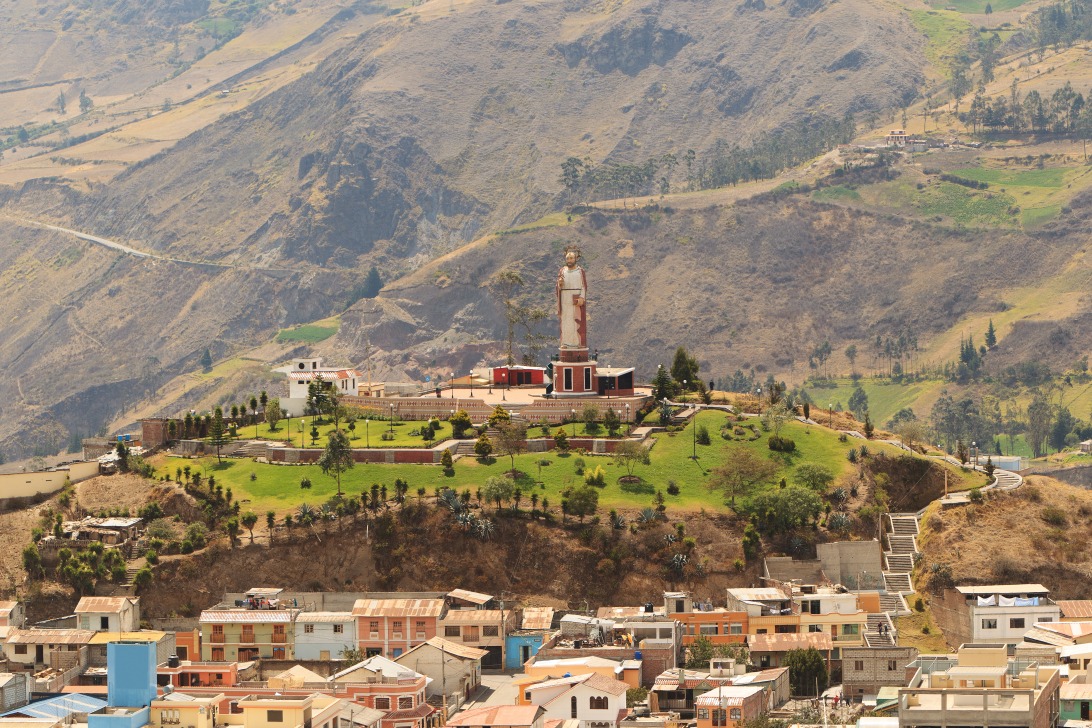
In Alausi itself, take time to climb to the San Pedro viewpoint and stroll through the central streets, which retain a marked railway character.
Practical information
- Departure point: Alausi station, in the town center.
- Duration: allow approximately 2.5 hours round trip, including the Sibambe stop.
- Ticket classes: when the service operates, several categories are available at moderate to mid-range prices depending on comfort level.
- Booking: recommended in advance, as capacity is limited.
- What to bring: warm clothing (altitude exceeds 2,300 m), water, sun protection.
When to visit
The Alausi region experiences two seasons. The dry season, from June to September, offers better visibility of the peaks and reduces landslide risks on the track. The rainy season, from January to April, brings greener vegetation to the hillsides but comes with frequent morning fog. Favor morning departures, which are typically clearer.
How to reach Alausi
Alausi sits on the Panamericana, in Chimborazo province. From Quito, allow approximately 5 to 6 hours of driving southward; from Cuenca, around 4 hours northward. Long-distance buses serve the town daily. On an organized tour, a stop here integrates naturally on the Quito–Riobamba–Cuenca route.
What to see in the region
The central Sierra concentrates several complementary sites:
- Fuya Fuya, a summit accessible for high-altitude trekking in the northern part of the country;
- The Río Pastaza, which marks the transition to the Amazon;
- the city of Riobamba and Chimborazo volcano, Ecuador's highest peak.
Frequently asked questions
Frequently asked questions
The tourist service has been suspended several times since 2020. Verify the operational status with Ferrocarriles del Ecuador or your travel agency before planning a visit to Alausi.
No. This practice was permanently banned following an accident in 2007 and the line's renovation. Passengers now travel inside the train cars.
The track has been fully renovated for tourist use. The zigzag maneuvers are visually impressive but are performed at very low speeds.
Several viewpoints around Alausi allow you to observe the zigzag layout from outside. Walking excursions and horseback riding around the rocky ridge are also available locally.
Including El Nariz del Diablo in your trip
To incorporate Alausi and the El Nariz del Diablo railway section into a coherent itinerary through the Sierra and beyond, consult our tailor-made trips in Équateur.
Interested in this visit?
We can include it in your personalised itinerary.