Wall of Tears (El Muro de las Lágrimas)
Wall of Tears (El Muro de las Lágrimas)
Built by hand by prisoners between 1945 and 1959, the Wall of Tears is the most visible remnant of Isabela Island's penitentiary period, just a few kilometers from Puerto Villamil.
A few kilometers from Puerto Villamil on Isabela Island stands a raw stone wall, constructed by hand by political prisoners and common criminals between 1945 and 1959. The Wall of Tears is one of the few visible testaments to the Galápagos penitentiary period—a monument to human suffering at the heart of an archipelago now synonymous with pristine nature.
Practical Information at a Glance
- Access: About 6 km from Puerto Villamil, reachable on foot, by bicycle, or taxi.
- Admission: Free; outdoor site.
- Recommended duration: 30 to 60 minutes on-site, often combined with other spots along the route.
- What to wear: Closed-toe shoes recommended for the trail.
What You'll See
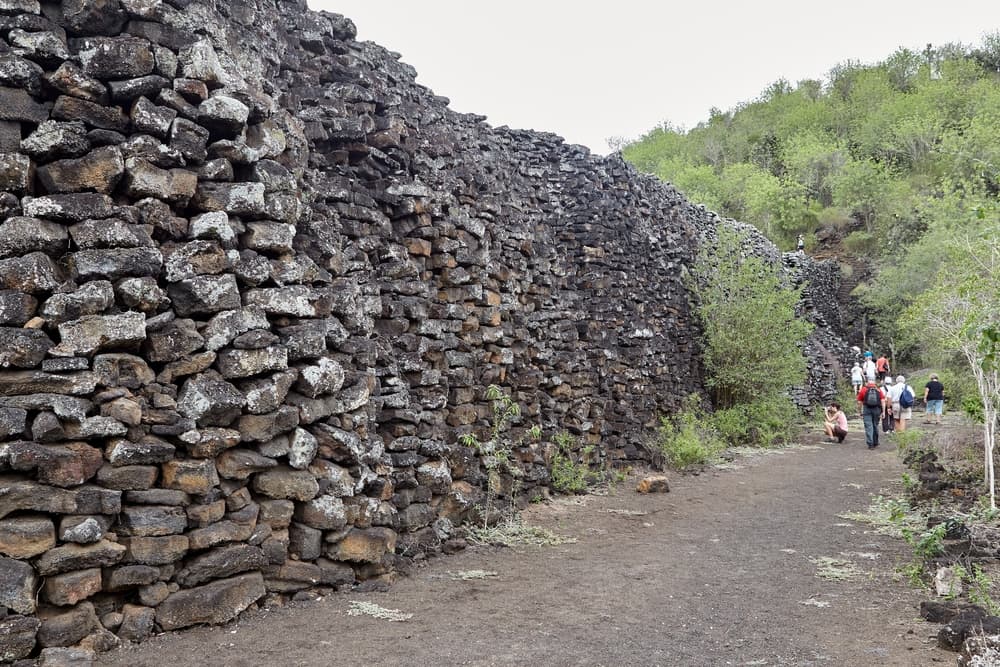
The wall rises several meters high and extends for a considerable length. It is composed entirely of volcanic lava blocks stacked without mortar, extracted and carried by hand by prisoners. Tropical vegetation has partially reclaimed the area around the structure, creating a striking contrast between the dark stone and the surrounding greenery.
An interpretive sign on-site traces the penitentiary colony's history. The trail leading to the wall passes through wetland areas where pink flamingos and giant tortoises are frequently observed.
History and Context
Isabela's penitentiary colony was established in 1945 by the Ecuadorian government. Prisoners—political opponents and common criminals—were sent to this remote island to construct, among other works, this wall with no real functional purpose. Forced labor, extreme conditions, and brutal treatment by guards claimed many lives. The colony closed in 1959, the same year the Galápagos National Park was created. The wall remained, a silent witness to this dark chapter.
Highlights of Your Visit
The Wall Itself
The scale of the construction strikes you immediately. Each lava block was hewn and laid by hand. Observing the regularity of the work helps you grasp the magnitude of labor imposed on the prisoners.
The Trail and Wildlife
The path from Puerto Villamil crosses coastal lagoons. Pink flamingos, herons, free-roaming giant tortoises, and land iguanas are regularly visible without special effort. The round-trip hike is a nature excursion in its own right.
The Viewpoint
A lookout platform near the wall offers views over Isabela's interior vegetation and, on clear days, the island's volcanic ridges.
Photography Tips
Morning light is softer and avoids the harsh shadows cast by tropical midday sun. Frame the wall with vegetation in the background to convey the contrast between human construction and surrounding nature. On the trail, maintain the required distance from wildlife—giant tortoises are photogenic but protected.
Location and Access
The Wall of Tears lies west of Puerto Villamil, Isabela's only inhabited village. The path is marked and accessible on foot or by bicycle—bikes are available for rent in the village. Local taxis also serve the site. No regular public transport operates on this part of the island.
Puerto Villamil is accessible from Santa Cruz by domestic flight or fast inter-island boat.
Nearby Attractions
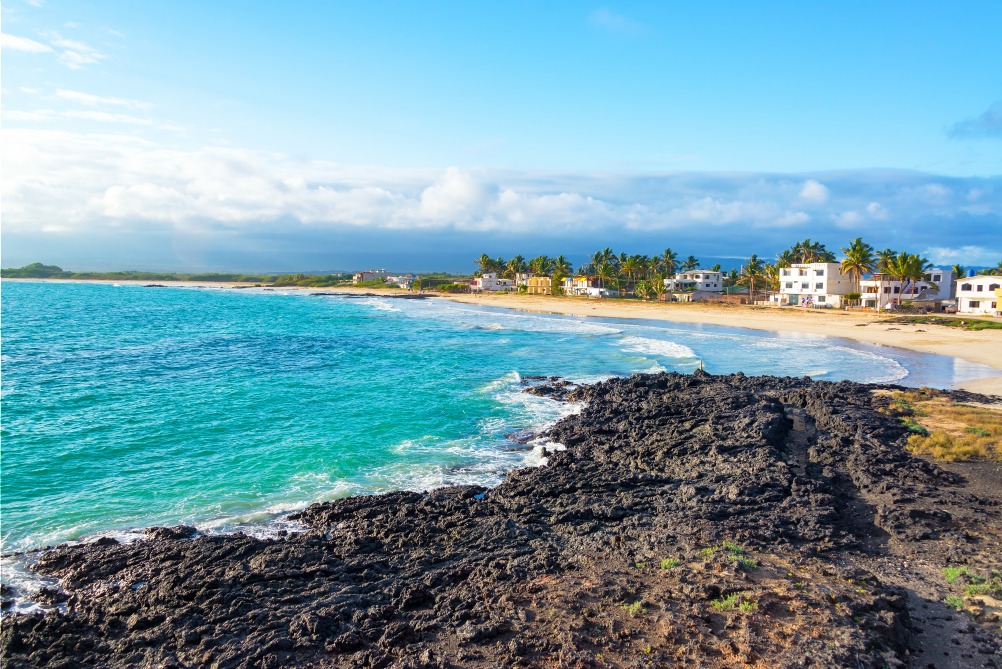
- Puerto Villamil Beach — long white sand beach bordering the village, starting point for many excursions.
- Flamingo Lagoon — coastal wetland on the way to the wall, natural habitat of Galápagos pink flamingos.
- Sierra Negra Volcano — one of the archipelago's most accessible active volcanoes, with a hike along the caldera rim.
- Tintoreras Islet — boat excursion from Puerto Villamil to observe white-tipped sharks, marine iguanas, and penguins.
Interested in this visit?
We can include it in your personalised itinerary.