Sangay
Sangay
A UNESCO-listed active volcano, Sangay rises to 5,230 m at the heart of a 5,177 km² national park. Mountaineering, trekking, and Andean fauna await.
Sangay volcano, also known as Macas, is located in Chimborazo Province, approximately 45 km southwest of Riobamba and at the eastern edge of the Andean cordillera. This active stratovolcano sits at the southern end of the northern Andean volcanic zone. Nature enthusiasts are captivated by its permanent volcanic activity—but that's far from all. The rich biodiversity that flourishes here and across its surroundings is reason enough to make the journey.
History
Mount Sangay was first summited on August 4, 1929, by Robert T. Moore, Waddell Austin, Terris Moore, and Lewis Thorne (United States).
Highly active, Sangay volcano has recorded several violent eruptions. These strombolian activities triggered prolonged ash falls, lava flows, pyroclastic surges, and lahars (volcanic mudslides). The most significant explosion occurred in 1628, sending an ash cloud that reportedly reached Riobamba, a city more than 50 km northwest of the volcano.
The volcano erupted again in 1728 and remained relatively calm until 1916. In 2005, three minor gas and volcanic ash eruptions were recorded. Though modest in scale, these eruptions underscored Sangay's continued strombolian volcanic activity.
Included within the Sangay National Park alongside Tungurahua volcano, Sangay was designated a UNESCO World Heritage Site in 1983.
Today
Sangay volcano rises above the Amazon rainforest to more than 5,500 m elevation. It ranks among the world's most active volcanoes. However, it features a gentle slope of 35°, with a slight incline running northwest to southwest.
The volcano's current form is defined by a massive volcanic cone with three deep craters. The central crater measures approximately 100 m in diameter with a depth of 50 m. The second crater spans 50 m in diameter, while the third dominates the western portion of the main crater at 100 m across.
Still active, Sangay is one of Ecuador's most active volcanoes. Its volcanic activity is continuous, manifesting through persistent fumaroles, eruptions, and lava flows. At night, it releases pyrotechnic displays visible from great distances, even from El Puyo.
Climbing Sangay Volcano
Climbing Mount Sangay is extremely dangerous due to the permanent risk of eruption. Attempting it presents a genuine challenge even for seasoned professionals. That said, with proper equipment, excellent physical fitness, and solid preparation, ascent is possible—even for experienced amateurs. To make the most of the scenery and minimize risks, climbing is best undertaken during the drier months, between November and February.
Trekking Sangay National Park
Thanks to its subtropical pluvial climate, the Sangay region encompasses three forest types: high-altitude tropical forests, subtropical forests, and tropical lowland forests. Situated in this zone, Sangay National Park spans roughly 5,177 km² and shelters pristine, intact biodiversity shielded from human interaction.
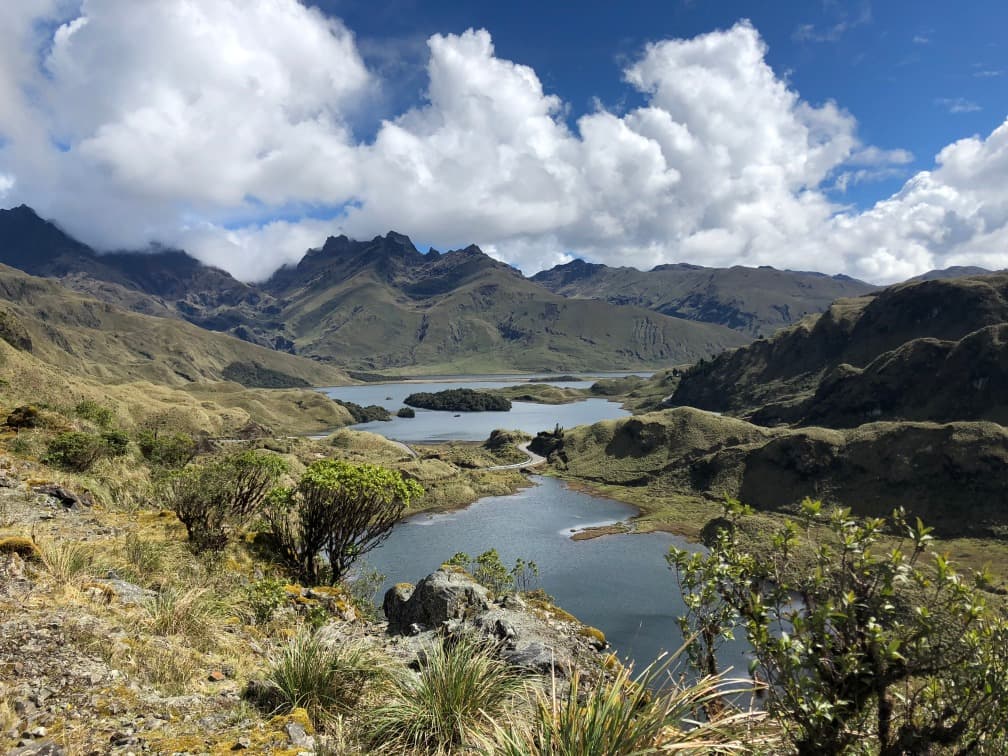
The park boasts magnificent natural landscapes formed by lagoons, rivers, and volcanic peaks. These ecological gems make it a premier trekking destination. Exploring the park promises a unique experience rich with discoveries of the region's ecosystems. More than 3,000 plant species provide food and habitat for diverse wildlife. Certain medicinal plants are used by local peoples for healing. In the higher elevations, you may encounter large mammals such as mountain tapirs, cougars, guinea pigs, and Andean foxes. For spectacled bears, jaguars, margays, white-tailed deer, collared brocket deer, and otters, venture to lower zones for a chance at observation.
The most practical way to reach Mount Sangay is to travel first to the village of Guagalla.
For safety reasons, you'll be accompanied by an indigenous guide upon arrival in Guagalla. Since Sangay volcano lies within the national park bearing its name, park entry is fee-based: $10 USD for foreign visitors and $2 USD for nationals.
Want to discover this destination?
Our local advisors design your tailor-made trip.