Bahía de Caráquez
Bahía de Caráquez
From post-earthquake ecocity to the mangroves of Isla Corazon and the waves of Canoa, Bahía de Caráquez captures the essence of Ecuador's Pacific coast.
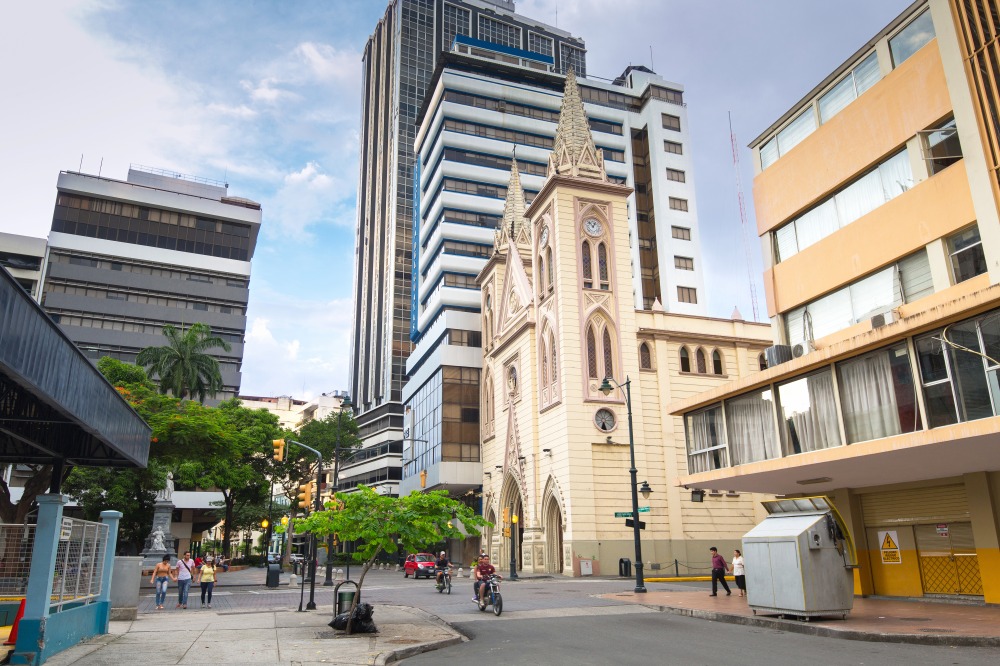
Located 545 km from Quito, Bahía de Caráquez, the capital of Sucre province, is a coveted beach resort in Ecuador. Peaceful, pristine, and strikingly modern, it attracts hundreds of visitors each year. Here's a detailed review of Bahía de Caráquez's highlights—an appealing town featuring white buildings, endless sandy beaches, and broad illuminated avenues.
The History of Bahía de Caráquez
Some 210 km from Guayaquil, the coastal city of San Antonio de Caráquez (its official name) was founded in March 1628 by Don José de Larrazabal. Bahía de Caráquez, or simply Bahía, was formerly called Bahía de los Caras during the Spanish conquest.
The city was built under the reign of Philip IV of Spain, by order of the president of the Royal Audience of Quito, Dr. Antonio de Morga. From the late 16th century to the mid-17th century, during the Spanish conquest period, it served as a major trading hub, bridging the Panama-Quito axis. Colonization strengthened commercial ties between this Pacific port in South America and those in Central America. Unfortunately, in 1629, the kings of Peru decided to favor the port of Santiago de Guayaquil over Bahía de Caráquez.
In the early 20th century, large numbers of Italian and Lebanese families settled in the coastal city. Its current population, estimated at around 30,000 inhabitants, consists primarily of mestizos and immigrants of Spanish origin. Bahía de Caráquez has been vulnerable to recurring earthquakes, notably in 1997, 1998, and most recently in 2016. Yet each time, the city underwent restoration. Following the August 1998 earthquake, the city was rebuilt on the principle of an ecocity, incorporating sustainable development elements into its urban planning.
What Makes Bahía de Caráquez Special
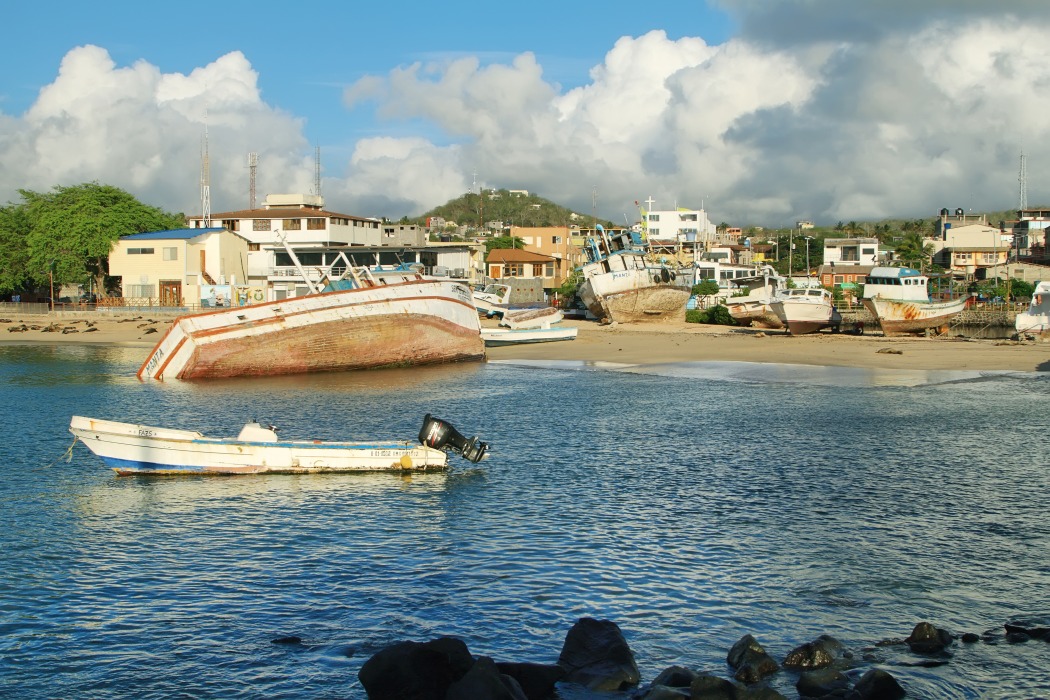
Bahía de Caráquez is a small Ecuadorian coastal town, located along the southern shore of the estuary formed by the Chone River and the Pacific Ocean. Sunshine, sandy shoreline, fishing villages nestled beneath palm trees: this former Spanish trading post is a dreamlike destination for a pleasant seaside getaway.
Beach and Relaxation
Just 5 minutes' drive from Bahía de Caráquez lies Punta Bellaca. Magnificent, this beach is worth a visit for its peaceful, fine-sand shores.
On the northern side of the Caráquez peninsula, Paseo de Roberto Beach enthusiastically welcomes water sports enthusiasts. It's the ideal spot for kayaking, jet skiing, wakeboarding, or banana boating. This beach also invites leisurely moments—swimming and sunbathing are equally appealing. Around 4 p.m. (local time), a yoga session is held near the guardhouse by several expatriates.
Along Bahía de Caráquez's waterfront, overlooking the bay and Pacific Ocean, small hotels and restaurants have been established. As a beach resort, Caráquez also offers paragliding and surfing near the cliffs of Canoa, or an unforgettable encounter with the century-old Galapagos tortoises at Galapagos Miguelito.
The Museum of Bahía de Caráquez
Culture enthusiasts will find much to enjoy at the Bahía de Caráquez Museum. Its collection of archaeological artifacts is exceptionally rich, with some pieces dating back to pre-Columbian times. Today, over 600 works await you within this museum, which officially opened to the public in 2004. Administered by Ecuador's Central Bank, the building is divided into 5 zones:
- 1st floor and mezzanine: Archaeological Exhibition
- 2nd floor: Visual Arts Exhibition
- 3rd floor: Archaeological Research Center (dedicated to archaeologists)
- 4th floor: Auditorium (seating capacity of 200)
- 5th floor: Documentation Center
On the 1st floor, extending to the mezzanine, you'll find a fine collection of archaeological objects, numbering over 469. The collection is titled "Origins, Caras, Jamas y Coaques." This exhibition highlights various artifacts from cultures that occupied Bahía de Caráquez from the pre-ceramic era through the Spanish conquistadors.
The 2nd floor features a visual arts exhibition focused on the evolution of pre-Columbian cultures in navigation, agriculture, pottery, and trade. The Archaeological Research Center on the 3rd floor houses a repository of more than 3,100 pieces. What truly sets this museum apart, however, is the replica of a wooden balsa sailboat.
Admission to the Bahía de Caráquez Museum is free. It's open daily from 9 a.m. to 4 p.m. An English-speaking guide is available for visitors.
Another flagship attraction is the Mirador de La Cruz. This cross-shaped tower offers panoramic views of the Bahía peninsula, the beaches of San Vicente, Cerro Seco, and Canoa, as well as the mangrove islands clustered within the estuary. The best time to visit Mirador de La Cruz is at sunrise or early evening. The views from the tower's summit are simply exceptional.
Eco-Tourism and Natural Attractions
Bahía de Caráquez is also an excellent destination if you're seeking quality natural sites. Head to the Cerro Seco Biological Reserve, nestled in the mountains. Spanning 100 acres, this reserve harbors a dense dry tropical forest. Following the reserve's hiking trails, you'll arrive at vistas overlooking the Pacific Ocean. You'll discover endemic plant species, including Guayacan, Palo Santo, and Ceibo trees, plus varieties of cacti and orchids.
The Las Caras Bridge, the longest bridge in all of Ecuador, is another tourist attraction worth seeing during your stay in Bahía de Caráquez. Suspended 1.2 km above Bahía de Caráquez's bay, this bridge is perfect for walking or cycling. As you cross, don't miss the magnificent views of Corazon Island. Las Caras Bridge also hosts Bahía Active's annual 10 km semi-marathon race.
If you're looking for a great weekend getaway idea in Bahía de Caráquez, visit the Natural Refuge on Corazon Island. Located near Bahía de Caráquez, south of San Vicente, this wildlife refuge undertakes sustainable development initiatives across the country's coastal zones. On your excursions, you'll traverse over 100 hectares of mangroves, 50 of which have been replanted by the indigenous community. 99 bird species have made these mangrove forests their natural habitat, such as the frigatebird colony. This colony represents the largest Tower Island frigatebird colony outside the Galápagos. A visit to the reserve takes 3 to 4 hours.
As part of this responsible tourism approach, several tour operators offer customized circuits between Bahía de Caráquez and Manabí. Their varied daily offerings include humpback whale watching, exploration of Isla Corazon, visits to La Segua wetlands or dry forests. Water sports activities are equally abundant (jet skiing, kayaking, SUP, banana boat rides, towable tubing, water skiing, parasailing, etc.).
Climate in Bahía de Caráquez
Bahía de Caráquez enjoys a steppe or near-desert climate. The dry season is quite windy and partially cloudy. Year-round, the climate is warm and oppressive. Rainfall is generally low, with average annual precipitation of 466 mm.
The average annual temperature typically ranges from 22 to 29 °C. It rarely drops below 21 °C and seldom exceeds 31 °C. March is the warmest month of the year, with an average temperature reaching 26.4 °C. August is the coolest month, averaging 24.0 °C.
From Ecuador
The Bahía de Caráquez beach resort is easily accessible by bus. The journey takes just eight hours from Quito and six hours from Guayaquil. Since November 3, 2010, when the country's longest bridge, the Las Caras Bridge, was inaugurated, you can connect San Vicente and Bahía de Caráquez across a distance of 2 km.
From Europe
The nearest airport to Bahía de Caráquez is San Vicente Airport, which has a paved runway 1,900 m long. Unfortunately, this airport doesn't accommodate regular flights. To reach the resort by air, the most convenient option is to fly to Quito (with connections through Madrid, Lima, Panama City, or Bogotá) and from there take another flight to Manta. From there, a rental car or taxi can take you to Bahía de Caráquez for around €40 (or less if you negotiate well).
Want to discover this destination?
Our local advisors design your tailor-made trip.