Quitoloma
Quitoloma
The largest pucará in the Pambamarca fortress complex, Quitoloma tells the story of Inca conquest in northern Équateur from its Andean heights at 3,800 m.
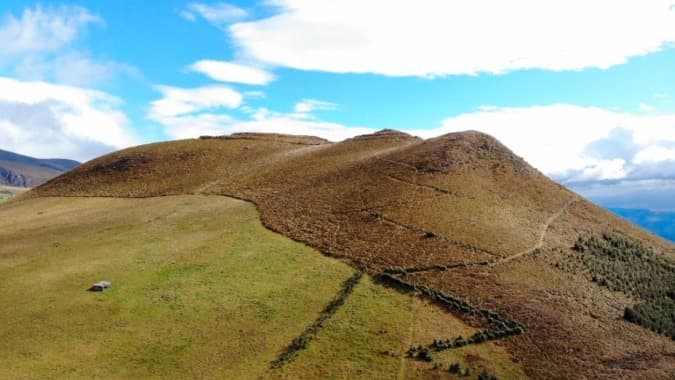
Quitoloma is a pre-Columbian archaeological site perched atop a hilltop rising in the Cayambé canton, Pichincha Province, in the northern Andes of Équateur. It is a pucará (a Quechua term designating a fortification) built by the Incas during their conquest of northern Équateur, specifically during the war against the Caranquis and Cayambes—peoples who mounted a long and fierce resistance to Inca expansion. Stretching some 450 meters along its longest axis, it stands as the largest pucará in the Pambamarca fortress complex, which encompassed 18 fortifications in total.
History
As mentioned above, the Quitoloma pucará was part of the Pambamarca fortress complex. Along with the Punguyacu pucará, it was designed to end attacks by the Quinches. While the Caisa fortress was built to prevent invasion from the Cayambe valley onto the high plateau, Cangahua served to monitor any conquest attempts from the eastern cordillera front. The remaining pucarás ensured defense against enemies from any direction within the Guayllabamba basin and prevented their penetration into the Cayambe valley via the Pisque River.
During excavations, archaeologists found no evidence indicating that the Quitoloma pucará was inhabited before the Incas. It was therefore necessarily constructed by them. Some scholars also believe that certain portions of this fortress were still occupied when Spanish conquistadors arrived.
Discovering Quitoloma Pucará
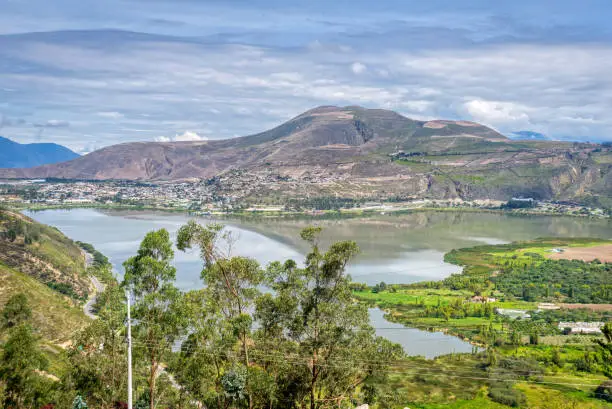
The Quitoloma pucará is located at the southern end of the Pambamarca fortress complex, near the town of Cangahua. It offers panoramic views over the surrounding landscape, with the capital Quito within sight.
The Exterior
The defensive structure is formed by concentric rings of walls encircling the hilltop. These were erected using roughly hewn stones assembled with mortar. Deep ditches were dug outside these walls, likely to reinforce their height. In total, the fortress features seven entrances.
Certain wall and ditch segments remain unfinished, suggesting that construction of the pucará was interrupted before completion. The reason for abandoning the project remains unknown.
The Interior
Inside the pucará, several partitions divide the area into seven distinct spaces. The northern end of the fortress is occupied by three concentric rings of partitions, which shelter a number of structures. Quitoloma's ushnu—a platform the Incas used to preside over the most important ceremonies of the Tahuantinsuyo—is rectangular in form. It measures 16 m long, 12 m wide, and 2.7 m high.
Just south of these concentric rings extends a large space containing 104 structures. Within it stand several kanchas (buildings serving as homes, temples, or palaces) that functioned as residences. A kallanka (a structure used as a storehouse, lodging for officials or travelers, a control post, or even military headquarters) is also present. It extends 14 m long and 7 m wide. Most residences in the large space are modest in size, measuring approximately 3 meters long by 2 meters wide. However, in the immediate vicinity of the kallanka, larger rooms are found, measuring 6 meters by 3. This suggests they were intended for prominent members of the Inca military.
Objects from daily life such as aribalos (pottery), flutes, and weaving tools, along with an abundance of kitchen vessels, were discovered in the large space. However, the majority of artifacts were sling stones and obsidian blades (often found in groups of 7 or more). These were likely used as projectiles during battles. "Structure 14" contained 171 sling stones. Archaeologists believe it served as a weapons repository. The large space also contains a fountain.
Regarding the other spaces at Quitoloma, they are devoid of structures. However, several rocks and rock outcroppings—which likely were considered huacas, or sacred objects—can be observed. These spaces may have also functioned as training grounds or animal enclosures.
Several route options allow you to reach the Quitoloma pucará:
- If departing from Quito, take the Panamericana northward to the outskirts of Cangahua. From there, follow the tertiary road to reach the archaeological site.
- The second route departs from the town of Quinche heading toward the village of Chumillos. From there, also follow a tertiary road, then hike to reach the site.
- The third route begins in Cayambe, taking the road southward to the junction of Cangahua village. Then follow the tertiary road to arrive at the site.
Want to discover this destination?
Our local advisors design your tailor-made trip.