El Quinche
El Quinche
Just 30 km from Quito, El Quinche is home to one of Ecuador's greatest sanctuaries and a Marian pilgrimage that draws 800,000 faithful each November.
El Quinche, situated northeast of Quito's metropolitan district in Pichincha Province, is primarily known for its renowned Marian pilgrimage. This sacred journey takes place at the heart of its sanctuary each November. A sojourn steeped in spirituality through El Quinche, the city of "miracles."
The History of El Quinche
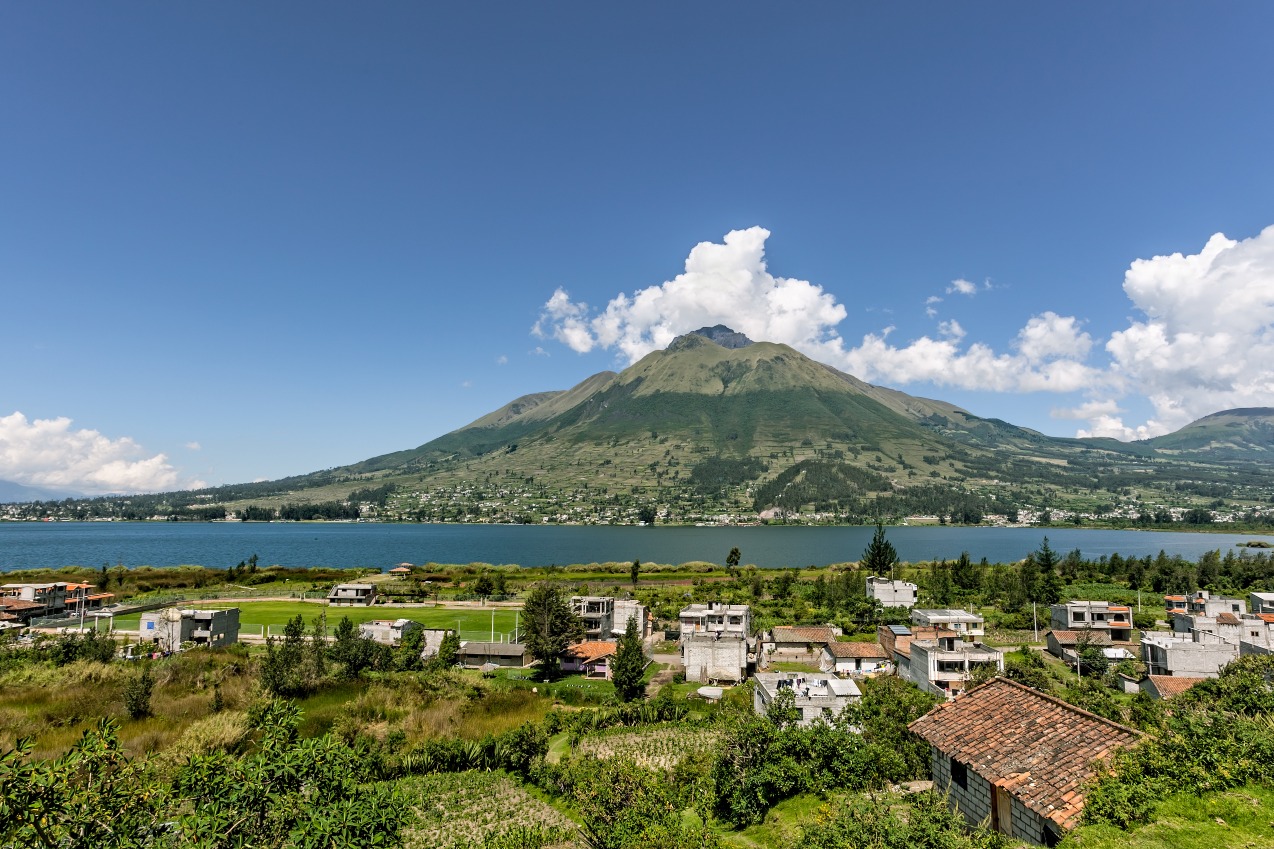
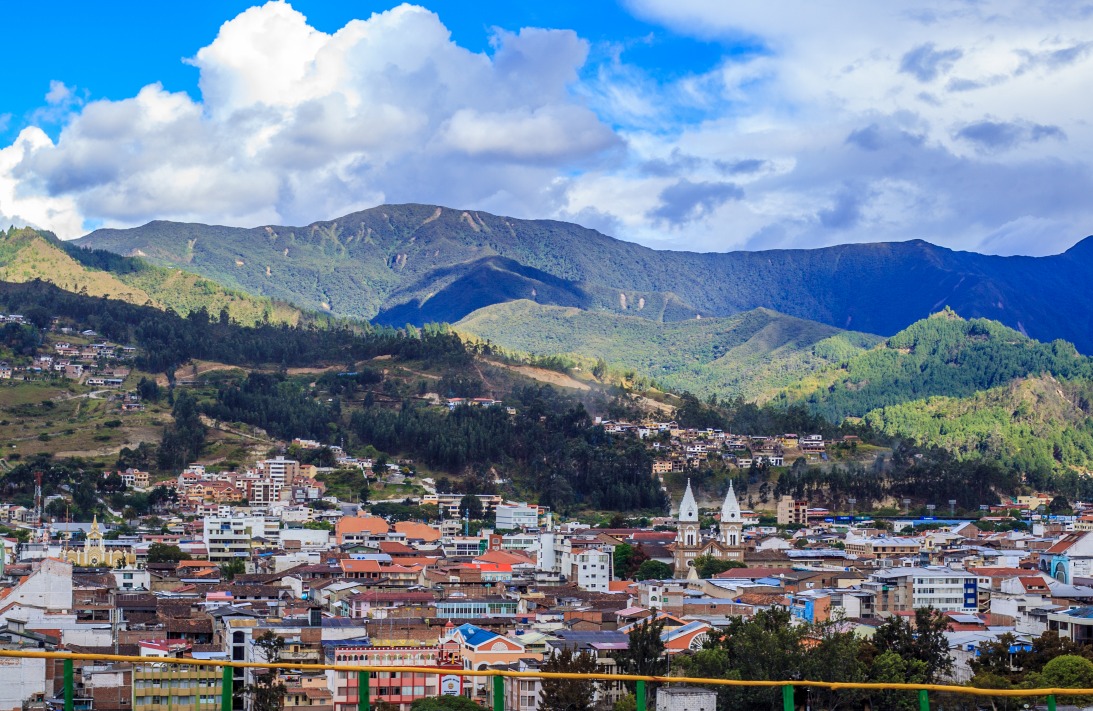
El Quinche nestles in a plain at the foot of the eastern cordillera of the Andes. Long before European arrival, this city was already inhabited by indigenous peoples, who used it as a sanctuary.
After occupying this locale in the late 15th century, the Incas integrated it into their empire. The abundance of Inca pottery discovered and the presence of an Inca temple testify to the city's importance to this civilization during that era.
The Incas also built several forts 10 km northwest of El Quinche, known as the Pambamarca fortress complexes. These strongholds were designed to protect them from attacks by the Cayambe people and other chiefdoms.
Following Spanish conquest around 1530, Catholicism became the dominant religion in the region. The Spanish thus decided to erect a church atop the Inca temple, which became the El Quinche sanctuary. In July 2015, the sanctuary welcomed Pope Francis, who was able to contemplate up close the statue of the miraculous Virgin.
El Quinche Today
The town of El Quinche, situated between Puembo and Guayllabamba and east of Mariscal Sucre International Airport, is administratively a rural parish of Quito canton.
The town is known for the El Quinche national sanctuary, which hosts an annual mass pilgrimage. This journey begins in Calderón during the night and ends at El Quinche on the morning of November 21st. For over 400 years, this pilgrimage has become a cherished tradition.
It is believed that the Virgin of El Quinche has performed countless miracles here, including physical and spiritual healings. This is why the sanctuary is one of Ecuador's most renowned and the most visited by the faithful and pilgrims. Among the hundreds of miracles attributed by devotees to the Virgin of El Quinche, some are depicted in paintings adorning the sanctuary's altar.
A mosaic of the Virgin of El Quinche can also be found gracing the Vatican gardens. It is a mosaic crafted from plants and wildflowers native to all regions of Ecuador.
The El Quinche Sanctuary: A Premier Tourist Attraction
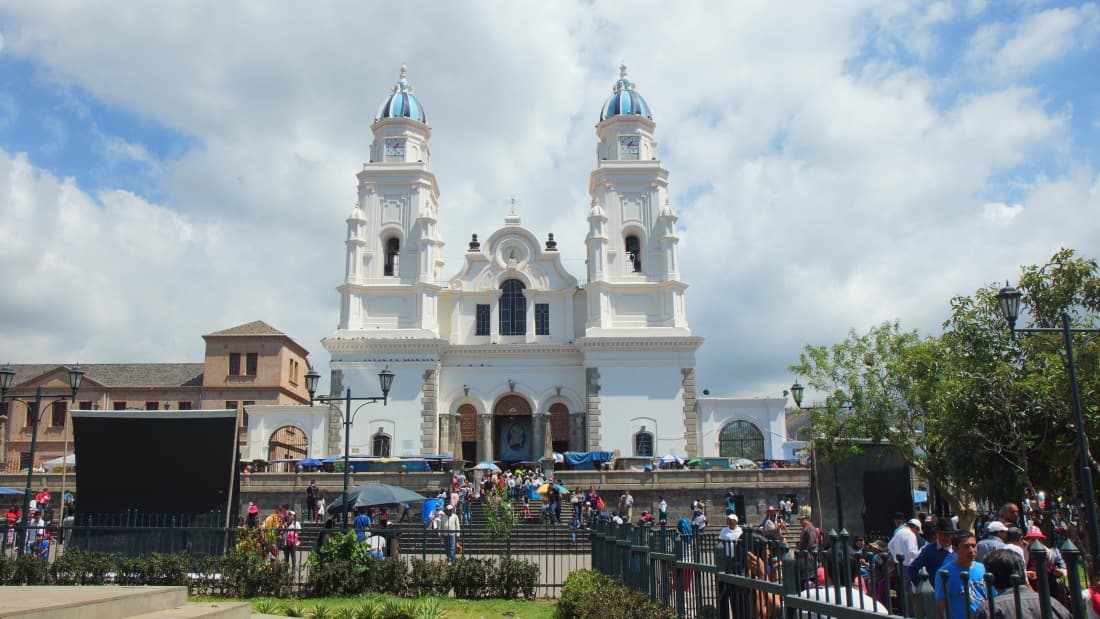
The El Quinche sanctuary is an imposing neoromanesque sanctuary built in the early 20th century with lime and brick. Construction of the current temple began in 1905 and its consecration took place in 1928. The sanctuary can today accommodate up to 4,522 faithful.
In 1985, the El Quinche basilica was declared a "national sanctuary" by the Ecuadorian Episcopal Conference and by Rome. In May 1992, it hosted the first Latin American congress of sanctuary pastoral work.
Adorning the walls of this edifice, embellished with gold leaf, are paintings depicting the various miracles accomplished by the Virgin of El Quinche over approximately four centuries. Most of these paintings were created by Miguel de Santiago. Inside the church, one can also find jewels that have been offered by the faithful.
The Statue of the Virgin of El Quinche: A Symbol of Faith for the Ecuadorian People
Each year, thousands of Ecuadorians undertake pilgrimage to the El Quinche sanctuary, departing from Quito and its surrounding suburbs. These pilgrims walk between 6 and 10 hours, through the night, in order to pay homage to the Virgin of El Quinche.
The tradition began over 400 years ago, when the Virgin of El Quinche was transferred from Oyacachi to El Quinche. She was credited with numerous miracles and favors. Today, these are represented in certain paintings and plaques that the faithful affix to the sanctuary's walls.
The Virgin of El Quinche is one of the most venerated Marian images in Ecuador. She stands at the heart of devotion among the country's Catholic faithful. According to some testimonies, an aura of light forms around the statue during the night. Among the documented miracles are accounts of a child brought back to life, as well as healings, especially after touching the handwoven shawl in which the Virgin was draped.
The statue of the Virgin of El Quinche is a beautiful sculpture carved from cedar wood in baroque style. It was hand-sculpted in 1586 by Don Diego de Robles of the Colonial Art School of Quito. This artist is particularly renowned for his images of the Virgin Mary, who is deeply venerated in Ecuador.
Here, the Virgin of El Quinche wears a dress embroidered with precious stones and adorned with gold and silver threads. She holds a scepter in her right hand and carries the Christ Child on her left arm. Both wear golden crowns.
The Virgin stands atop a silver crescent-shaped base, a symbol often associated with the Virgin of the Apocalypse. This sculpture, standing 62 centimeters tall, is removed from its glass case only twice a year.
El Quinche: A Major Center of Pilgrimage and Celebration
During the second week of November, more than 800,000 believers make pilgrimage to the sanctuary of the Virgin of El Quinche. Often, the faithful come from the city of Quito and its surrounding areas.
The exact date of the pilgrimage varies, but it typically begins on the Friday before November 21st, which is the day of the special Mass at the sanctuary. The pilgrimage generally takes place at night.
The 30 km route begins in the Cumbayá and Tumbaco valley and ends at the parish of El Quinche. This location lies approximately one hour east of the urban zone of Quito's Metropolitan District.
During the tribute to the Virgin of El Quinche, the town exudes an exceptionally festive atmosphere. Visitors enjoy fireworks, food stands at the central market, and concerts!
Climate
El Quinche enjoys a climate that is both warm and temperate. In terms of precipitation, rainfall is lighter in winter than in summer. On average, the area receives 796 mm of rain annually.
The average annual temperature is 15°C. In September, temperatures reach 15.3°C, making it the warmest month of the year. With an average temperature of 14.7°C, June is the coldest month.
There are bus services that connect Pifo and El Quinche on a daily basis.
While some buses depart from the Río Coca stop on the Ecovía network in Quito, others originate from Guayllabamba, passing by Quito's zoo.
Want to discover this destination?
Our local advisors design your tailor-made trip.