The Church of the Company of Quito
The Church of the Company of Quito
Nicknamed La Compañia, this baroque church in Quito's historic center ranks among Ecuador's 7 wonders, celebrated for its gilded interiors and the Quito school of art.
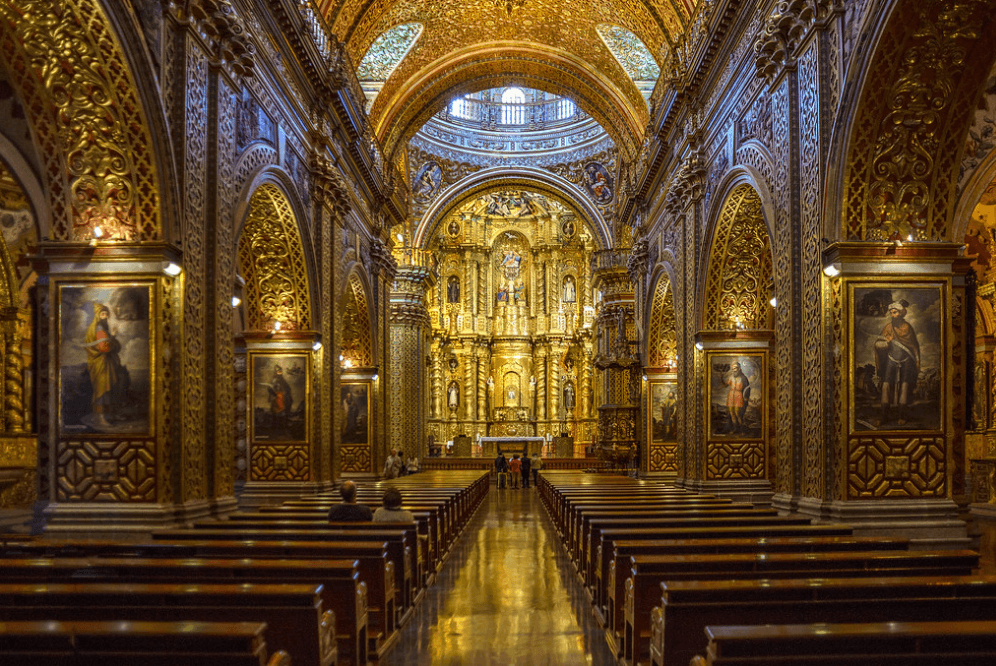
Nicknamed La Compañia, the Church of the Company of Jesus stands in Quito's historic center, just steps from Independence Square. Counted among Ecuador's 7 wonders, it is regarded as one of the finest expressions of South American baroque, with a nave entirely covered in gilded ornaments and carved woodwork.
Why visit La Compañia
- An exceptional façade and interior: baroque architecture adapted to Latin American culture, blending Roman and Moorish influences.
- A monumental building project: 160 years of construction, from 1605 to 1765, completed by artists of the Quito school in the 17th century.
- A site of Jesuit heritage: former headquarters of the order in colonial Équateur, integrated into Saint Gregory University.
- A living sanctuary: the shrine of Mariana de Jésus, patron saint of Équateur, makes it an active pilgrimage site.
History
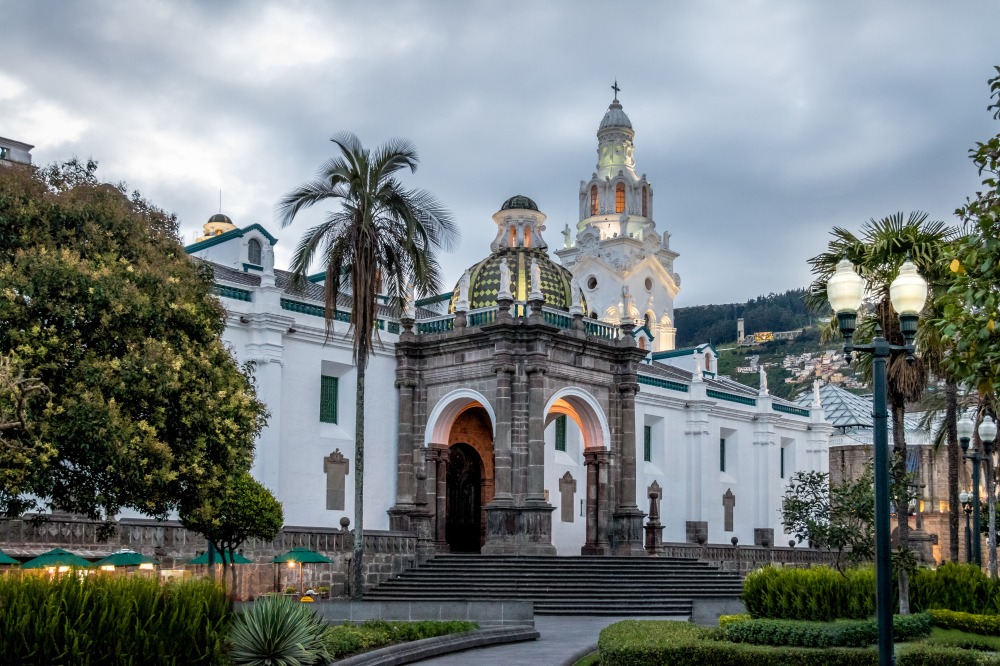
The history of the Jesuits in Quito begins well before the church's construction. The city had been taken by Spanish conquistadors around 1532, and its various quarters distributed among the religious orders established there: Franciscans, Dominicans, and Augustinians. The first Jesuits arrived only on July 19, 1586. The city council initially assigned them the northwest corner of Independence Square, but a conflict with the Augustinians eventually led them to settle on the southern quarter of the square, where La Compañia stands today.
Construction began in 1605 and stretched over nearly 160 years. A major turning point came in 1636, twenty-one years after the foundations were laid, with the arrival of architect and sculptor Marcos Guerra. He surrounded himself with artists from the Quito school for the frescoes and decorations. Construction was completed in 1668, when the church opened for worship, but finishing work on the façade and interior decor continued until 1765.
The building was not spared hardship. Earthquakes in 1859 and 1868 caused the bell tower to collapse, and a fire ravaged the interior of the nave. Restoration work has been undertaken since and continues today to preserve the delicate décor.
What to see inside
The exterior architecture recalls Roman baroque churches, but La Compañia includes several South American specificities, notably Moorish-inspired motifs. The great central nave is entirely covered in gilded ornaments and carved woodwork, created in the 17th century by local artists. This ornamental density is what strikes visitors most upon entry.
The shrine of Mariana de Jésus
At the feet of the main altar rests the shrine of Mariana de Jésus, patron saint of Équateur. According to tradition, she gave her life in 1645, while Quito was experiencing a wave of epidemics and earthquakes. Beatified in 1853 and canonized by Pius XII in 1950, she is the object of fervent devotion and her shrine attracts numerous pilgrims.
Elements to observe
- The façade carved in volcanic stone, finely worked.
- The lateral altarpieces and pulpit, gilded in gold leaf.
- The nave ceiling and its geometric motifs with Mudéjar influence.
- The murals attributed to artists of the Quito school.
Practical information
- Duration of visit: allow 45 minutes to 1 hour to tour the nave and observe the décor.
- Admission: paid entry at a moderate rate; combined tickets with other Jesuit sites are sometimes offered.
- Hours: open daily with a midday break and reduced hours on Sundays. Check updated hours before your visit.
- Photography: generally prohibited inside to preserve the gilding and painted décor.
- Dress code: shoulders and knees covered, as for any active place of worship.
How to get there
The church is located in the heart of Quito's historic center, just steps from Independence Square. From the main points of the center, access is easy on foot. By public transportation:
- Bus line 27: get off at Benalcazar & Sucre stop, a few steps from the entrance.
- Bus line 5: get off at Bolivar y Cuenca stop, a short distance from the church.
The historic center is pedestrian-friendly on several streets, so wear comfortable shoes and account for the altitude (approximately 2,850 m), which can leave visitors breathless in the first days.
Nearby
The visit fits naturally into a day exploring Quito's historic center, a UNESCO World Heritage site. To extend your journey through Équateur, several sites lend themselves to a complementary itinerary:
- Cuicocha Lake, in the northern Andes, for a nature break.
- El Nariz del Diablo, the famous railway section through the cordillera.
- The Pastaza River, at the edge of Équateur's Amazon region.
Frequently asked questions
Frequently asked questions
Planning your trip
The Church of the Company fits perfectly into a cultural stay in Quito and a broader journey through Équateur, between the Andes, Amazon, and Pacific coast. To build a custom itinerary, consult our Équateur travel suggestions.
Interested in this visit?
We can include it in your personalised itinerary.