Yasuni National Park in the Amazon
Yasuni National Park in the Amazon
In the heart of Ecuador's Amazon, Yasuni National Park concentrates the world's greatest biodiversity. Lodges, wildlife, access, tips: the complete guide.
A globally recognized biodiversity hotspot, Yasuni National Park is an essential stop on an adventurous journey through Ecuador. Nestled in the Amazon jungle, it offers an unforgettable experience for hiking enthusiasts, kayaking adventures, camping, and will delight tourists seeking an authentic wildlife safari. Discover this renowned park coveted by all, yet increasingly threatened by petroleum extraction.
The history of Yasuni Park
Yasuni Park is home to the world's most diverse natural reserve. The park's current territory was one of the natural habitats of the Pleistocene, during which drastic climatic changes occurred (glaciations, alternating humid and dry climates…). This favored the development of certain Amazon jungles (such as "vegetation islands"). These served as refuge for numerous animal and plant species.
This park was established to preserve the way of life of the Huaorani people and the exceptional biodiversity of the reserve. The Waorani or Huaorani, depending on pronunciation, are an indigenous people in Ecuador who rely on hunting, gathering, and fishing products as their means of subsistence.
In the 1960s-70s, several peoples protested the disregard for nature and people. In 1968, facing environmental damage caused by petroleum companies, an ethnic reserve was founded, allowing the Huaorani to continue defending their freedom and culture.
Yasuni National Park was officially established on July 26, 1979. As one of Ecuador's 44 protected areas, the park was designated a UNESCO Biosphere Reserve in 1989 for the diversity of its ecosystems. Composed primarily of red clay soils, this reserve is extremely rich in petroleum deposits, making it a zone threatened by petroleum extraction.
In 1990, the Ecuadorian government expanded the Waorani ethnic reserve eastward, bringing it to 6,100 km². Additionally, a large portion of Yasuni National Park was granted to the Waorani reserve, including the Yasun River valley. This zone facilitates easier access to the majority of petroleum deposits. To compensate for the loss of park territory, it was given additional land to the southeast. After further expansion in 1992, the park reached an area of 10,227 km².
It was not until 2006 that part of the park was declared a "protected zone." In 2007, President Rafael Correa launched the Yasuni-ITT project. For Ecuador, this project represented hope for a different future without the constant pressure of petroleum companies.
Yasuni Park today
Part of the dense Amazon forest, Yasuni National Park is located in the provinces of Orellana and Pastaza, in northeastern Ecuador. Its topographic composition is relatively gentle. Its slightly rolling terrain is dotted with large marshy plains, forested areas, and alluvial plains.
The region where this reserve is located is crossed by the Pastaza and Napo rivers. These constitute the two principal river systems of northeastern Ecuador. Today, Huaorani communities occupy this zone. Consequently, Yasuni Park is an unmissable destination for those seeking community-based ecotourism in Ecuador.
Yasuni Park and its exceptional biodiversity
In the heart of Pastaza Province, in eastern Ecuador, Yasuni National Park is an open-air zoology book that will reveal the treasures of the Amazon jungle.
This park shelters within 16,000 km² of area, biodiversity among the richest in the world according to botanists and ethnobotanists. Moreover, it constitutes the largest protected area in Ecuador.
The complete flora of the park has not yet been precisely inventoried. However, estimates indicate that more than 4,000 species of trees and flowering plants are found there. The vegetation is exploited by indigenous peoples to compensate for agricultural production deficits during dry periods.
The plant kingdom is of exceptional and almost unmatched richness. It consists of humid primary forests and several useful plants for local populations (medicinal, edible, ornamental, or sources of plant fibers such as resin and wood…). The park also harbors bryophytes, fungi, algae, lichens, and photosynthetic bacteria.
For the populations living in the zone, the park constitutes a reservoir of genetic resources. The wildlife inventory for the park, though incomplete, reveals the presence of approximately 200 mammal species, 111 amphibian species, 610 birds, 268 fish, and 107 reptiles. The park also contains around 51 confirmed endemic species, some of which are extremely rare or even threatened.
Across thousands of square kilometers within the park, various rare species live in freedom. During your visit, you may spot alligators, pink river dolphins, red howler monkeys, turtles, snakes, mongooses, parrots. Bats, jaguars, armadillos, giant otters, or the tiny pygmy marmoset will compete for your photographs.
Regarding the soils of the reserve, most consist of red clay soils with weak humic content. Marsh zones and the eastern part of the park are occupied by weakly moistened gleys.
All told, Yasuni Park alone contains more tree species than the United States and Canada combined. It holds more bird and mammal species than anywhere else in the world, as well as more amphibians than all of Europe… This is due to the high ecological stability of the zone over centuries.
Unfortunately, this natural paradise owes its reputation not solely to its biodiversity, particularly given its subsoil rich in petroleum. This black gold represents a large part of Ecuador's wealth today. The Ecuadorian government decided in 2013 to authorize petroleum exploitation in the Yasuni reserve, thus endangering this ecological stability.
Yasuni Park, ideal for expeditions
The Yasuni National Park constitutes a natural sanctuary of Ecuador's biodiversity. Excursions through this protected zone will surely bring you unforgettable moments in the heart of the equatorial jungle. Lush vegetation, lakes amid primary forest, lagoons, several rivers, charming villages, endemic plant and animal species… are discovered throughout the hikes. Furthermore, the park plays a major role in preserving genetic resources, while ensuring a harmonious balance between humans and nature.
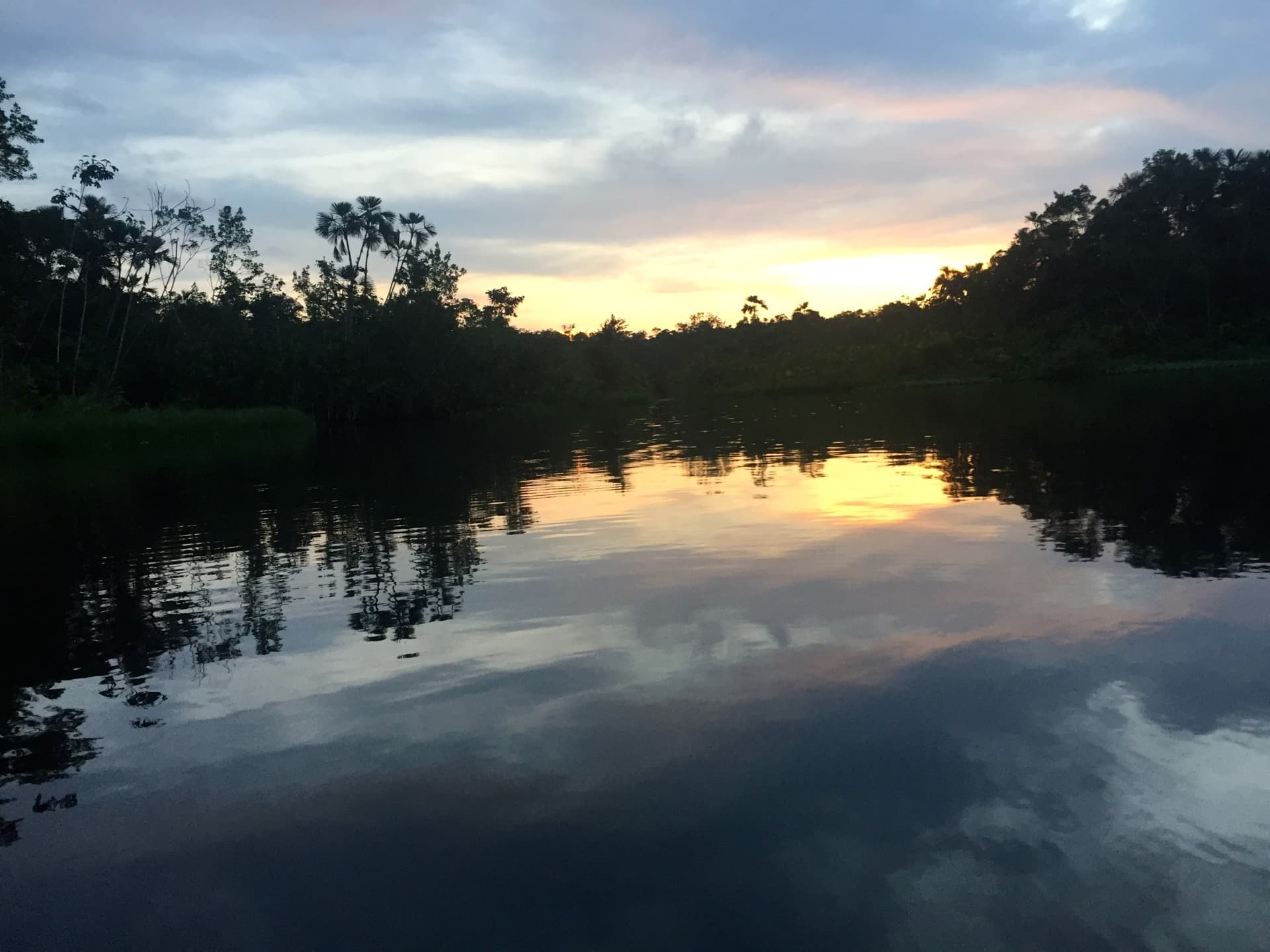
Expeditions typically last between 2 and 3 days. They are filled with numerous activities and entertainment options. To gain a complete overview of the fauna and flora of this reserve, a canoe-kayaking expedition along the black-water channels is absolutely essential. Hiking through the jungle, nighttime expeditions, bird watching, and visits to the Napo cultural center will also be on the agenda.
Certain lodges will also offer opportunities to see different bird species such as toucans, macaws, and other colorful birds. The circuit can be combined with trips to the lagoons of Anango, Jatuncocha, Panacocha, and Garzacocha, and why not continue to the Tiputini River. You can also incorporate into your nature circuit a visit to the Catholic University PUCE research station.
Climate within the Yasuni natural reserve
Rising between 200 and 350 meters in altitude, the Yasuni biosphere reserve enjoys an extremely humid climate. Annually, extreme temperatures oscillate between 15°C and 38°C, with total precipitation of 2,425 mm to 3,145 mm. Humidity in the reserve is very high, averaging 88%.
Consequently, it rains throughout the year, typically with showers in late afternoon. It is extremely rare that the park goes more than 10 consecutive days without rain. This is why certain areas of the forest remain permanently flooded. However, the reserve experiences a less humid period between August and February. This is the best time to schedule expeditions.
From Coca or Puerto Misahualli, it is very easy to reach Yasuni National Park by navigating in a pirogue on the Napo River.
To travel from Quito, Ecuador's capital, to Yasuni Park without a car, you must take a bus, then a ferry. The journey takes 15 hours 46 minutes for a distance of 317 km.
Want to discover this destination?
Our local advisors design your tailor-made trip.