Quilotoa
Quilotoa
Andean caldera at 3,914 m, emerald lake born from an eruption in 1280, starting point of a legendary hiking loop: everything you need to know about Quilotoa.
Located 80 km southwest of Quito, in the canton of Pujili, Cotopaxi province, Quilotoa is the westernmost volcano of the Ecuadorian Andes. It is an ancient volcano crowned by a water-filled caldera. The panorama here is absolutely breathtaking, as the site exudes authentic, untamed charm. For lovers of off-the-beaten-path adventures and vast open spaces, this place promises a truly fantastic experience.
History
Mount Quilotoa was formed approximately 40,000 years ago. According to local legend, it owes its name to a princess from the region. Its last eruption dates back to 1280. Extremely violent, this catastrophic VEI-6 eruption caused the caldera to collapse and subsequently led to the formation of the Quilotoa Lake.
Today, the Quilotoa volcano lies dormant. The only signs of its volcanic activity are the thermal springs found on its eastern flank and the fumaroles at the bottom of the lake.
Today
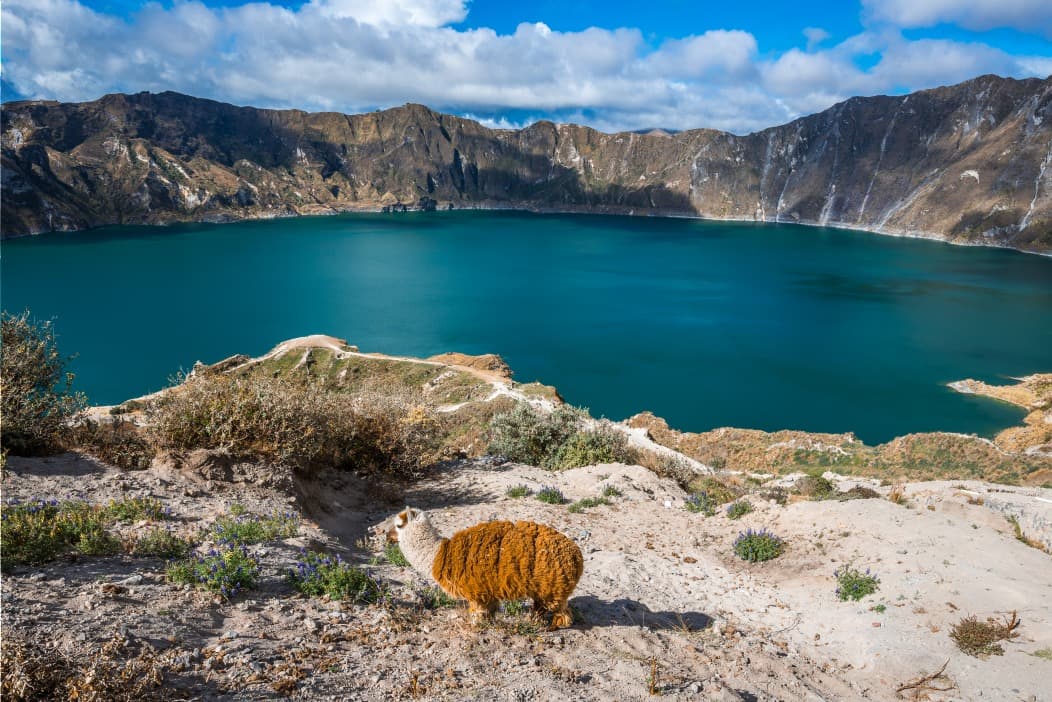
The majestic Mount Quilotoa rises above 3,914 m in elevation. Over time, it has transformed into a vast caldera 3 km wide with a highly irregular rim. Its northern section reaches 3,810 m while its southeastern section climbs to approximately 4,000 m.
The caldera is home to a crater lake 9 km wide and 250 m deep, displaying a greenish hue due to dissolved minerals. The Quilotoa lagoon ranks among Équateur's principal tourist sites and is among the most impressive attractions in the Ecuadorian Andes. It is the centerpiece of a celebrated hiking circuit through the Andean region known as the "Quilotoa Loop." While swimming is prohibited, visitors can enjoy its enchanting emerald waters by paddleboat.
Hiking at Quilotoa
The Quilotoa hike is among Équateur's most celebrated outdoor activities. It offers two hiking circuits—the first is a tour around the caldera, and the second follows the famous Quilotoa Loop. Both routes culminate at the lake and Quilotoa caldera.
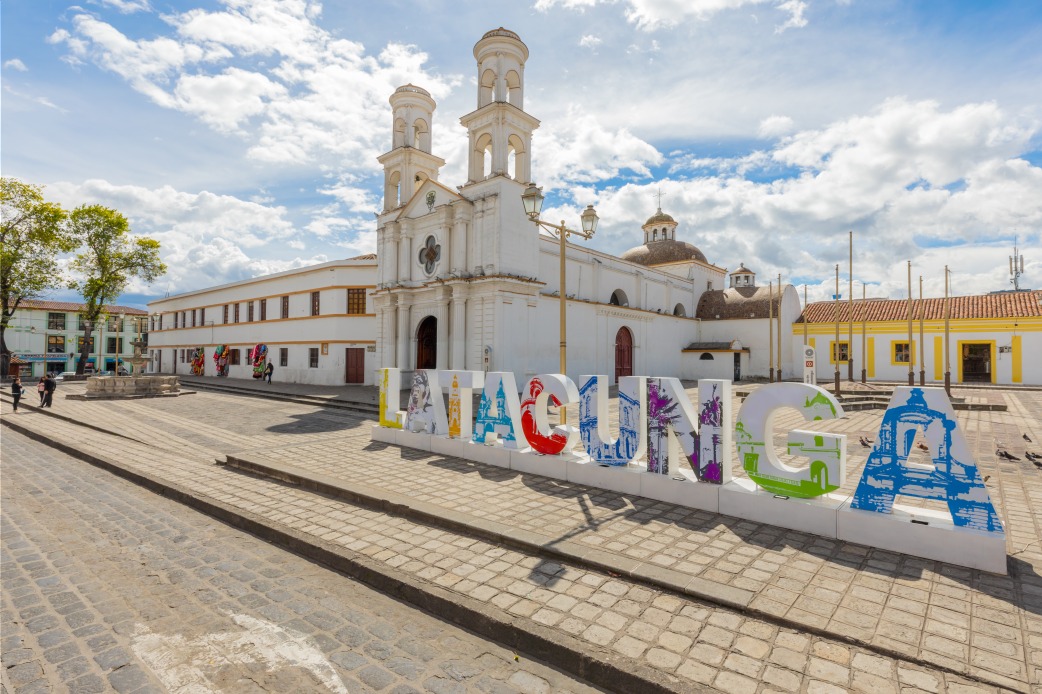
Highly popular, the Quilotoa Loop is a self-guided multi-day hike covering 200 km of trails through surrounding Andean towns and mountains, including the lake and Quilotoa crater. It begins in the town of Latacunga and ends at Quilotoa volcano. It passes through several Andean communities along the route: Latacunga, Saquisili, Zumbahua, Sigchos, and Chugchilan. To the delight of hikers choosing this route, camping is permitted at the Quilotoa volcano site—ideal for fully appreciating the site's beauty. You can capture stunning photographs of the location, including the lagoon below during sunrise and/or sunset.
For a duration of 4 to 5 hours, the lake hike is also highly favored by Quilotoa visitors. It includes a circuit around the caldera following a sandy and steep 10 km trail.
The Village of Quilotoa
The Quilotoa volcano region offers a unique opportunity for community-based tourism. Situated near the volcano's southwest side, Quilotoa village serves as a departure point for tourists wishing to follow a hiking itinerary along the Quilotoa Loop. The village, like all other communities in the region, is inhabited by indigenous peoples who live from agriculture.
Best Seasons to Visit the Region
According to the Köppen-Geiger classification, the Quilotoa region enjoys a warm oceanic climate with no dry season. The annual average temperature is 14.2°C while precipitation averages 322.3 mm. Even during the driest month of the year (July), average precipitation is 6.4 mm. February is the wettest month. It is therefore recommended to visit the region around July.
From Latacunga, the best way to reach Quilotoa is to follow the Quilotoa Loop circuit. The most efficient means for this is to rent a car and hire a local driver.
Although highly irregular, public transportation is also a viable option for reaching Quilotoa from Latacunga. You can take the direct bus from Latacunga to Quilotoa or the bus from Latacunga to Zumbahua. Quilotoa volcano is located just 14 km north of Zumbahua.
Want to discover this destination?
Our local advisors design your tailor-made trip.