Bartolomé Island
Bartolomé Island
Just 100 meters from Santiago, Bartolomé brings together volcanic landscapes, Pinnacle Rock, and snorkeling with penguins. Our complete guide to visiting.
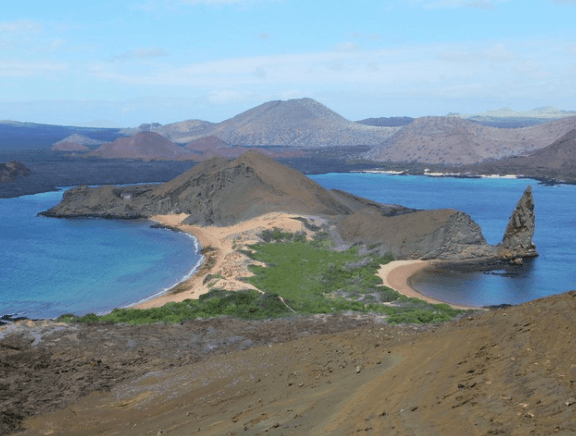
Bartolomé Island is a small isle of just over one square kilometer, located some hundred meters southeast of the immense and world-renowned Santiago Island. Its modest size allows this volcanic island to offer breathtaking panoramas—among the most stunning in the entire Galápagos archipelago. It features an extinct volcano reaching 114 meters in altitude and a wealth of volcanic structures glistening in shades of red, orange, green, and black.
History
Bartolomé Island is among the "younger" islands of the Galápagos archipelago, studied by the crew of the HMS Beagle and notably Charles Darwin, following the main landmasses in the area such as Santa Maria Island and Chatham Island, which were surveyed in 1835.
The island's name, Bartolomé, derives from the English name of Sir Bartholomew James Sulivan, a British naval lieutenant and close associate of Charles Darwin who participated with him on this voyage from Great Britain to South America with the purpose of charting the continent's coastlines. These studies, originally planned to last 2 years, ultimately took 5 years between 1831 and 1836. The first mention of this island, nearly adjacent to Santiago Island, appears in a letter dated 1836—mere months or a year after the survey of the archipelago's main islands—addressed to the HMS Beagle's captain, Robert FitzRoy.
Visiting Bartolomé Island
Beyond the exhilarating experience of taking in an exceptional vista from its highest point, the island offers two points of interest not to be missed. The first is swimming and especially snorkeling around Pinnacle Rock (see photo), one of the most impressive volcanic formations on the island, teeming with life. You may encounter penguins, sea turtles, white-tipped reef sharks, and other fish species endemic to the Galápagos.
You can then make your way behind Pinnacle Rock. This landmark shelters a small cave that is an ideal breeding ground for Galápagos penguins. The island is, year after year, a breeding and nesting site favored by many species throughout the archipelago. You'll find sea turtles and herons here, taking advantage of the width of the bays and beaches for reproduction.
Want to discover this destination?
Our local advisors design your tailor-made trip.