Sierra Negra Volcano
Sierra Negra Volcano
Sierra Negra, an active shield volcano in southern Isabela, hosts one of the largest calderas in the Galápagos. A guided trek through black lava, fumaroles, and endemic wildlife.
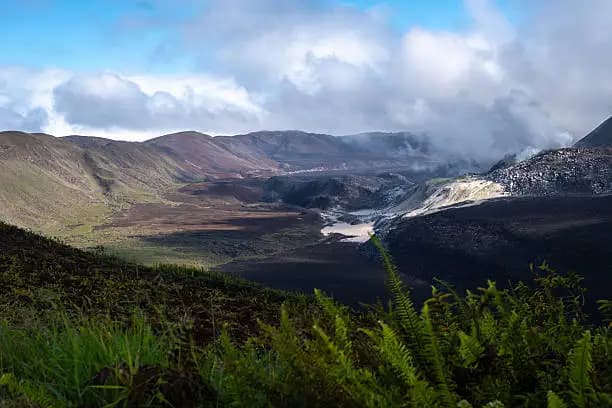
Sierra Negra is one of the most active shield volcanoes in the Galápagos, located in southern Isabela. Its caldera measures roughly 10 km in diameter, making it one of the largest on Earth. The hike to the crater rim reveals a landscape of solidified lava, fumaroles, and panoramic vistas across the archipelago — raw volcanic terrain with no equal in the region.
Quick practical facts
- Access: departure from Puerto Villamil, approximately 18 km away; truck-taxi or horse transfer to the trailhead.
- Entry: paid visit, included in Galápagos National Park entry fees; authorized guide mandatory.
- Duration: half-day to full day depending on extension toward Chico volcano.
- Attire: closed hiking boots essential, warm clothing (summit often shrouded in cloud), sun protection.
- Accessibility: trail unsuitable for mobility-impaired visitors — uneven volcanic terrain.
What you'll see
The trail winds through Scalesia forest before opening onto the caldera. The crater rim reveals an immense black lava field, dotted with secondary cones and active fissures. On clear days, views stretch across neighboring Isabela volcanoes and the Pacific Ocean. The extension to Chico volcano crosses recent lava flows in rust and ochre tones.
History and context
Sierra Negra erupted several times during the 20th and 21st centuries, notably in 2005 and 2018. These eruptions reshaped the landscape of the island's northern flank. The volcano is part of the hotspot system that formed the Galápagos archipelago over millions of years. Its ongoing activity makes it a natural laboratory for geologists.
The highlights of your visit
The caldera rim
Reaching the crater edge after roughly a two-hour ascent is the centerpiece of the hike. The caldera opens beneath your feet across some 10 km in diameter — an impressive mineral void, often wrapped in morning mist.
Chico volcano
This additional hour-long extension follows the caldera's eastern ridge to a field of recent lava. The rock colors — black, red, orange — contrast with tufts of pioneering vegetation slowly reclaiming the terrain.
Wildlife along the way
The trail passes through zones where Isabela's giant tortoises roam freely. Darwin's finches and Galápagos hawks are regularly spotted on the route.
Photography tips
Morning light is most favorable: clouds often engulf the summit by late morning. From the caldera rim, a wide-angle lens captures the crater's true scale. The lava textures at Chico — contrasts of color and form — photograph beautifully in raking light. No particular photography restrictions apply at this site.
Location and access
The trailhead lies roughly 18 km northeast of Puerto Villamil, Isabela's only inhabited village. A truck-taxi or organized excursion from the village reaches the trailhead. The ascent takes approximately two hours for an average hiker. A park-authorized guide is mandatory — local Puerto Villamil agencies offer daily departures.
In the area
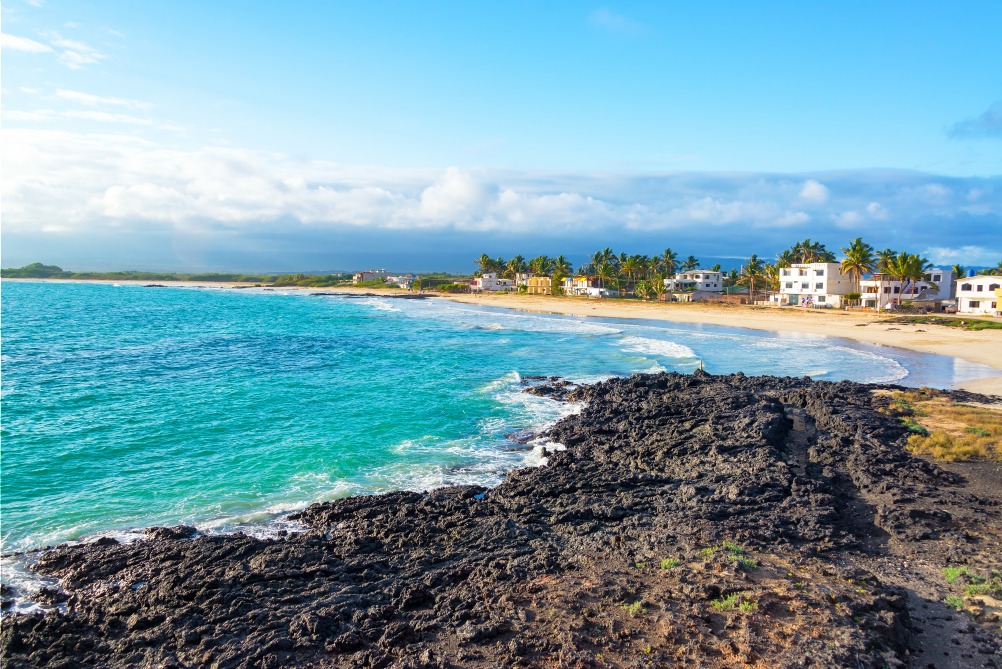
- Puerto Villamil — departure village, with white-sand beaches and giant tortoise breeding center.
- Las Tintoreras — islet near Puerto Villamil, known for white-tipped sharks and marine iguanas.
- Isabela's natural pools — volcanic rock formations creating sheltered bathing basins.
- Muro de las Lágrimas — wall built by 19th-century prisoners, accessible on foot from Puerto Villamil.
Frequently asked questions
Yes. The Galápagos National Park mandates an authorized guide for any Sierra Negra trek. Puerto Villamil agencies organize departures with guide included.
The dry season (June to December) offers cooler summit temperatures but also more mist. The warm season (January to May) sometimes brings clearer views. Early morning starts are advised regardless of season.
The trail is moderate: steady ascent over volcanic terrain. Closed hiking boots are essential. The Chico volcano extension lengthens the outing without significantly increasing difficulty.
Yes. Most agencies offer a Sierra Negra morning and a Puerto Villamil coastal afternoon (Las Tintoreras, natural pools). The day is full but doable.
The National Park monitors volcanic activity continuously. In case of an alert, access is closed. Before departure, confirm trail status with your agency or the Galápagos National Park.
Interested in this visit?
We can include it in your personalised itinerary.