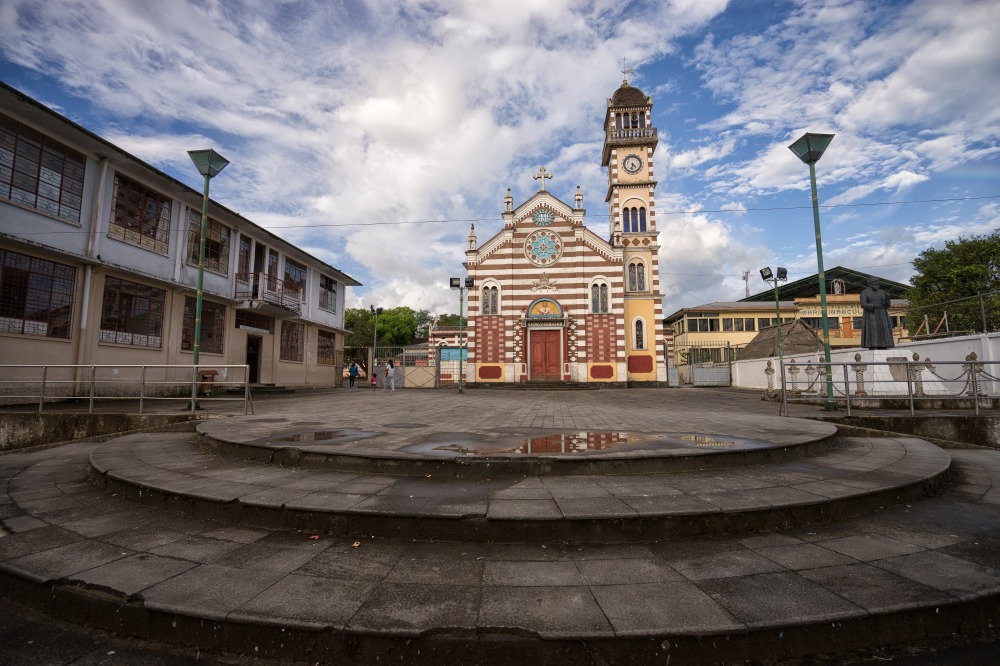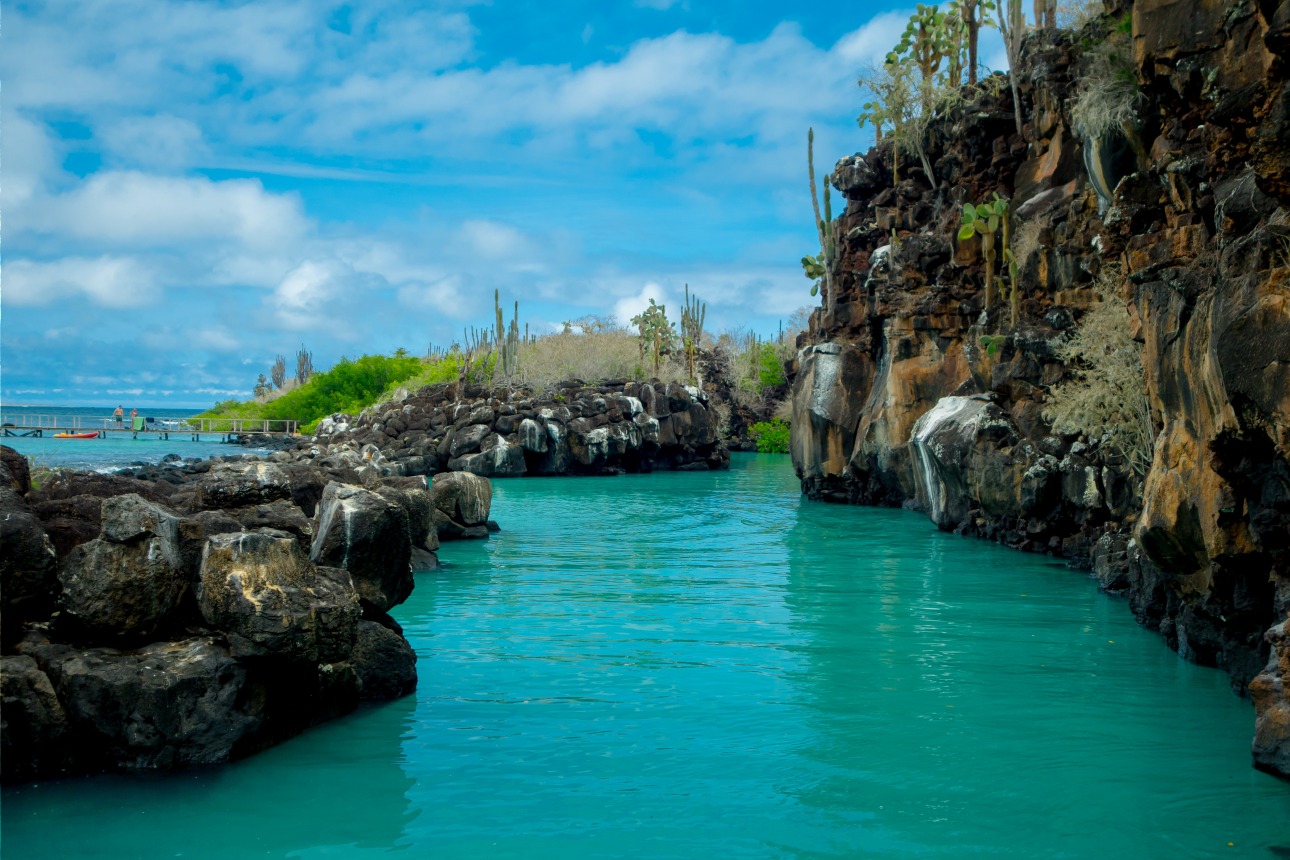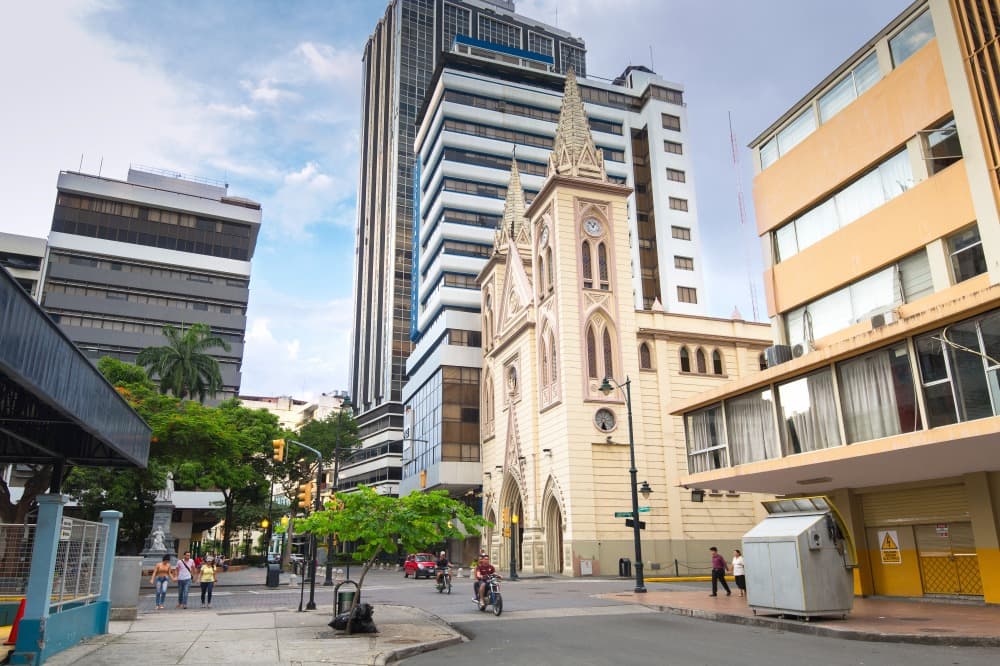
Guayaquil
Guayaquil
Ecuador's largest city and gateway to the Galápagos, Guayaquil blends colonial heritage, urban parks and tropical energy along the Guayas River.
A rich heritage, alongside numerous museums, restaurants, parks, nightclubs and shopping centers, combined with the warmth of its inhabitants, make Guayaquil an unmissable destination in Ecuador. The city, stretching along the Guayas River, is a modern and buzzing metropolis, thriving in the tropical heat of an immense fertile plain. Ecuador's largest city is a legendary place that captivates visitors with its enchanting charm. The "Pearl of the Pacific" awaits you—come and discover it!
Diving into Guayaquil's History
There are multiple versions of the origin of the name "Guayaquil." According to legend, the city would be named Guayaquil because of the union of Indian chief Guayas and his wife Quil. For other historians, this name would come from the surname of Chief Guayaquile. The latter lived in the region before Spanish colonists took over the city.
Indeed, under the orders of Spanish conquistador Francisco Pizarro, Spanish explorer Sebastián de Benalcázar invaded Guayaquil in 1535. The city then took the name "Santiago de Amay." Following attacks and fires, attributed to the Chono Indians, it was nearly destroyed. Rebuilt in 1536, it changed its name once again to become "Santiago de la Culata."
In 1538, Francisco de Orellana became the governor of Guayaquil. He then decided to rename it "Santiago de la Nueva Castilla." But once again, Spanish colonists, who came to settle on the lands of the Guayaquile Indians in 1543, changed the city's name to "Santiago de Guayaquil."
Due to the numerous attacks the city suffered from 1586 to 1687, fortresses were built atop the hills, overlooking the Guayas River. The goal was to protect it from these assaults.
With peace restored, Guayaquil began to develop gradually and rapidly. The city had the opportunity to possess vast agricultural fields (tropical fruits, cacao, and coffee), as well as a major fishing port.
Guayaquil Today
Guayaquil, a port city in Ecuador, is known as a gateway to Pacific beaches and the Galápagos. Today, Ecuador's largest city is the country's principal economic hub through its international airport, modern buildings, and major port.
Throughout and around this immense locality are arranged parks and various attractions, allowing its residents to enjoy a pleasant living environment. Most importantly, these parks make the city appealing to its visitors. Guayaquil is the best starting or ending point for those wishing to explore Ecuador.
If you want to explore the city in an original way, opt for a boat excursion along the Guayas River. It's the best place to observe up close the daily life of riverbank residents.
Next, you disembark onto solid ground, heading toward Las Peñas, this small hill where Guayaquil was born. Its unique charm is revealed in its bohemian atmosphere and colonial architecture. Here, you'll discover some wooden houses with Spanish architecture dating from the 20th century.
Don't miss tasting traditional dishes, such as Encebollado, during a culinary stopover in Guayaquil. It's a hot soup made with yucca, skipjack tuna, onion, and cilantro, served with fried plantain chips or, in some places, with white rice and bread.
Discovering the Rich Heritage of Guayaquil
Guayaquil is the economic capital of Ecuador, the most populous city in the country and its main fishing port. It is precisely located on the south Pacific coast, while being crossed by several estuaries, such as Salado.
Centenario Park, the Moorish Tower, the Simón Bolívar Jetty, Santa Ana Hill and the Las Peñas neighborhood constitute an incredible cultural and historical route. To which are added theaters, churches (San Francisco or La Merced), museums, bars and restaurants of all kinds.
Culture and art enthusiasts will want to visit the city's numerous museums. You have, for example, the Museum of Anthropology and Contemporary Art (rich with 50,000 archaeological objects and 3,000 contemporary artworks). Also stop by the Miniature Guayaquil Museum, the Municipal Museum (tracing the city's history from pre-Columbian times), the Casa de la Cultura Ecuatoriana, the Clay Museum or the Presley Norton Museum. Food lovers will take the opportunity to visit the Cacao Museum.
Cultural events are equally plentiful in Guayaquil! Carnival, for example, is an incredible celebration held each year on the days preceding Ash Wednesday and Lent. The program includes parades, art exhibitions, beauty contests, fireworks, and other entertainment.
Also enjoy a getaway to Guayaquil to visit its magnificent churches. The most remarkable is the Metropolitan Cathedral, located at the heart of the city. The building is actually found in Seminario Park, behind a statue of Simón Bolívar. This neogothic-style church, erected in 1547, stands majestically on Cerro Santa Ana. It cuts an impressive figure with its beautiful facade highlighting a sculpture of Saint James, its majestic lateral towers, beautiful dome, stained-glass windows and altars designed in marble.
Another iconic Guayaquil attraction is its cemetery. Officially created on April 27, 1823, it was not until 1888 that all social classes in the city could be buried there. However, the wealthier remain at the top in mausoleums. In the 1920s and after the arrival of Italian sculptors and architects, this cemetery is considered a true work of art, whose reputation today extends throughout the continent.
At the end of the promenade, an emblematic and atypical neighborhood awaits you: Las Peñas. Perched atop Cerro Santa Ana, this neighborhood is practically an open-air museum. Guayaquil's first neighborhood, founded 400 years ago, it was originally inhabited by fishermen and artisans. In the 20th century, it transformed into a wealthy neighborhood dotted with luxurious residences occupied by businessmen, intellectuals, and politicians. Beautifully restored and designated Cultural Heritage of Ecuador, people visit today to discover its bohemian atmosphere or stroll along its colorful and winding streets. Climbing the 444 steps of Cerro Santa Ana, you discover the Chapel of the Virgin of Mercedes and a magnificent lighthouse, which offers panoramic views of the city. In addition to the view, Las Peñas has all the infrastructure needed for an unforgettable stay, including bars, cafés, and souvenir shops.
Guayaquil, a City Where You Can Recharge
The "Pearl of the Pacific," as Guayaquil is nicknamed today, boasts a large number of natural sites to rejuvenate and make your trip an unforgettable experience.
Malecón 2000, overlooking the Guayas River, remains unquestionably a magical stop in Guayaquil! Between gardens, fountains, museums, restaurants, IMAX cinema, shops and cafés, this refreshing 2.5 km promenade is one of the city's most pleasant places. Facing this long pedestrian thoroughfare, much loved by residents, stands the Torre Morisca (Moorish Tower), which is a symbol of the city. You can also admire "La Rotonda" here, a marble hemicycle created in honor of José de San Martín and Simón Bolívar, the two great Liberators of Latin America.
If you'd rather escape the hustle and bustle of the city, that's entirely possible! Head to Santay Island, located on the Guayas River, which is a protected area of 2,179 hectares. In wooden houses built on stilts live just over 200 inhabitants. You can access the island via an 840 m long bridge, designed exclusively for pedestrians and bicycles. Santay Island is also a lovely green getaway, where you'll discover 12 species of reptiles (boa and iguana), 85 species of birds and mammals (raccoon, anteater, or the wild cat called the ocelot).
Half an hour from the city unfolds a magnificent botanical garden that's worth exploring. You'll find 80 species of endemic orchids, 700 species of plants, 73 species of birds, butterflies, fish, turtles, and even monkeys.
To see iguanas of various sizes, (reaching up to 1 m long), Seminario Park, also called Bolívar Park or Iguanas Park, is a must-visit. This unusual place** is found just across from Guayaquil's cathedral.
Guayaquil's parks are as numerous as they are varied. Centenario Park is the largest of all. Spanning 20 hectares, it houses various monuments and statues, as well as some historic remains. The "Columna de Los Proceres" is certainly its most famous monument. Standing in the middle of the park, it is built in honor of the martyrs of independence.
The Historic Park, lining the banks of the Río Daule, is another natural site worth visiting. Free to enter, it's a complete and enriching visit on the history of Guayaquil, and even Ecuador. The site features a replica of old Guayaquil, including houses dating from the Republican era. This park also appeals with its mangrove forest, home to 28 different animal species, such as Virginia deer, peccaries, raccoons, monkeys, sloths, crocodiles, and parrots.
Climate
Guayaquil enjoys a relatively mild tropical climate, resulting notably from its proximity to the Pacific Ocean. Consequently, the city experiences a dual influence from currents, including the Humboldt current (cold) and the El Niño current (warm). This allows the city to benefit from two distinct seasons.
A rainy season, characterized by humidity and heat, corresponds to the austral summer. It extends from December to April. As for the dry season, with slightly cooler weather, it corresponds to the austral winter. This lasts from May to December.
In terms of temperatures, they remain high practically year-round. Average temperatures range between 20 and 27 °C. Consequently, the best season to visit the city falls between June and December.
Air
Right in the heart of the city is the José Joaquín de Olmedo International Airport. Welcoming over 4 million passengers annually, it is Ecuador's second most important airport, after Quito's.
From Cali, Bogotá, Lima, and San Salvador, this airport is served by Avianca. From New York, Santiago de Chile, Buenos Aires, and Lima, it is served by LAN Airlines.
From Panama, it is served by Copa Airlines, by TAME from Fort Lauderdale, and finally, from Miami, by American Airlines.
For Europe, departing from Madrid, you can reach Guayaquil with LAN Airlines and from Amsterdam with KLM.
Guayaquil Airport is also connected to other Ecuadorian cities, such as Cuenca, Loja, Esmeraldas, Quito, Latacunga, or the Galápagos, via Tame, LAN Ecuador, and Avianca Ecuador.
Bus
You can reach Guayaquil by bus from several Ecuadorian cities and Peru. The Terminal is located north of the airport. Thus, several bus lines connect Ecuadorian cities like Coca, Cuenca, Esmeraldas, Latacunga, Ambato, Manta, Quito, Tulcán… to Guayaquil.
Want to discover this destination?
Our local advisors design your tailor-made trip.