Kicker Rock (León Dormido)
Kicker Rock (León Dormido)
A 153 m volcanic tuff cone off San Cristobal, León Dormido is one of the Galápagos' richest snorkeling and diving spots.
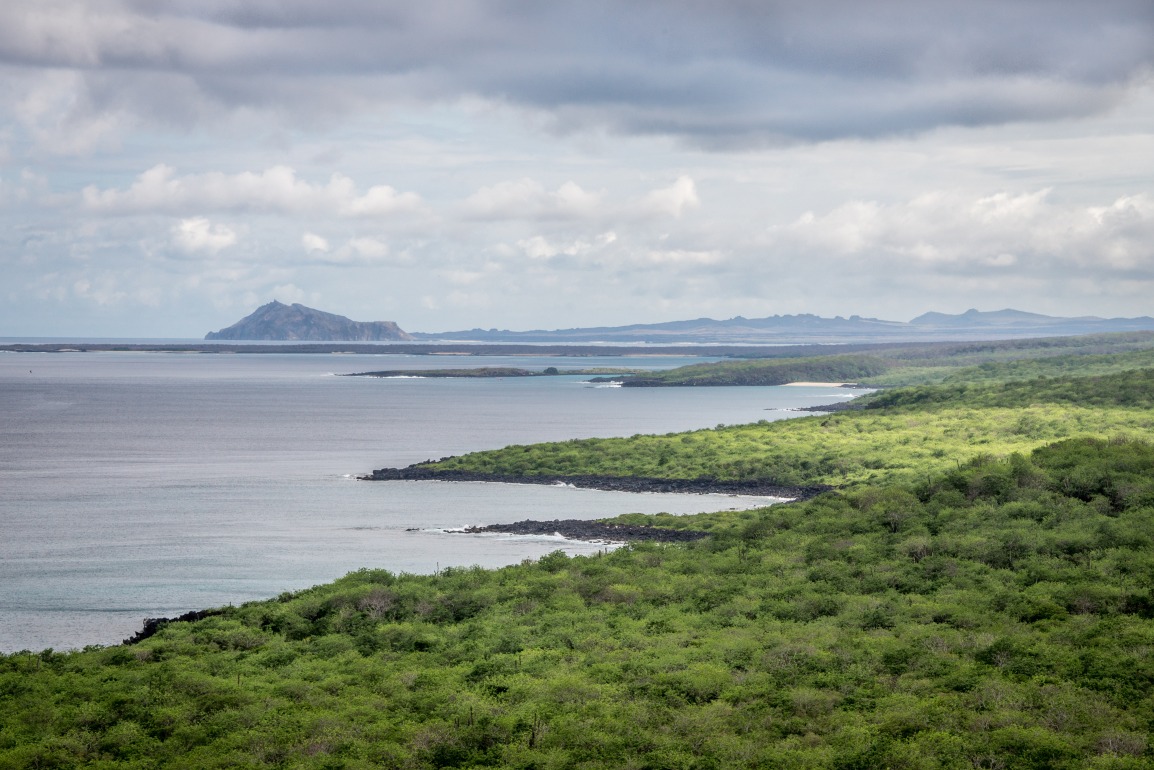
Kicker Rock is an eroded volcanic tuff cone rising to 153 meters, standing off the northeast coast of San Cristobal, the easternmost island of the Galápagos archipelago. Known in Spanish as León Dormido, a reference to its silhouette evoking a sleeping lion, it takes its English name from its boot-like shape when viewed from certain angles. The site comprises two blocks separated by a narrow channel, and it ranks among San Cristobal's most visited snorkeling and diving spots.
Why visit Kicker Rock
The site's appeal lies equally in its geology and marine biodiversity. The steep walls of both blocks act as a nutrient upwelling mechanism from the depths, attracting an unusually high concentration of wildlife in open water. The contrast between the rocky silhouette rising from the ocean and the underwater activity below explains why operators in Puerto Baquerizo Moreno feature it as their flagship excursion.
Note: the rock cannot be visited on foot. Access is exclusively by boat, and observation takes place from the vessel, through surface snorkeling or scuba diving for certified divers.
What to see and do
Snorkeling in the channel
The best viewing point is the channel separating the two rocks, where water reaches approximately 19 meters deep. The recommended technique is to drift slowly with the current and observe wildlife passing by rather than pursuing it. Experienced swimmers can venture into the open-water side, where the sea is rougher but hammerhead sharks appear more readily.
Observable marine wildlife
- Whitetip reef sharks, Galápagos sharks, and seasonally, hammerhead sharks
- Eagle rays and golden rays
- Seals (Galápagos sea lions), marine iguanas, sea turtles, octopuses
- Tropical reef fish: yellow-tailed surgeonfish, Mexican trumpetfish, sergeant major, parrotfish, pufferfish, rainbow wrasse, hawk fish
Scuba diving
Diving grants access to areas unreachable by snorkeling, notably deeper passages where hammerhead shark schools congregate. The site is generally rated intermediate to advanced: strong currents, open-water immersion, few visual reference points. A confirmed certification and recent dives are essential.
Birdwatching
The cliffs serve as perches for Nazca boobies and blue-footed boobies, which plunge-dive in the site's waters. Frigatebirds practice kleptoparasitism by harassing boobies to drop their catches. Nests are visible on rocky ledges from the boat.
When to visit
Two seasons rhythm the year in the Galápagos, each with distinct advantages:
- Cool and dry season (May to November/December): nutrient-rich waters thanks to the Humboldt Current, particularly active marine life, best odds of spotting hammerhead sharks. Wetsuits provided by operators.
- Warm and humid season (December to April): warmer waters and often better visibility, generally calmer seas. Marine life remains present, though less abundant.
Practical information
The site is accessed from Puerto Baquerizo Moreno, capital of Galápagos Province on San Cristobal. Day excursions typically last around 6 hours, split between round-trip travel (approximately 3 hours' navigation) and water time (approximately 3 hours, snorkeling at the rock plus a nearby beach stop). A naturalist guide, usually English-speaking, accompanies outings.
A few points to anticipate:
- Snorkeling is accessible to an average swimmer with guidance, but currents can be strong: mention your level when booking
- Scuba diving requires valid certification (Open Water minimum, Advanced recommended)
- Reef-safe sunscreen is mandatory in the national park
- Seasickness possible on the journey: plan preventive treatment if you're susceptible
How to get there
San Cristobal has its own airport (code SCY), served daily from Quito and Guayaquil on the mainland. Flights from Quito typically include a technical stop in Guayaquil. Upon arrival, Galápagos National Park entrance fees and INGALA transit card must be paid in cash (USD).
From San Cristobal Airport, Puerto Baquerizo Moreno is a few minutes by taxi. All Kicker Rock excursions depart from the municipal port, with booking available through local agencies or as part of an inter-island cruise with the site on the itinerary.
What to combine nearby
Ecuador abounds in remarkable natural sites that complement a San Cristobal visit. On the mainland, Cuicocha Lagoon offers another volcanic landscape example, while The Tunnels on Isabela provide basaltic formations and distinctly different shallow-water snorkeling. On the cultural side, the Church of the Company of Jesus in Quito deserves a stop before or after the archipelago.
Frequently asked questions
Frequently asked questions
No, not for snorkeling, which remains the primary activity and accessible to any autonomous swimmer guided by a guide. Certification (Open Water minimum) is only required for scuba diving.
They are observed throughout the year, but with higher frequency during the cool season (May to November/December), when waters are nutrient-rich. No sighting is guaranteed.
Comfortable open-water swimming ability is required. The site is in the open sea with no visible bottom and subject to currents. Non-swimmers cannot participate; hesitant swimmers should inform the operator, who provides a vest and enhanced supervision.
Allow a half-day to a full day depending on the package: approximately 6 hours for a standard excursion including travel, snorkeling at the rock, and a beach stop.
Yes, some excursions offer observation from the boat, which is rewarding for birdwatching and viewing the rock's silhouette. However, most of the site's appeal remains underwater.
Plan your trip
Kicker Rock fits naturally into an itinerary combining the mainland and archipelago. To build a custom journey including San Cristobal and other Ecuadorian stops, consult our Équateur tours.
Interested in this visit?
We can include it in your personalised itinerary.