Mompiche
Afro-Ecuadorian fishing village in Esmeraldas province, Mompiche attracts visitors with its long wild beach, rolling surf waves and mangroves accessible by dugout canoe.
Mompiche is a fishing village nestled on Équateur's northern coast, in Esmeraldas province. Surrounded by mangroves and tropical forest, it remains one of the rare Ecuadorian coastal villages to have preserved an authentic atmosphere. Its long dark sand beach, consistent waves and challenging access make it a favourite destination for surfers and travellers seeking refuge from overcrowded beach resorts.
Quick facts at a glance
- Access: from Esmeraldas or Muisne, by bus then boat or by road depending on the season
- Recommended duration: 2 to 4 days to enjoy the beach and surroundings
- Dress code: no restrictions — beach attire recommended
- Dry season: June to November, calmer seas and clear skies
What to see
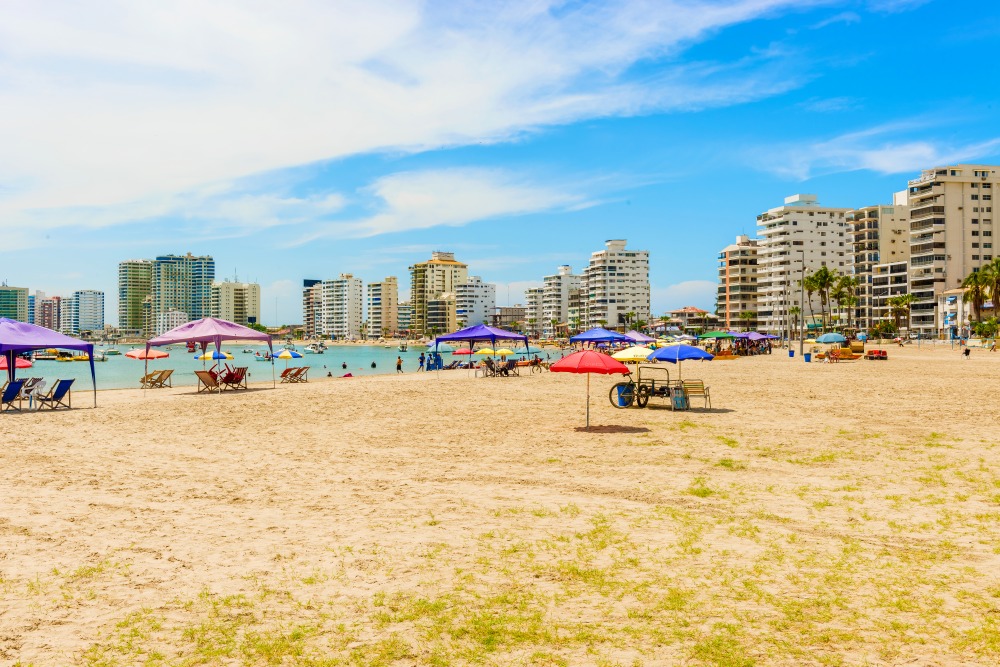
The main beach stretches for several kilometres, lined with palm trees and virtually deserted during the week. The sand is dark grey, characteristic of this stretch of coast. Long, consistent waves attract intermediate to advanced surfers. In the village itself, wooden houses on stilts, dugout canoes pulled onto the shore and fishing nets drying in the sun compose a daily scene without pretence.
History and context
Mompiche belongs to Esmeraldas province, historically inhabited by Afro-Ecuadorian communities whose culture—marimba music, cuisine based on coconut and seafood—remains very much alive. The village long subsisted in near self-sufficiency through artisanal fishing. The gradual arrival of surf tourism from the 2000s onwards transformed the local economy without erasing its character.
Highlights of your visit
Mompiche Beach
Long, uncrowded and framed by dense vegetation, it offers a rare setting on Équateur's coast. Sunsets over the Pacific Ocean are particularly striking during the dry season.
Surfing
Mompiche's waves are renowned among Ecuadorian and foreign surfers. Lessons and board rentals are available from local providers. The break is better suited to surfers with some experience.
The mangroves
The areas immediately surrounding the village harbour mangrove zones accessible by dugout canoe. These outings allow you to observe local wildlife—birds, crabs, fish—in an intact ecosystem.
Afro-Ecuadorian gastronomy
Village restaurants serve typical northern coast dishes: encocado de pescado (fish in coconut milk), ceviche de concha (marinated clams), patacones. Produce comes directly from local fishermen.
Photography tips
Golden light in late afternoon is ideal for photographing the beach and canoes. Early morning mist over the mangroves creates interesting atmospheres. Always ask locals' permission before photographing them.
Location and access
Mompiche is located in Muisne canton, Esmeraldas province, on Équateur's north-western coast. Access from Esmeraldas is by bus to Muisne then by boat or along a coastal road depending on conditions. From Quito, the journey takes approximately 6 to 8 hours. Accessibility for people with reduced mobility is limited due to unpaved roads and canoe access points.
Nearby attractions
- Esmeraldas — provincial capital, logistics hub for the northern coast.
- Muisne — neighbouring island village, accessible by ferry, known for its peaceful beaches and mangroves.
- Súa — small fishing village further south, with a sheltered bay and family-friendly atmosphere.
- Atacames — lively beach resort a few hours south, for those seeking more nightlife.
Frequently asked questions
The dry season, from June to November, offers clearer skies and calmer seas. The rainy season (December to May) brings more powerful waves, appreciated by experienced surfers.
The beach is family-friendly during the dry season when waves are moderate. However, access to the village remains long and infrastructure is basic — plan accordingly.
No. The beach is enjoyed for swimming, walks and dugout canoe trips through the mangroves. Surfing is an option, not a requirement.
A classic route follows the northern coast from Esmeraldas: Atacames, Súa, Muisne, then Mompiche. It is also possible to head towards the Colombian border via San Lorenzo.
No official restrictions. Out of respect for residents, ask their permission before photographing them, particularly during fishing activities or in private spaces.
Want to discover this destination?
Our local advisors design your tailor-made trip.