Isla Española
Isla Española
The southernmost island of the Galápagos, Española concentrates waved albatrosses, red iguanas, and white sand beaches. A practical guide to prepare your cruise.
Isla Española, formerly known as "Hood Island," ranks among the finest stops in the Galápagos, notably for its magnificent coastline of spectacular cliffs. This uninhabited island represents one of the world's premier diving destinations (both scuba and snorkeling). An enjoyable exploration of this popular island, which captivates above all through the incredible diversity of its wildlife.
A Dive into Isla Española's History
Española, the southernmost of the Galápagos islands, is likely the oldest still-existing island in the archipelago. Geologists estimate its age at over 4 million years.
Over centuries, through tectonic activity, the island slowly drifted away from the volcanic hotspot (magma) that created it. After losing its energy source, its volcano eventually went extinct. Following the onset of erosion, Isla Española became remarkably flat and low in altitude, compared to the other Galápagos islands.
Moreover, the island's former name "Hood" was given in tribute to Admiral Lord Samuel Hood, by English naval officer James Colnett in 1798, during Colnett's voyage to the Galápagos. It was also the first island spotted by Charles Darwin during his epic voyage aboard the HMS Beagle in 1835, though the celebrated English naturalist and paleontologist never actually landed there.
Española Island Today
Ila Española, located at the far southeast of the Galápagos archipelago, deserves a visit as part of a cruise. Despite its highly arid and volcanic landscape, it harbors an impressive variety and abundance of endemic species. The lava lizard, the giant tortoise, the mockingbird, and of course the colony of Galápagos albatrosses are among the most striking.
As such, Española's giant tortoise and Galápagos albatross, both endangered, are now subject to regular monitoring. Measures are also in place to protect their natural habitat.
A Brief Overview of Española Island
Española Island, measuring 60 km² with a highest point of 206 meters, is relatively flat and surrounded by a few hills. The island is built on a submarine lava block. A group of geologists even witnessed signs of volcanic activity in the 1980s; but today, the volcano is extinct.
In the island's southern section, an abrupt cliff landscape unfolds. One must not miss the spectacle offered by the Hueco Soplador (blowhole) located near the albatross colony. It is a water fountain created by ocean waves, shooting from the ground to a height of 25 m. The phenomenon resembles a geyser.
On the island, one also notices arid vegetation (particularly numerous spiny plants), but above all, rich fauna. Indigenous animals include: the waved albatross, sea lions, colorful marine iguanas and lava lizards.
Ila Española is also a true sanctuary for seabirds. Blue-footed boobies, red-billed tropicbirds, Espanola mockingbirds, Nazca boobies, swallow-tailed gulls, and Galápagos albatrosses (a colony of approximately 12,000) coexist in harmony.
Isla Española, an Ecuadorian Gem to Explore
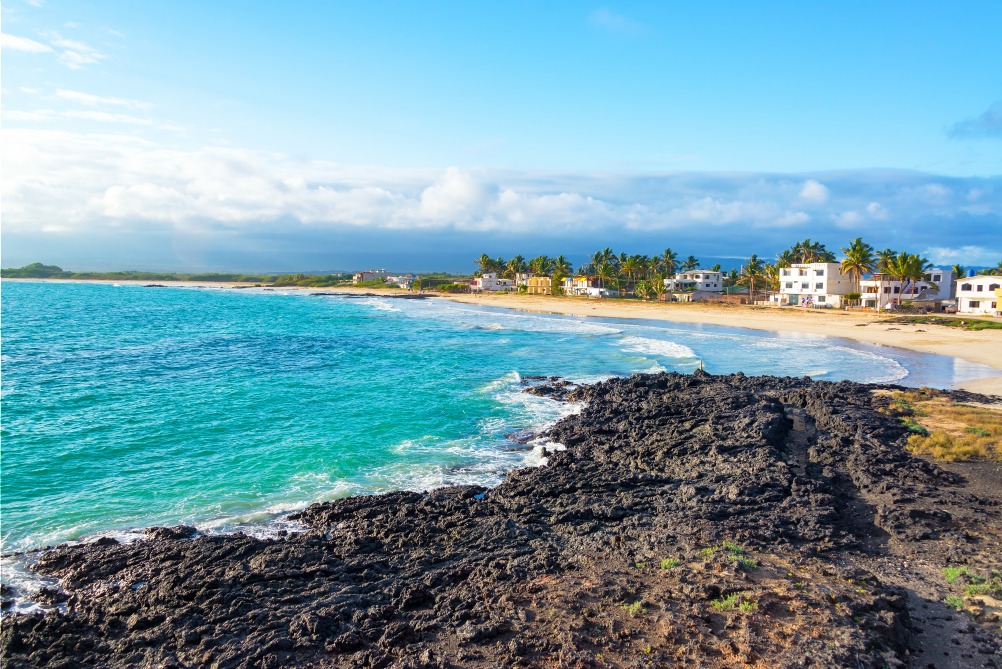
- Gardner Bay, stretching along the northeast coast of Hood Island, displays a magnificent white sand beach approximately 1 km long. While sea lion colonies bask in the sun, sea turtles swim offshore. The turquoise water, perfect for swimming, offers a striking contrast with the pristine beach strewn with shells.
Off shore, on Tortuga Island, snorkeling offers the chance to encounter young sea lions and schools of tropical fish of surprising size (yellow-tailed surgeon fish, king angelfish, or hump-headed parrotfish, among others).
But the most spectacular sight is Gardner Rock, accessible only by panga, where one can see white reef sharks, sometimes hammerheads, dozing. On the rocks, large marine iguanas and lava lizards mingle.
- Suarez Point (Punta Suarez) is another highlight of Española island. This site, one of the wildest and most remarkable in the Galápagos, is accessible by boat, then on foot. The area is indeed crossed lengthwise by a 3 km tourist trail, perfect for hiking.
Located at the southwest of the island, Punta Suarez merits interest for the myriad of seabirds living there. Indeed, between April 15 and December 15, it is mating season. A large colony of Galápagos albatrosses invades this part of Española. The spectacle offered by albatrosses during this mating period is particularly amusing.
Year-round, one spots blue-footed boobies concentrating inland or on cliffs. One can also see large agitated albatrosses using the cliffs as launching ramps. This is another highlight of the journey not to be missed!
Along Suarez Point, other endemic seabird species are discovered. Thus, en route, you may encounter swallow-tailed gulls, lava herons, Galápagos doves, Galápagos hawks, and especially Hood mockingbirds.
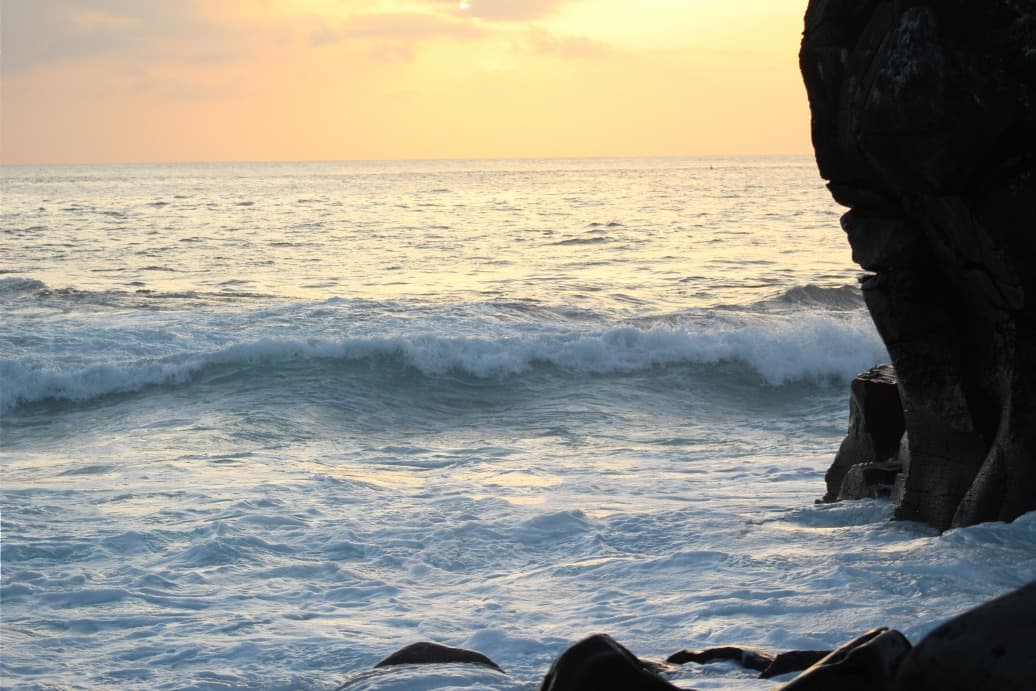
On the basaltic coast, at the end of Punta Suarez's marked trail, one witnesses an astonishing natural phenomenon called the "blowhole." In fact, it is a seawater source that rushes violently into a narrow hole, after which the water is ejected up to 25 meters high.
- Osborn Island is another small island worth visiting during your sojourn on Española Island. Located southeast of Española, it is accessible only by panga. It is indeed the ideal place for snorkeling or swimming. Large schools of colorful tropical fish are often observed around Osborn, and it is common to see angelfish and parrotfish among the abundant marine fauna. Occasionally, one also spots manta rays and sea lions.
Exceptional Endemic Fauna
Since Española is a fairly isolated island, visiting it is highly interesting due to the diversity of endemic species living there. Among these, the waved albatross, Española's lava lizard, marine and land iguanas, and Española's mockingbird. Moreover, the marine iguana on Española Island displays red and green hues year-round. This is truly worth seeing.
Beyond the waved albatross, Española is home to blue-footed boobies and Nazca boobies. Among the other wild species on Española island are also the Galápagos hawk, red-billed tropicbirds, and not to mention sea lions.
Although sightings are rare, one can sometimes spot Española's giant tortoises. In the 1960s, only 14 individuals remained. Thanks to meticulous species conservation efforts, nearly 2,000 giant tortoises now live on Española island. This conservation work was conducted jointly by scientists, the Charles Darwin Foundation and the Galápagos National Park.
Climate on Isla Española
Due to its relatively flat landscape, the climate is quite dry year-round. That said, for those wishing to snorkel off the island's coast, the waters are quite warm between January and April.
The boat remains the best way to reach Española Island. From Santa Cruz to Española Island, the total journey duration is between 10 and 12 hours. From San Cristóbal, which is closer to Española, the journey takes 2.5 hours.
Want to discover this destination?
Our local advisors design your tailor-made trip.