Meaning of the Ecuadorian Flag
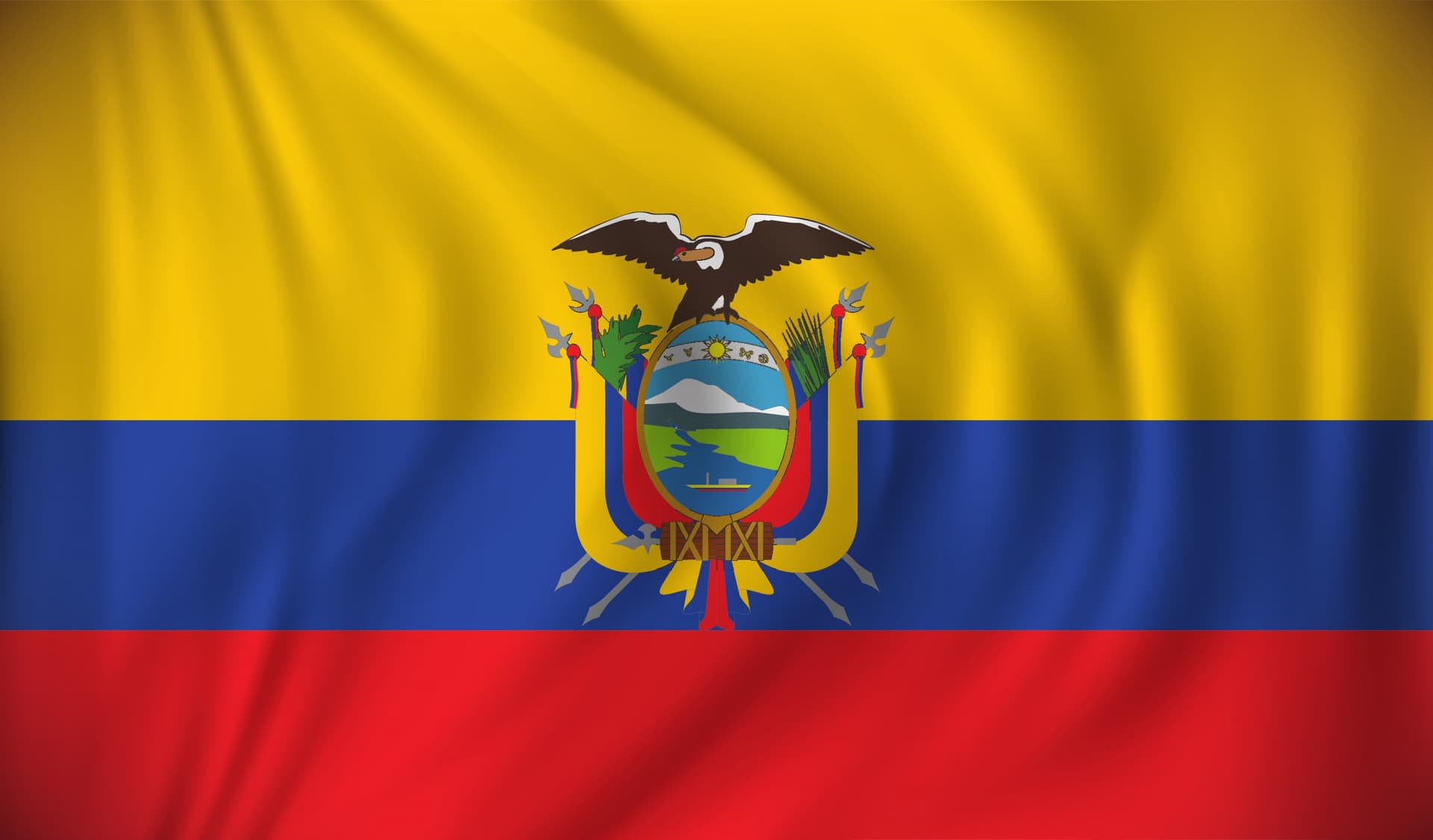
The flag of Équateur was formed on the same basis as those of Colombia and Venezuela.
The flag of Équateur was formed on the same basis as those of Colombia and Venezuela. These territories, among others, formed from 1819 onwards, and for several years thereafter, Gran Colombia. A nation symbolizing emancipation from Spanish conquistadors. Yellow, red, and blue are three colors that remain, to this day, on the flags of all three South American countries.
The Ecuadorian flag draws its distinctiveness from the standards of the two neighboring countries.
Like that of Colombia, the horizontal yellow band, which represents both the abundance of natural and agricultural resources of the country as well as the presence of gold, extends across the upper half of the flag, leaving only the lower half for the other two colors. Dividing the remaining two quarters, blue and red respectively represent the ocean and the azure sky and, as on countless other flags worldwide, the blood shed by patriots to bring freedom and justice to the nation.
What it shares with Venezuela's flag is the presence of its coat of arms at the center of the flag. The Ecuadorian standard is the only one of the three to draw a major characteristic from each of the other two flags.
A coat of arms filled with symbols
The coat of arms located at the center of the Ecuadorian flag evolved four times between the version adopted in 1835 and its final version of 1860 that we know today. The similarities lie in the presence of the Andean condor, also a symbol of other South American countries such as Peru, Argentina, Bolivia, Chile, and Colombia, which represents the power and greatness of the nation. The 1835 coat of arms also displayed four zodiac signs: Aries, Taurus, Gemini, and Cancer, symbolizing the historical months of March, April, May, and June—pivotal months during the country's emancipation in the first half of the 19th century. Finally, placed in the center of these zodiac signs, a sun that may represent the Incan deity Inti, crossing the sky each day and swimming throughout the night to bring a new day to the peoples.
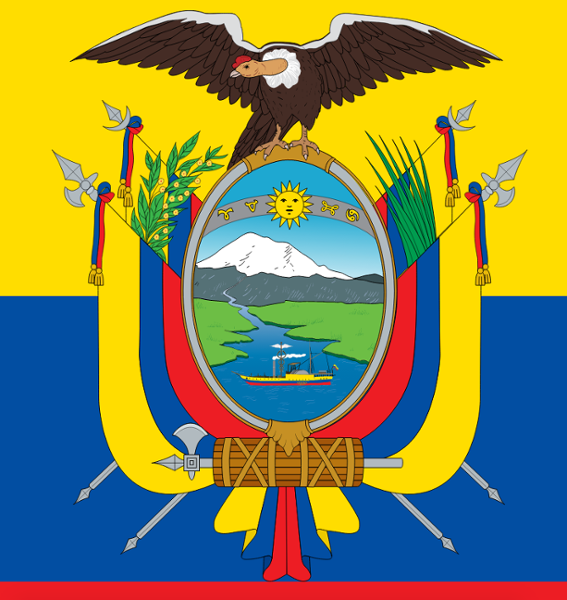
Added to the 1860 coat of arms were Mount Chimborazo and the Guayas River, symbols of the brotherhood of the Ecuadorian people. The boat, in the country's colors, floating in the foreground on the Guayas represents the first steamboat built on the docks of Guayaquil. It references commerce and maritime knowledge. Finally, the laurel and palm branches symbolize triumph and glory.
Frequently asked questions
The flag of Équateur is composed of three horizontal bands: yellow (upper half) representing the abundance of natural resources and the presence of gold, blue symbolizing the ocean and sky, and red evoking the blood shed by patriots for the country's freedom.
These three flags share the colors yellow, blue, and red because all three countries were part of Gran Colombia, a nation founded in 1819 under the leadership of Simón Bolívar, symbolizing emancipation from Spanish conquistadors.
The coat of arms on the Ecuadorian flag, in its final 1860 version, represents notably the Andean condor (symbol of power), Mount Chimborazo, the Guayas River, the first steamboat built in Guayaquil, as well as laurel and palm branches symbolizing triumph and glory.
The central coat of arms of the Ecuadorian flag was adopted in its final version in 1860, after evolving four times since the first model of 1835.
The 1835 coat of arms displayed four zodiac signs: Aries, Taurus, Gemini, and Cancer, corresponding to the months of March, April, May, and June—pivotal months during Équateur's emancipation in the first half of the 19th century.